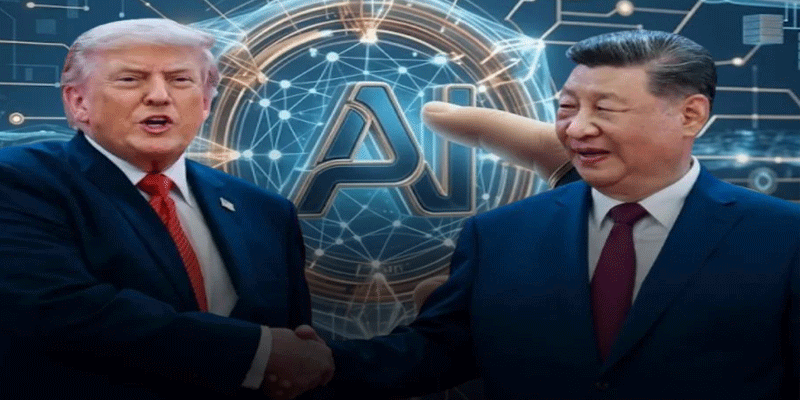
Trump–Xi Washington summit preparations are combining unusually elaborate diplomatic ceremony with a high-stakes economic and technology agenda. US President Donald Trump plans to personally greet Chinese President Xi Jinping at Joint Base Andrews on September 23, ahead of Xi’s White House state visit and September 24 summit, underscoring the importance Washington attaches to the encounter.
A Rare Diplomatic Moment
Xi’s visit comes after years of tariff disputes, technology restrictions and strategic competition between the world’s two largest economies. The administration is now seeking areas where rivalry can be managed without severing economic links. Preparatory negotiations are already under way, with US Treasury Secretary Scott Bessent scheduled to meet Chinese Vice Premier He Lifeng in New York on trade, rare earths, AI and broader economic issues.
The meetings could continue into September 21, giving negotiators an opportunity to narrow differences before Trump and Xi meet face-to-face.
Ceremony Meets Strategic Substance
The visit will feature an arrival ceremony at the White House, a military review in the Rose Garden and a formal state dinner hosted by Trump and First Lady Melania Trump for Xi and Peng Liyuan. Trump’s decision to personally receive Xi at Andrews is particularly notable because US presidents rarely greet visiting leaders at the airport.
The state dinner will also carry a distinctly technological character. Expected guests include Amazon founder Jeff Bezos, Alphabet CEO Sundar Pichai, OpenAI chief Sam Altman, Tesla and SpaceX CEO Elon Musk, Nvidia CEO Jensen Huang, Dell founder Michael Dell, Citigroup CEO Jane Fraser and former Apple CEO Tim Cook.
Trade, Rare Earths And AI
Trade is expected to dominate the substantive discussions. Washington and Beijing are examining whether tariffs on some non-strategic goods can be reduced, while the existing tariff truce approaches its November 10 expiry. Rare-earth minerals and magnets are another critical issue because their supply is central to advanced manufacturing and technology industries.
AI represents an even newer frontier. Bessent has said the preparatory discussions will cover both open- and closed-weight models, AI risks and possible guardrails. The objective is reportedly to avoid a complete technological bifurcation while maintaining US leadership and addressing security concerns.
VIP Engagement Beyond the Summit
The programme extends beyond formal negotiations. Xi and Peng are scheduled to return to the White House for a private tea with Trump and Melania, followed by a tour of the National Archives as the United States marks its 250th anniversary.
The presence of leading technology executives could provide an informal channel for discussions on AI investment, semiconductor supply chains, technology markets and commercial cooperation.
From Diplomatic Optics to Tangible Outcomes
The elaborate welcome and high-profile guest list provide powerful diplomatic symbolism, but the summit’s significance will ultimately depend on what follows. Narrow tariff adjustments, greater rare-earth supply stability and practical AI dialogue could create mechanisms for managing competition. At the same time, unresolved disagreements over technology controls and strategic security will remain. The Trump–Xi meeting therefore represents less a resolution of US–China rivalry than an opportunity to establish workable guardrails around it.
(With agency inputs)