Economic Ambitions Meet Strategic Priorities in Southeast Asia
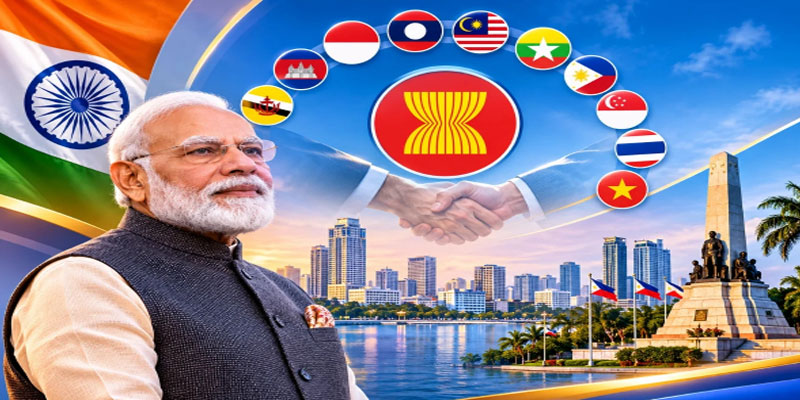
Prime Minister Narendra Modi is in Manila for the 23rd ASEAN–India Summit and the 21st East Asia Summit, hosted by the Philippines in its capacity as ASEAN Chair for 2026. The visit comes at a crucial juncture in India's engagement with Southeast Asia, with bilateral trade touching $128.38 billion in 2025–26. Beyond strengthening diplomatic relations, New Delhi is seeking to correct trade imbalances, accelerate negotiations on a revised trade agreement and deepen maritime cooperation. The larger question is whether India can convert its growing strategic partnership with ASEAN into greater economic opportunities.
Strategic Background: Advancing the Act East Policy
India and ASEAN elevated their relationship to a Comprehensive Strategic Partnership in 2022. Their cooperation is now guided by a 2026–30 Plan of Action, which seeks to expand collaboration across economic, technological, security and cultural sectors.
The Manila summit provides an opportunity to assess progress and establish future priorities. Southeast Asia's strategic importance has increased amid geopolitical competition, contested maritime routes and changing global supply chains.
The 2026 designation as the ASEAN–India Year of Maritime Cooperation further strengthens India's Act East policy, Indo-Pacific strategy and MAHASAGAR vision.
Trade Imbalance: The Biggest Economic Challenge
· Indian exports: $38.41 billion.
· Indian imports: $89.96 billion.
· Trade deficit: $51.55 billion.
The ASEAN–India Trade in Goods Agreement (AITIGA), signed in 2009 and implemented in 2010, was intended to facilitate commerce through tariff reductions. However, India believes the existing framework has not delivered sufficiently balanced benefits.
New Delhi is pushing for an early conclusion of its review to improve market access, address non-tariff barriers and create more reciprocal trading conditions. However, securing agreement among all ten ASEAN members remains challenging, with negotiations potentially extending into 2027.
Maritime Security: Strengthening Indo-Pacific Cooperation
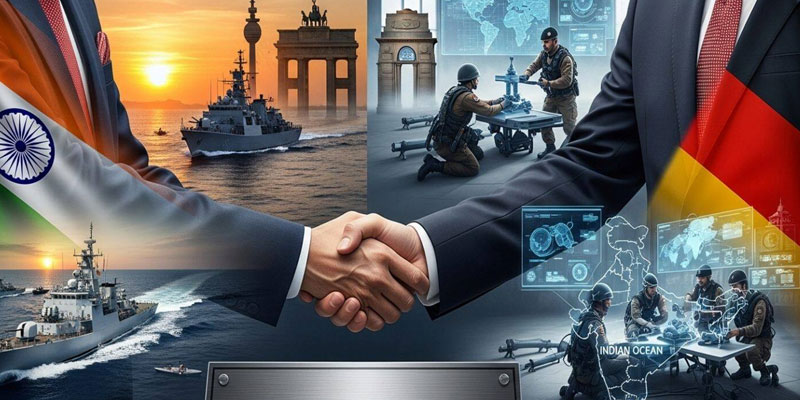
Maritime cooperation is another major priority. India is expected to advocate stronger naval coordination, maritime domain awareness, disaster response, fisheries protection and secure sea lanes.
The second India–ASEAN naval exercise at Subic Bay in September 2026 demonstrates the growing emphasis on operational cooperation. Discussions are also expected to reinforce freedom of navigation, international law and ASEAN centrality, particularly concerning the South China Sea.
Beyond Trade: Building a Stronger Regional Partnership
The summit is expected to advance cooperation in digital infrastructure, technology, connectivity, energy security and resilient supply chains.
From Strategic Goodwill to Economic Gains
Ultimately, India's success in Manila will depend on converting diplomatic engagement into measurable outcomes. A modernised AITIGA, balanced trade and stronger maritime partnerships could transform ASEAN into an even more valuable economic and strategic partner. For Modi, the challenge is clear: ensuring that India's $128-billion relationship evolves into a more reciprocal, resilient and mutually beneficial partnership.
(With agency inputs)