Dhaka’s Military Reset After Power Shift
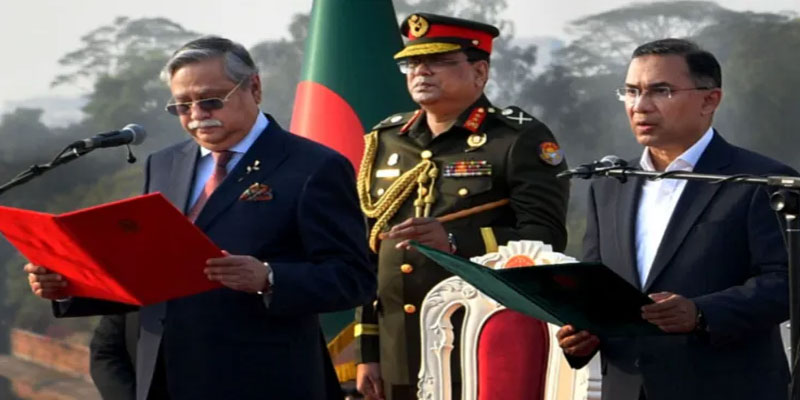
Within days of the Bangladesh Nationalist Party’s (BNP) return to power on February 17, 2026, under Tarique Rahman, Dhaka unveiled a sweeping reshuffle of its military high command. The move coincided with the recall of Bangladesh’s Defence Adviser in New Delhi, a signal that civil-military recalibration was underway. The new government wasted little time consolidating authority, replacing key figures in the Army General Staff and military intelligence while repositioning officers perceived to be aligned with the previous interim leadership.
The reshuffle follows a turbulent political phase marked by the exit of Sheikh Hasina in 2024 and a 17-month interim administration led by Muhammad Yunus. President Mohammed Shahabuddin publicly criticized that interim arrangement as unconstitutional overreach, reinforcing the BNP’s narrative that institutional balance had to be restored.
Consolidating Command and Loyalty
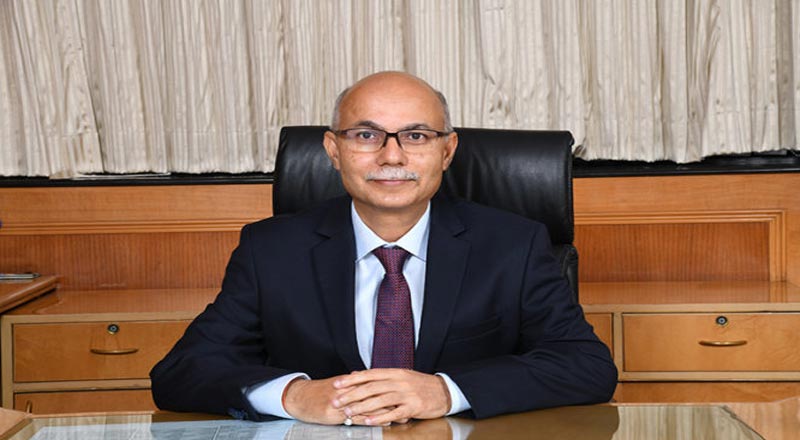
At the center of the restructuring is the appointment of Lt Gen M Mainur Rahman as Chief of General Staff and Maj Gen Kaiser Rashid Chowdhury as Director General of DGFI. Lt Gen Mir Mushfiqur Rahman assumed the role of Principal Staff Officer. These changes signal a decisive effort by Tarique Rahman to ensure the armed forces’ loyalty after a politically sensitive transition.
Bangladesh’s military has historically played a decisive role in national politics, particularly during earlier BNP governments and the post-1975 era. The current overhaul appears aimed at preventing internal fissures while reaffirming civilian authority—though critics argue it risks politicizing the institution anew.
The recall of the Defence Adviser from New Delhi is especially symbolic. It indicates that the new leadership is reassessing external military alignments even as it stabilizes its internal power structure.
Strategic Calculations and Regional Signals
The reshuffle carries broader geopolitical undertones. Bangladesh’s security apparatus is recalibrating its priorities—focusing more on internal intelligence, Islamist networks, and Rohingya-related instability. At the same time, the BNP’s historical skepticism toward India shapes perceptions in New Delhi.
India and Bangladesh have enjoyed strong defence engagement over the past decade under Sheikh Hasina, including joint military exercises and border management cooperation. The two countries have conducted regular editions of the “Sampriti” exercise, strengthening interoperability between their armies. These efforts were closely coordinated through diplomatic and defence channels in both capitals.
A shift in tone from Dhaka could cool the warmth that defined ties between the India and Bangladesh in recent years. While no formal downgrades have been announced, the recall of a key liaison officer suggests a pause in momentum.
Implications for India-Bangladesh Military Ties
In the short term, the reshuffle may slow operational cooperation. Intelligence-sharing, joint border patrols, and defence dialogues could face bureaucratic recalibration as new appointees settle in. The DGFI leadership change is particularly significant; intelligence coordination has been central to countering cross-border extremism and insurgent networks affecting India’s Northeast.
However, structural realities limit the scope of deterioration. Bangladesh relies on India for power imports, trade access, and regional connectivity. Conversely, India values Dhaka’s cooperation in maintaining stability along their 4,000-kilometer border. Strategic geography, economic interdependence, and shared security concerns make a complete rupture unlikely.
Longer term, Bangladesh may diversify defence partnerships—exploring options with China or Turkey—yet it cannot easily replicate the institutional familiarity built with India. A recalibration rather than rupture is more probable.
Stability or Strategic Drift?
Tarique Rahman’s military reshuffle is both a consolidation exercise and a diplomatic signal. It seeks to secure loyalty at home while recalibrating Bangladesh’s external posture. For India, the development warrants caution but not alarm.
If managed pragmatically, the transition could evolve into a more balanced phase of engagement—less personalized, more institutional. But if mistrust deepens, defence cooperation may gradually erode, complicating regional security dynamics. Ultimately, the durability of India-Bangladesh military ties will depend less on reshuffled names and more on sustained political will in Dhaka and New Delhi to prioritize stability over suspicion.
(With agency inputs)