A Direct Call Aimed at Cooling Tensions
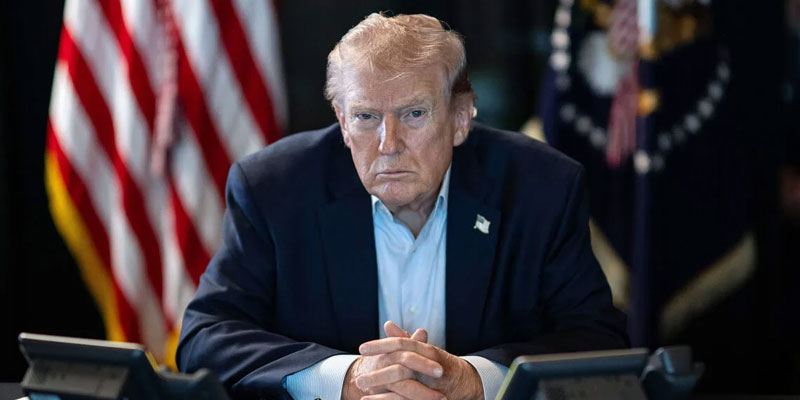
U.S. President Donald Trump’s recent phone call to Japanese Prime Minister Sanae Takaichi—urging her not to provoke Beijing over Taiwan’s sovereignty—has exposed the delicate diplomatic choreography underway in Asia. The call, reported by The Wall Street Journal, came immediately after Trump spoke with Chinese President Xi Jinping, who reiterated China’s historic claim over Taiwan and pressed for shared U.S.–China responsibility in managing the international order.
Takaichi had stirred controversy by suggesting Japan might consider military intervention if China moved against Taiwan—an assertion that predictably enraged Beijing. With Japan situated barely 110 kilometers from Taiwan and bound by security obligations with the U.S., her statement elevated the stakes dramatically. Trump’s message to “lower the volume” reflected not hesitation but an attempt to prevent the Taiwan issue from exploding into a regional crisis.
Strategic Motives Behind Trump’s Sequence of Calls
1. Stabilizing U.S.–China Relations
The order in which Trump placed (and received) his calls is revealing. Xi’s unusual outreach indicated Beijing’s urgency: China sought to reassert its position on Taiwan while keeping U.S.–China rivalry from spiralling. Trump, eyeing a visit to Beijing in April 2026, appears to have interpreted the moment as an opportunity for de-escalation rather than confrontation.
2. Containing Alliance Risks with Japan
Takaichi’s statements risked dragging the U.S. into conflict through the U.S.–Japan security treaty. Trump’s advisory call was therefore a pre-emptive move to preserve American strategic flexibility.
By encouraging restraint, Trump ensured Japan remained aligned with U.S. red lines rather than acting independently on Taiwan. Takaichi’s confirmation that Trump offered an open channel of communication reflects continued trust—but Japan’s denial of specific advice underscores its desire to project autonomy.
3. Preventing a Multi-Front Asian Crisis
The timing of these exchanges coincides with rising Sino-Japanese friction not only over Taiwan but also over the Senkaku/Diaoyu Islands. Trump’s intervention can be seen as an effort to avert simultaneous crises while U.S. forces reconfigure their posture in the Indo-Pacific.
This aligns with Trump’s broader “America First” priority: avoid foreign entanglements that distract from issues like Ukraine and domestic economic concerns.
4. Protecting U.S. Economic and Technological Interests
Taiwan is central to global semiconductor supply chains. Any escalation would disrupt American tech industries and investor confidence. Moderating tensions thus protects U.S. economic stability while appealing to domestic constituencies that favor predictable trade relations with China.
A Balancing Act in an Unsettled Triangle
Trump’s calls to Xi and Takaichi highlight a carefully calibrated diplomatic maneuver—one designed to manage a volatile security environment where U.S. commitments, China’s assertive nationalism, and Japan’s strategic anxieties intersect. His counsel to Tokyo signals pragmatism: avoiding a premature flashpoint over Taiwan while preserving alliance cohesion and maintaining leverage over Beijing.
The episode underscores the enduring fragility of the U.S.–China–Japan triangle. As tensions over Taiwan continue to simmer, Washington’s ability to temper rhetoric, reassure allies, and deter adversaries will determine whether the region drifts toward conflict or maintains an uneasy stability.
(With agency inputs)