Tensions in West Asia escalated sharply after Iran’s military command warned it could target banks linked to the United States and Israel across the region. The statement, issued on March 11, 2026, by Khatam al-Anbiya Central Headquarters, signaled a shift from attacks on oil and military infrastructure to financial targets.
Iranian officials claimed the warning followed overnight strikes allegedly carried out by the U.S. and Israel on a bank in Tehran that reportedly killed several employees. In response, Iranian authorities cautioned civilians to remain at least 1,000 meters away from banks associated with American or Israeli institutions, specifically mentioning financial hubs in Dubai, Saudi Arabia, and Bahrain.
Economic Targets: A New Front in the Conflict
Iran’s threat represents a new phase of what analysts describe as economic warfare. Rather than focusing solely on energy infrastructure or military bases, Tehran now appears to be targeting financial institutions that underpin global trade and investment flows in the Gulf.
Cities such as Dubai play a critical role in global commerce, processing a large share of the world’s oil trade and hosting major international banks. Disruptions to financial centers could therefore trigger ripple effects far beyond the region, affecting global markets, shipping, and energy prices.
The threats also come amid rising geopolitical tensions following the reported killing of Iran’s former leadership and the consolidation of power by Mojtaba Khamenei, whose leadership is widely seen as closely aligned with the Islamic Revolutionary Guard Corps. Since the escalation began, more than a hundred missiles and drones have reportedly been launched across Gulf targets.
Dubai and UAE: Heightened Defenses and Warnings
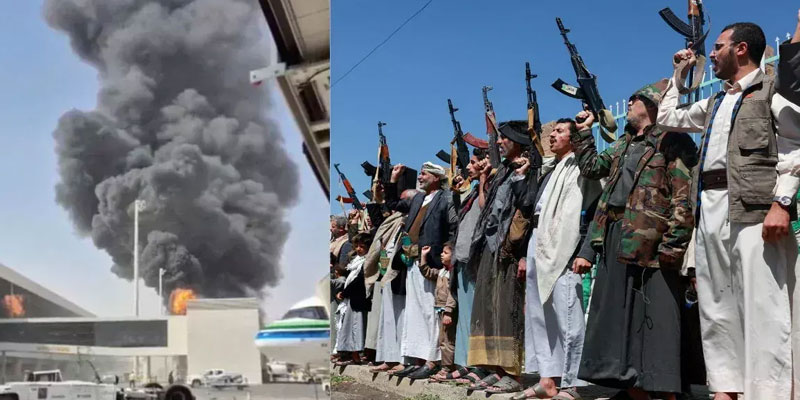
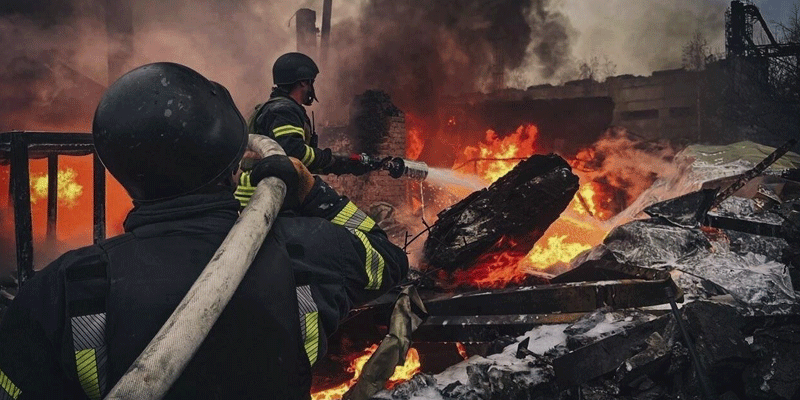
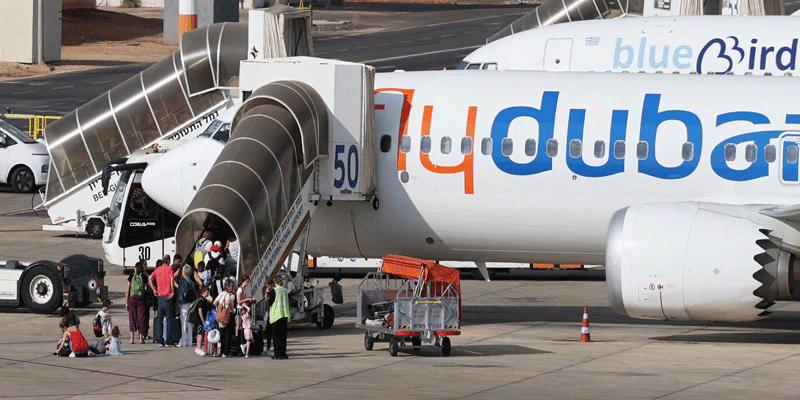
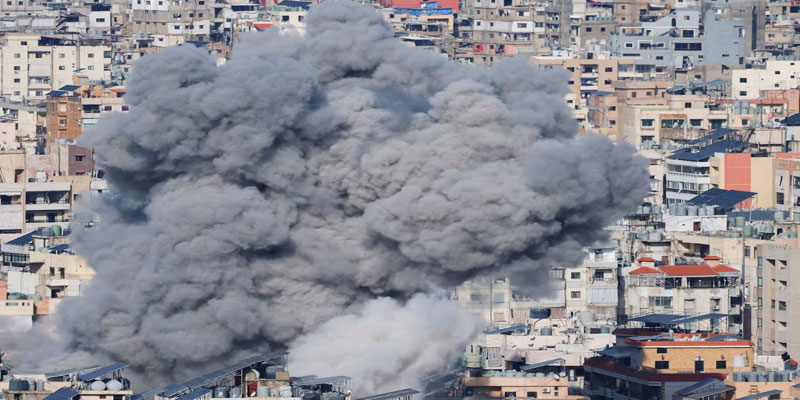
The United Arab Emirates moved quickly to bolster security following the threats. Air defenses were activated after explosions and drone strikes were reported in parts of Dubai, temporarily disrupting operations at Dubai International Airport.
Authorities issued emergency alerts to residents, while infrastructure including the Jebel Ali Port and luxury landmark Burj Al Arab were placed on heightened security.
UAE President Mohamed bin Zayed Al Nahyan publicly urged Iran to de-escalate, warning that attacks on civilian infrastructure and regional financial centers would damage stability across the Gulf.
Saudi Arabia and Bahrain: Interceptions and GCC Coordination
Saudi Arabia also reported intercepting Iranian missiles and drones over Riyadh and the eastern oil-producing region. Defenses were activated around the Shaybah Oil Field, a key energy facility. Saudi officials condemned the attacks and warned that continued aggression would have severe consequences for Iran.
Meanwhile, Bahrain reported injuries after drone strikes near the Bapco oil complex. The country temporarily closed its airspace and strengthened defenses around facilities hosting U.S. military assets.
The crisis prompted an emergency meeting of the Gulf Cooperation Council, where member states discussed collective defense measures and reiterated their right to self-defence under international law.
Global Stakes and Regional Risks
Beyond security concerns, the threat to financial institutions carries broader economic implications. Gulf banking hubs manage billions of dollars in global transactions, and disruptions could trigger currency volatility, trade disruptions, and cyber-security risks.
Countries heavily dependent on Gulf energy routes are watching closely. For example, India relies on the Strait of Hormuz for a significant portion of its oil imports, while millions of Indian expatriates live and work across the Gulf.
A Dangerous Expansion of the Conflict
Iran’s threat to target banks marks a dangerous expansion of an already volatile confrontation in West Asia. By shifting the battlefield from oil and military installations to financial infrastructure, Tehran risks destabilizing not just regional security but also global economic networks.
For Gulf states, the response has focused on strengthening air defenses, coordinating through regional alliances, and signaling deterrence without triggering a wider war. Yet the growing cycle of retaliation suggests that diplomatic solutions are urgently needed. Without meaningful de-escalation, attacks on financial and energy hubs could push the region—and potentially the global economy—into a far deeper crisis.
(With agency inputs)