Chinese EV Competition Forces Volkswagen into Massive Restructuring
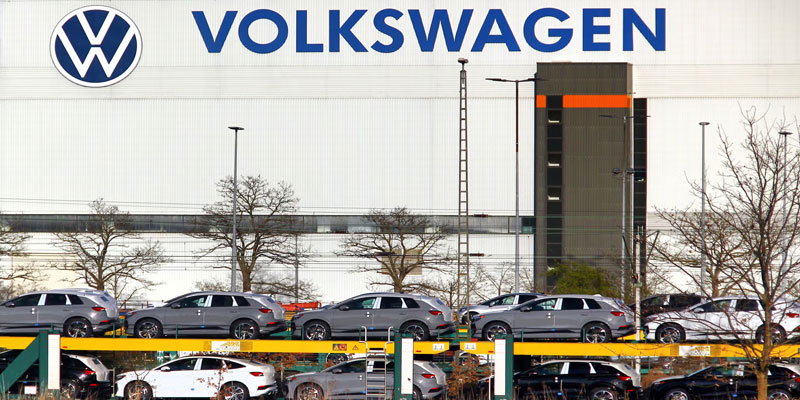
German automobile giant Volkswagen is reportedly considering one of the biggest restructuring exercises in its history, with plans that could result in the loss of nearly 100,000 jobs and the closure of factories in Germany. The move comes as the company struggles to keep pace with the rapid rise of Chinese electric vehicle (EV) manufacturers, which have transformed the global automotive landscape through competitive pricing, advanced battery technology and faster innovation cycles. While the immediate impact will be felt in Europe, the developments also carry important implications for India's evolving automobile industry.
How Volkswagen Lost Its Dominance
For decades, Volkswagen was among the world's most successful automobile manufacturers and enjoyed a dominant position in the Chinese market, which is the world's largest automobile market. However, the rapid emergence of domestic Chinese EV makers such as BYD, Geely, Chery, SAIC and Leapmotor has fundamentally altered the competitive landscape.
Unlike traditional automakers, these companies have leveraged strong battery ecosystems, integrated software platforms, lower production costs and rapid product development to capture significant market share. As Chinese manufacturers expanded beyond their domestic market into Europe and other global regions, legacy automakers like Volkswagen found themselves under increasing pressure to reduce costs and accelerate their transition towards electric mobility.
Reports suggest that Volkswagen has already agreed to substantial workforce reductions through negotiations with labour unions, and the latest proposals could deepen the restructuring further as the company seeks to restore competitiveness.
What the Restructuring Signals
The reported restructuring reflects a much broader transformation taking place across the global automobile industry. The shift from internal combustion engines to electric vehicles is no longer merely a technological transition—it has become a complete industrial reset where software capability, battery technology, manufacturing efficiency and supply chain integration are increasingly determining market leadership.
Volkswagen's challenges also demonstrate that brand legacy alone is no longer sufficient to maintain market dominance. Companies capable of delivering affordable electric vehicles with advanced digital features and shorter product development cycles are reshaping consumer preferences worldwide.
Possible Impact on India
The direct impact of Volkswagen's global restructuring on India is likely to remain limited, as there are currently no indications of major production cuts or factory closures affecting its Indian operations. However, the company's ongoing global challenges could influence its investment priorities in the country.
Recent developments suggest Volkswagen has been reorganising its India business, streamlining management structures and adopting a more cautious approach towards future electric vehicle investments while exploring partnerships to reduce costs. This could potentially slow new product launches or delay capital expenditure in the Indian market.
At the industry level, the episode offers an important lesson for Indian automakers. Companies such as Tata Motors, Mahindra & Mahindra and others are already investing heavily in electric mobility, software-defined vehicles and localisation. Volkswagen's experience reinforces the importance of developing competitive battery technologies, cost-efficient manufacturing and strong domestic supply chains.
Indian auto component manufacturers could also face indirect effects if prolonged weakness in the European automobile market reduces export demand, although the sector's diversified customer base should help cushion any immediate impact.
A Wake-Up Call for the Global Auto Industry
Volkswagen's restructuring represents more than the challenges of a single company—it reflects the rapid emergence of a new global automotive order led by electric mobility, software innovation and manufacturing agility. For India, the development is less a direct threat than a timely reminder that competitiveness in the EV era will depend on continuous innovation, localisation and technological leadership. If Indian automakers successfully adapt to these changing dynamics, Volkswagen's current difficulties may ultimately serve as a valuable lesson rather than a warning of challenges to come.
(With agency inputs)