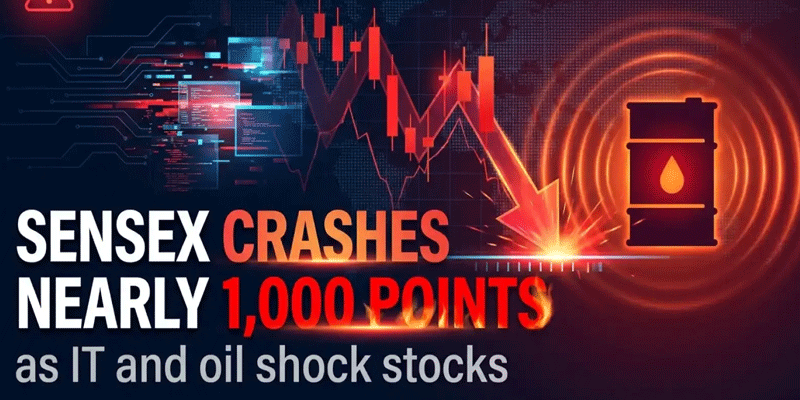
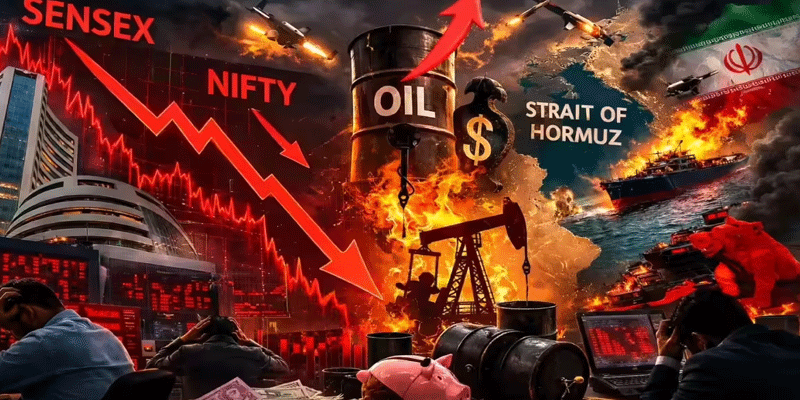
Indian equity markets opened the week on a positive note, with the Sensex and Nifty trading higher in early deals on June 22, 2026, as investors responded favourably to easing tensions in West Asia and a decline in crude oil prices. The benchmark Sensex rose more than 400 points, or 0.54%, to touch an intraday high of 77,223, while the Nifty advanced over 100 points, or 0.51%, to trade around 24,137. The rally reflected growing optimism that geopolitical risks that had weighed heavily on global markets over the past several weeks may be gradually subsiding.
Markets Recover from Geopolitical Uncertainty
The latest gains come after a prolonged period of volatility triggered by conflict in West Asia. The region witnessed nearly six weeks of heightened tensions, including disruptions around the Strait of Hormuz, a critical global energy corridor through which a significant share of the world's oil supplies pass.
The closure of the strait for several months led to supply concerns, pushed energy prices higher and created uncertainty across financial markets. Indian equities were not immune to these developments. Earlier in June, benchmark indices came under pressure as investors feared a broader regional conflict that could disrupt global growth and increase inflationary risks.
Sentiment improved after the United States and Iran reached a preliminary ceasefire understanding, reducing fears of further escalation. The development has helped stabilize energy markets and restore investor confidence.
Falling Oil Prices Boost Market Sentiment
One of the most significant triggers for the rally has been the moderation in crude oil prices. Brent crude, which had surged amid conflict-related concerns, recently fell about 2.6% to around $102.30 per barrel, while West Texas Intermediate (WTI) crude declined roughly 2.5% to below $96 per barrel.
For India, which imports a large portion of its crude oil requirements, lower energy prices are particularly beneficial. They help reduce inflationary pressures, improve the trade balance and ease concerns about corporate profitability. The decline in oil prices has also contributed to strengthening the rupee, further supporting market sentiment.
IT Stocks Lead the Market Recovery
The information technology sector emerged as the biggest contributor to Monday’s gains. The Nifty IT index climbed more than 1%, extending a recovery that began earlier this month.
Leading technology companies such as Infosys, Wipro, Tata Consultancy Services (TCS) and Coforge attracted strong buying interest as investors responded to improving global technology sentiment. The Nifty MidSmall IT & Telecom index also gained around 0.8%, indicating broader participation across the technology space.
Oil and gas stocks joined the rally as easing crude price volatility improved outlooks for refiners and energy-related businesses. The sector's gains reflected expectations that a more stable energy market could support profitability and investment activity.
Key Drivers and Market Outlook
Apart from easing geopolitical tensions, positive global market cues and a stronger rupee have helped improve risk appetite among investors. Market participants are increasingly shifting their focus from conflict-related concerns toward economic growth prospects, corporate earnings and global demand trends.
However, analysts remain cautious. They note that foreign investor flows, global interest-rate expectations and the pace of recovery in technology spending will continue to influence market direction in the coming weeks.
Relief Rally Signals Renewed Investor Confidence
The rebound in the Sensex and Nifty highlights how closely Indian markets remain linked to global geopolitical and economic developments. The easing of tensions in West Asia and the accompanying decline in crude oil prices have provided much-needed relief to investors, helping restore confidence after weeks of uncertainty. While risks have not disappeared entirely, the latest rally suggests that markets are beginning to look beyond immediate geopolitical concerns and refocus on growth, earnings and long-term economic fundamentals.
(With agency inputs)