Markets Bounce Back After Sharp Previous-Day Correction
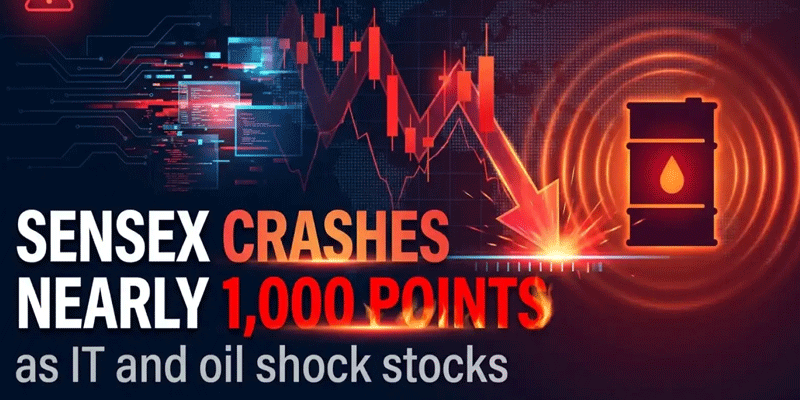
Indian equity markets staged a strong recovery, reversing much of the weakness seen in the previous session. The benchmark BSE Sensex surged 790.54 points to close at 76,991.22, while the NSE Nifty50 climbed above the psychologically important 24,000 mark to settle at 24,021.65.
The rally reflected renewed investor confidence driven by bargain hunting, expectations of softer crude oil prices and encouraging signals from monetary policymakers. While the sharp gains boosted sentiment across Dalal Street, market participants remain watchful of both domestic and global developments that could influence the next phase of market movement.
Why the Market Rebounded
The rally followed a period of heightened risk aversion that had triggered a notable correction in equities. Rather than indicating a complete shift in market direction, the rebound appeared to be a combination of short-covering and selective buying in fundamentally strong stocks.
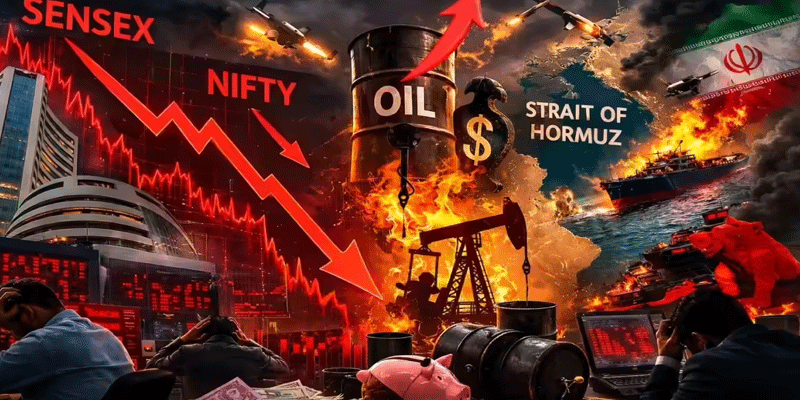
One of the key drivers was the outlook for lower crude oil prices. As a major importer of crude oil, India benefits significantly from softer energy prices. Lower oil costs help reduce inflationary pressures, improve the current account balance and support both corporate profitability and consumer spending.
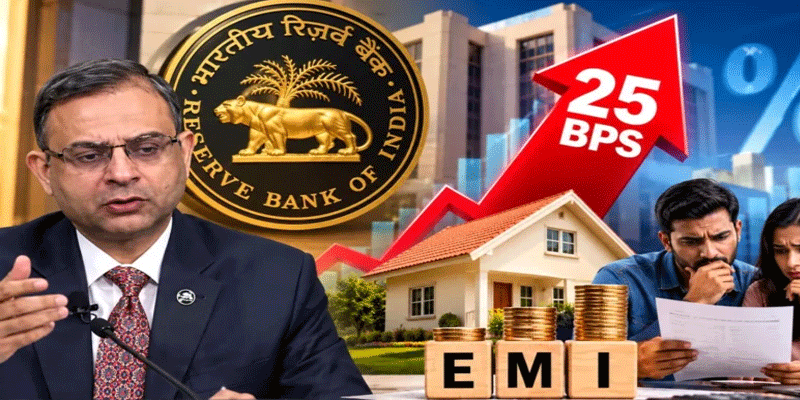
Another positive trigger came from the Reserve Bank of India. RBI Governor Sanjay Malhotra's comments that it was premature to discuss interest rate hikes reassured investors that the current accommodative interest-rate environment may continue for some time. Lower borrowing costs generally support economic growth, lending activity and equity valuations.
Who Led the Rally?
Banking stocks emerged as the primary drivers of the market recovery. Investors responded positively to the prospect of stable interest rates and improving liquidity conditions, both of which are supportive of credit growth and financial sector earnings.
Information technology stocks also contributed significantly to the gains. The sector benefited from improving global risk sentiment and optimism surrounding demand for technology services.
Among individual stocks, airline major InterGlobe Aviation (IndiGo) stood out as one of the top gainers, rising around 5 percent during the session. The strong performance reflected renewed confidence in travel demand and consumer spending trends.
Top Gainers
Some of the notable gainers included:
· InterGlobe Aviation (IndiGo)
· Major private sector banking stocks
· Leading IT companies
· Select consumption and travel-related counters
Top Losers:
While the market closed firmly in positive territory, a few defensive and broader-market stocks underperformed. The relatively weaker performance of certain mid-cap and small-cap counters highlighted investors' preference for large-cap quality names during the rebound.
Broader Market Signals Remain Mixed
Despite the strong benchmark performance, broader market participation remained subdued. The Nifty Midcap 50 rose just 0.29 percent, the Nifty Midcap 100 gained only 0.10 percent and the Nifty Smallcap 100 advanced 0.39 percent.
This divergence suggests that investors are not yet embracing a broad-based risk-on strategy. Instead, they are concentrating their investments in large, liquid and fundamentally stronger companies.
Adding to the positive sentiment, India VIX—the market's volatility gauge—fell nearly 4 percent, indicating reduced anxiety among traders following the previous session's sell-off.
What Investors Should Keep in Mind
The latest rally reinforces the resilience of Indian equities, particularly when supported by favourable factors such as lower oil prices, stable interest rates and improving economic expectations. However, investors should avoid interpreting a single strong session as confirmation of a sustained uptrend. Key variables such as the monsoon, US monetary policy and geopolitical developments in West Asia continue to influence market sentiment. For investors, the prudent approach remains focusing on quality businesses, maintaining diversification and avoiding impulsive decisions based on short-term market swings. Patience, disciplined asset allocation and a long-term perspective remain the most reliable tools for navigating volatile markets.
(With agency inputs)