Modi’s Peace-making Persona Amid the Gaza Truce Talks
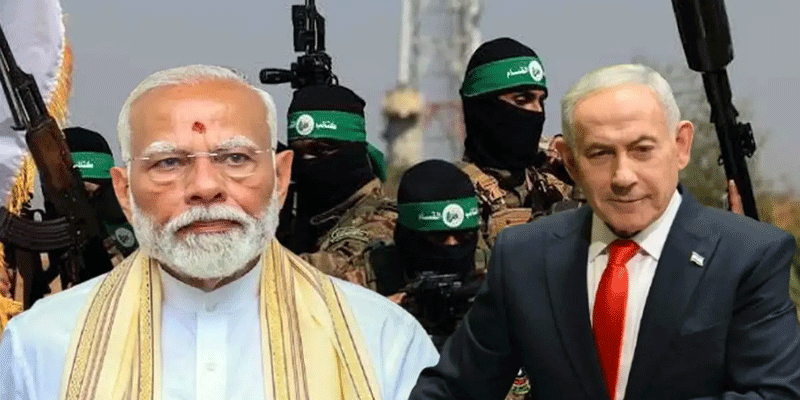
As the world watched developments unfold over the long-standing Gaza conflict, a moment of unexpected diplomacy took center stage. Israeli Prime Minister Benjamin Netanyahu paused a high-stakes security cabinet meeting—one focused on finalizing a ceasefire and hostage release deal under U.S. President Donald Trump’s 20-point Gaza Peace Plan—to speak with India’s Prime Minister Narendra Modi. The conversation, as reported by The Times of Israel, symbolized not only the urgency of the peace effort but also Modi’s rising stature as a trusted voice for stability and conciliation in global affairs.
Often regarded as a steady hand in turbulent times, Modi’s outreach reinforced India’s traditional support for peace through dialogue, even in one of the world’s most volatile regions.
The Call That Interrupted a Crucial Security Meet
According to Netanyahu’s office, the Israeli leader took a brief but significant pause from his cabinet’s deliberations to hold a phone conversation with Modi. The two leaders reportedly discussed the progress achieved under President Trump’s Gaza initiative, which aims to end hostilities and ensure the safe release of hostages.
“Prime Minister Modi congratulated Prime Minister Netanyahu on the agreement reached for the release of all the hostages,” said an official statement from Jerusalem. The call was later publicly acknowledged by both leaders on X (formerly Twitter). Modi wrote, “Called my friend, Prime Minister Netanyahu, to congratulate him on the progress made under President Trump’s Gaza peace plan. We welcome the agreement on the release of hostages and humanitarian aid to Gaza. Reaffirmed that terrorism in any form is unacceptable anywhere in the world.”
Israel’s Prime Minister’s Office also confirmed the exchange, describing it as a gesture that underscored the “deep friendship and mutual respect” between the two nations.
Israel Votes for Ceasefire as the U.S. Mediates
Shortly after the call, Israel’s government voted to approve the proposed ceasefire and hostage release arrangement. The plan—crafted through American mediation—marks the first tangible step toward ending months of violence in Gaza.
As CNN and The Jerusalem Post reported, the Israeli cabinet formally adopted the “outline for the release of all hostages, both living and deceased.” Officials said the truce would take effect immediately. Present at the meeting were U.S. Special Envoy Steve Witkoff and senior advisor Jared Kushner, representing President Trump’s team in the final stages of negotiation.
Under the agreement’s “Phase One,” Israel will begin a limited withdrawal from parts of Gaza in exchange for the release of captives held by Hamas. In return, Hamas negotiator Khalil al-Hayya confirmed that the U.S. had provided “guarantees” ensuring that this phase would mark the complete cessation of warfare.
Trump’s Declaration: ‘A Momentous Breakthrough’
At the White House, President Trump hailed the deal as a diplomatic milestone. “We ended the war in Gaza,” he said, describing it as “a breakthrough people said could never happen.” He announced that all hostages would be freed within days and hinted at an official signing ceremony in Egypt to formalize the agreement. Trump added that the achievement symbolized his administration’s commitment to resolving global conflicts and “bringing wars to a close.”
Diplomacy Rekindled, Hope Renewed
The Netanyahu-Modi call, though brief, reflected the spirit of cooperative diplomacy that global peace efforts desperately need. While the U.S.-brokered ceasefire still faces complex implementation challenges, it stands as a moment where diverse nations—India, Israel, and the U.S.—aligned in the shared pursuit of peace.
As Gaza braces for a fragile calm, the dialogue between Netanyahu and Modi has underscored one essential truth: even amid conflict, a phone call between allies can echo louder than the sounds of war—signaling, perhaps, the dawn of a more peaceful Middle East.
(With agency inputs)