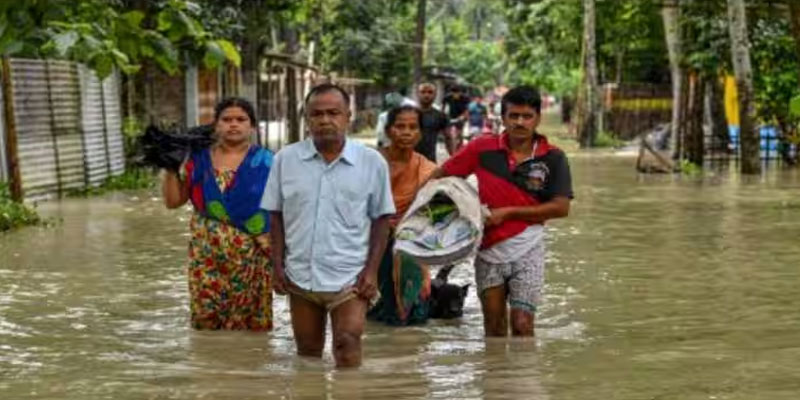
Floodwaters Continue to Wreak Havoc Across Assam
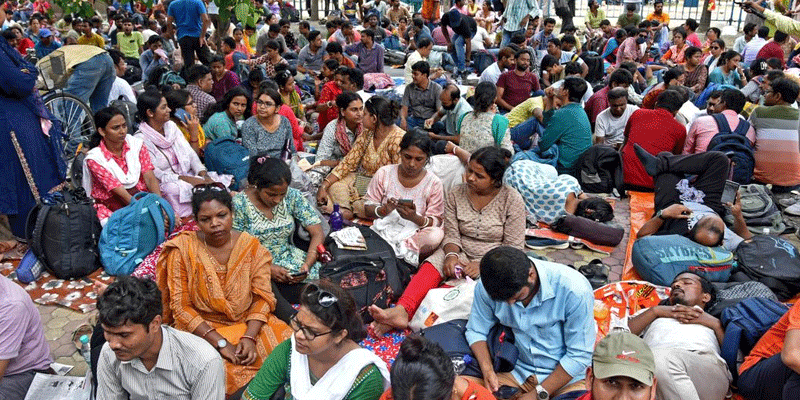
Floodwaters continue to wreak havoc across Assam, submerging hundreds of villages, damaging crops and forcing thousands into relief camps as the state battles one of its worst monsoon disasters this season. Although water levels have started receding in parts of upper Assam, the overall situation remains critical, with the death toll rising to 78 and fresh heavy rainfall forecast threatening to reverse any gains. Authorities have warned that the coming days could witness renewed flooding, embankment breaches and landslides, keeping emergency teams on high alert.
A Recurring Monsoon Challenge Intensifies
Assam's latest flood crisis has been triggered by incessant monsoon rains, overflowing rivers and repeated breaches in flood protection infrastructure. The state's unique riverine geography, dominated by the Brahmaputra and its tributaries, makes it one of India's most flood-prone regions.
Apart from widespread inundation, concerns are mounting over disease outbreaks in relief camps, damaged public infrastructure, loss of livestock and disruption to transportation and essential services.
Death Toll Climbs as Fresh Weather Threat Looms
The latest ASDMA bulletin reported three more deaths over the past 24 hours, taking the overall death toll to 78. Two fatalities were reported from Sivasagar district and one from Golaghat.
Meanwhile, the India Meteorological Department (IMD) has issued an Orange Alert for Tinsukia and forecast heavy to very heavy rainfall across Assam, Arunachal Pradesh and Nagaland between July 30 and August 1. Officials fear that runoff from neighbouring hill states could rapidly raise river levels in vulnerable districts such as Tinsukia, Dhemaji and Lakhimpur, triggering fresh flash floods and waterlogging.
Emergency response teams, including medical and veterinary personnel, remain deployed across affected districts. To support people living outside relief camps, the state government has also established 30 additional relief distribution centres.
Key Figures from the Flood Situation
· Total deaths: 78
· People affected: Over 3 lakhs
· Villages submerged: 551 across 21 revenue circles
· Districts affected: Seven
· People in relief camps: More than 16,500 across 71 camps
· People receiving relief outside camps: Over 72,000
· Crop area damaged: 21,523 hectares
· Livestock washed away: More than 11,000 animals
· Livestock severely affected: Over 17,000 animals
Why the Situation Remains Serious
Even as floodwaters recede in certain areas, experts warn that Assam has entered a more dangerous second phase of the disaster. Fresh rainfall could quickly breach weakened embankments, trigger flash floods and landslides, and worsen waterlogging in low-lying regions.
The crisis also exposes the recurring vulnerabilities of Assam's embankment network, drainage systems and settlement patterns. Annual relief operations have become a routine administrative exercise, yet long-term resilience continues to depend on stronger flood-control infrastructure, improved river management, scientific land-use planning and effective early-warning systems.
With mounting losses to agriculture, livestock and public infrastructure, political pressure is also expected to grow on both the state and Central governments to accelerate relief measures and invest in durable flood-mitigation projects.
Beyond Relief Lies the Challenge of Resilience
Assam's flood emergency underscores the growing intensity of climate-linked disasters and the limitations of relying solely on relief and rehabilitation. While rescue operations remain the immediate priority, the latest rains serve as a reminder that recovery can be undone within hours. Sustainable flood management, stronger embankments, resilient infrastructure and better disaster preparedness are now essential to reducing the state's recurring vulnerability. The coming days will be crucial in determining whether Assam can withstand another spell of heavy rainfall without slipping into an even deeper humanitarian crisis.
(With agency inputs)