PML-N Wins 9 of 13 Mirpur Seats in First Phase
Pakistan Muslim League-Nawaz (PML-N) has emerged as the dominant party in the first phase of the Pakistan-occupied Kashmir (PoK) Assembly elections, winning 9 of the 13 seats in the strategically significant Mirpur Division, according to preliminary results. The Pakistan Peoples Party (PPP) secured the remaining four seats. However, the electoral outcome has been overshadowed by allegations of rigging, violence and procedural irregularities, raising fresh questions about the credibility of the electoral process. Beyond the numbers, the developments are significant because they come at a time when PoK is witnessing growing public discontent over inflation, governance failures and shortages of essential services, making the elections a test of both political legitimacy and administrative credibility.
Elections Amid Public Anger
The first phase of the elections covered the districts of Mirpur, Bhimber and Kotli, where PML-N recorded an impressive performance. Based on preliminary Forms-26 and Forms-27, the party captured key constituencies, including Nakyal, Sehnsa, Charhoi and Khuiratta in Kotli, besides registering victories in Mirpur and Bhimber.
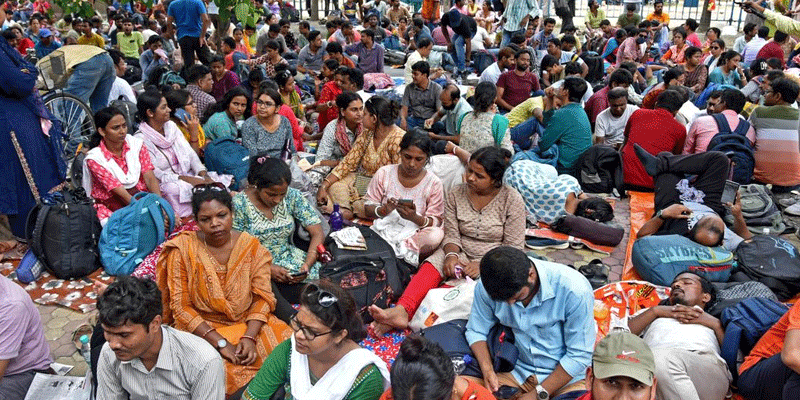
The elections were conducted against the backdrop of prolonged protests across PoK, where residents have demonstrated against soaring inflation, rising electricity tariffs, governance failures and demands for subsidised wheat flour and affordable power. Consequently, the elections evolved into more than a routine political contest—they became a referendum on public dissatisfaction and the government's ability to address everyday economic hardships.
Rigging Allegations Cloud Electoral Credibility
Despite PML-N's strong showing, opposition leaders, particularly from the PPP, have alleged widespread electoral manipulation. They claim that several constituencies were effectively "gifted" to the ruling party through irregularities during counting and result compilation.
These allegations have prevented the election from being viewed as a straightforward democratic mandate. Instead, attention has shifted to the transparency of the process, with demands for recounts and independent scrutiny likely to continue. The credibility of the final outcome will depend less on the seat tally and more on how convincingly these allegations are investigated and addressed.
Strategic Significance for India
For India, the election does not alter its consistent legal and constitutional position that the entire region of the former princely state of Jammu and Kashmir, including Pakistan-occupied Kashmir, is an integral part of India. Nor does the outcome immediately change the security situation along the Line of Control (LoC).
However, the political implications are strategically relevant. A stronger PML-N presence may allow Islamabad to project greater administrative stability in PoK and strengthen coordination between the federal government and the local administration. This could help Pakistan present an image of political normalcy in international forums despite continuing public unrest.
At the same time, persistent allegations of rigging, governance failures and public dissatisfaction provide India with evidence to highlight democratic deficits and governance challenges in PoK. The continuing unrest also suggests that underlying socio-economic grievances remain unresolved, limiting Pakistan's ability to claim lasting political stability in the region.
The Road Ahead: Stability or Continuing Volatility?
The results remain preliminary, and political uncertainty is likely to continue if opposition parties intensify legal challenges and demands for electoral review. Even if PML-N secures formal control of the Assembly, the broader question is whether it can restore public confidence and effectively address the economic and governance issues that triggered widespread protests.
Beyond Electoral Victory Lies the Real Challenge
The first phase of the PoK elections appears to have strengthened PML-N's political position, but it has not ended the deeper crisis of governance and public trust. For Pakistan, the victory may offer short-term political consolidation and a stronger administrative narrative. For India, however, the developments reinforce that the region continues to face political instability, contested democratic processes and unresolved public grievances. Ultimately, the true measure of the election will not be the number of seats won, but whether it leads to credible governance, institutional legitimacy and lasting stability in a region that remains strategically sensitive.
(With agency inputs)