Context and Election Snapshot
West Bengal has long stood apart in India’s political imagination—steeped in intellectual tradition, cultural pride, and fiercely independent electoral behavior. From Left Front dominance to the rise of the Trinamool Congress (TMC), the state has repeatedly rewritten political narratives. The 2026 Assembly elections, however, mark perhaps its most dramatic pivot yet.
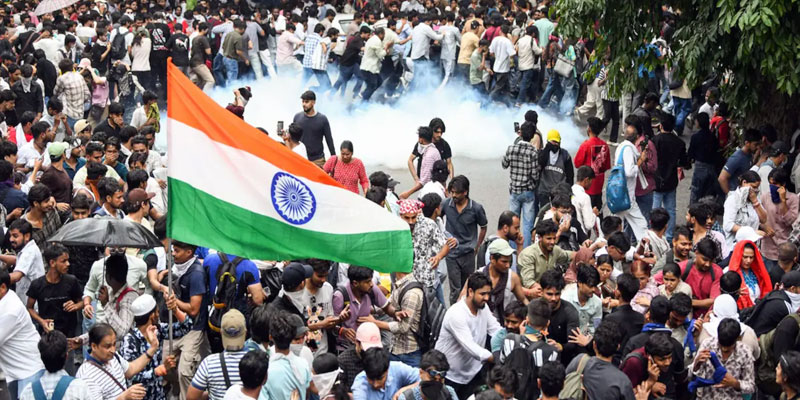
Early trends quickly solidified into a decisive mandate: the Bharatiya Janata Party (BJP) surged past the halfway mark in the 294-seat Assembly, securing roughly 205–206 seats and ending over a decade of TMC rule. The shockwave extended beyond Bengal. The BJP retained Assam, while significant shifts in Kerala and Tamil Nadu suggested a broader churn in India’s political landscape. Together, these results painted a picture of a country in transition—electorally and ideologically.
The Bhabanipur Shock: Symbolism Meets Strategy
Initially leading during early counting rounds, Banerjee’s advantage eroded as later EVM counts tilted toward the BJP. The reversal underscores not just a tactical loss, but a deeper shift in voter sentiment. Bhabanipur, with its diverse, urban electorate, has historically mirrored Kolkata’s political pulse. Its swing toward the BJP signals the party’s penetration into urban strongholds once considered TMC bastions.
The scale of reversal—from a 58,000-vote victory in the 2021 bypoll to a 15,000-vote defeat—reflects cumulative dissatisfaction. Allegations of corruption, governance lapses, and economic concerns appear to have chipped away at the TMC’s once-formidable support base.
Modi’s Message: A Mandate Beyond Bengal
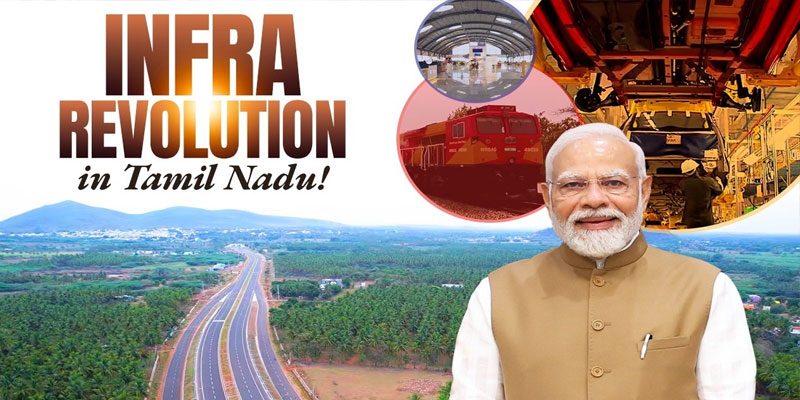
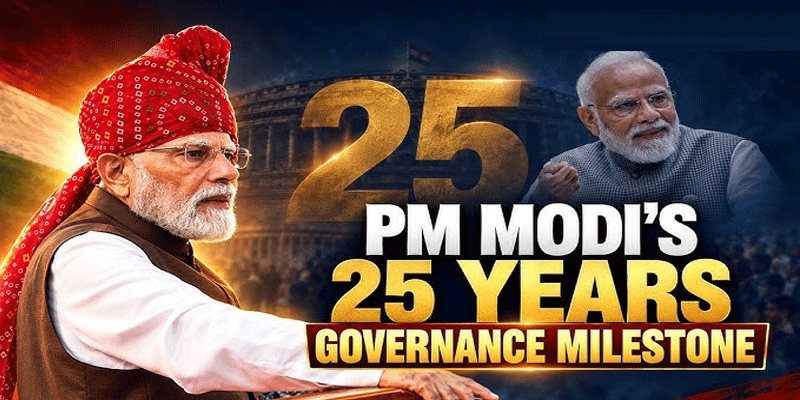
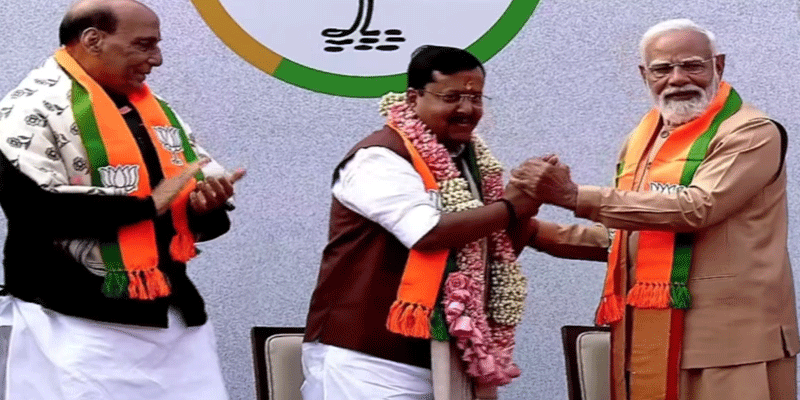
Prime Minister Narendra Modi framed the results as a watershed moment. Declaring that “the lotus blooms in West Bengal,” he described the outcome as a triumph of “people’s power” and governance-focused politics. His messaging emphasized continuity—linking the victory to welfare schemes, development guarantees, and national priorities.
Modi credited high voter turnout to what he called “fearless voting,” suggesting a breakdown of intimidation-driven politics. He also reiterated commitments to implement central schemes like national health insurance and pursue citizenship measures tied to the Citizenship Amendment Act (CAA).
Importantly, Modi positioned Bengal’s verdict within a larger national arc—arguing that victories across eastern and southern states would accelerate India’s development trajectory. The narrative was clear: Bengal is not an isolated win, but part of a broader consolidation.
The Electoral Battle: Realignment and Resistance
The BJP’s sweep reflects more than anti-incumbency. Its gains in Muslim-majority areas and traditional TMC strongholds suggest a complex realignment that goes beyond simple polarization narratives. Organizational expansion, targeted campaigning, and leadership projection—particularly through Adhikari—played a critical role.
For the TMC, the loss exposes vulnerabilities in its grassroots machinery and patronage networks. The erosion appears gradual rather than sudden, driven by governance fatigue and shifting aspirations among voters.
A Turning Point in Eastern Politics
The 2026 Bengal verdict is not merely a change in government—it represents a structural political realignment. The BJP transitions from challenger to incumbent, while the TMC faces an existential moment requiring reinvention. Bhabanipur stands as both symbol and signal: a reminder that no stronghold is permanent.
As Modi ties this mandate to a national vision, the real test will lie in governance delivery. For Bengal, the story is just beginning—one that could redefine the balance of power in eastern India for years to come.
(With agency inputs)