83 New Patients Monthly, One Death Every Three Days
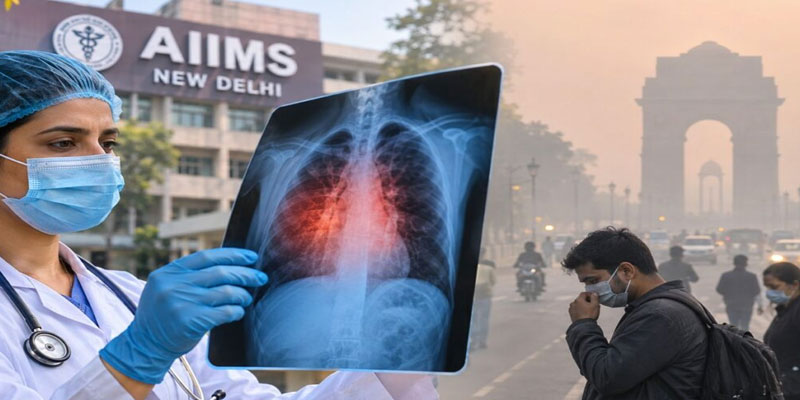
Delhi has recorded 6,581 lung-cancer cases across three major government hospitals between January 2020 and July 2026, averaging approximately 83 new patients every month. Meanwhile, four government hospitals reported 913 deaths during the period, equivalent to nearly one death every three days. The figures, obtained through Right to Information (RTI) applications, have renewed concerns about the possible contribution of prolonged air pollution to Delhi’s growing cancer burden.
What the Hospital Figures Reveal
The RTI responses covered AIIMS, Ram Manohar Lohia (RML) Hospital, Safdarjung Hospital and the Delhi State Cancer Institute (DSCI). The key findings include:
· AIIMS: 4,860 cases and 158 deaths between January 2020 and March 2026.
· DSCI: 1,613 cases and 354 deaths up to July 2026, including 351 women diagnosed during the period.
· RML Hospital: 108 cases, including 47 women, and eight deaths.
· Safdarjung Hospital: 393 deaths, although its total number of cases was not disclosed.
Is Air Pollution Responsible?
Air pollution is a scientifically established lung-cancer risk factor, but it is not the only cause. The International Agency for Research on Cancer (IARC) classifies outdoor air pollution and particulate matter as carcinogenic to humans.
Fine particles such as PM2.5 can penetrate deep into the lungs, potentially causing cellular damage and increasing cancer risk over prolonged exposure. Importantly, lung cancer can also develop in non-smokers.
Other contributing factors include:
· Tobacco consumption and second-hand smoke.
· Industrial and occupational exposure to hazardous substances.
· Genetic susceptibility and certain previous lung diseases.
The RTI data, however, do not establish that pollution caused these individual cases. None of the hospitals provided the requested breakdown of patients who had never smoked.
Clean Air Is Also Cancer Prevention
AIIMS has initiated the AIRCARE study to investigate the relationship between prolonged air-pollution exposure and lung cancer. Its findings could provide valuable evidence for future public-health interventions. Delhi needs sustained action against vehicle emissions, industrial pollution, construction dust and crop-residue burning, alongside improved cancer screening and early diagnosis.
The message is unmistakable: clean air is not merely an environmental priority; it is an essential investment in preventing life-threatening diseases.
(With agency inputs)