Oil Surges as War Deepens
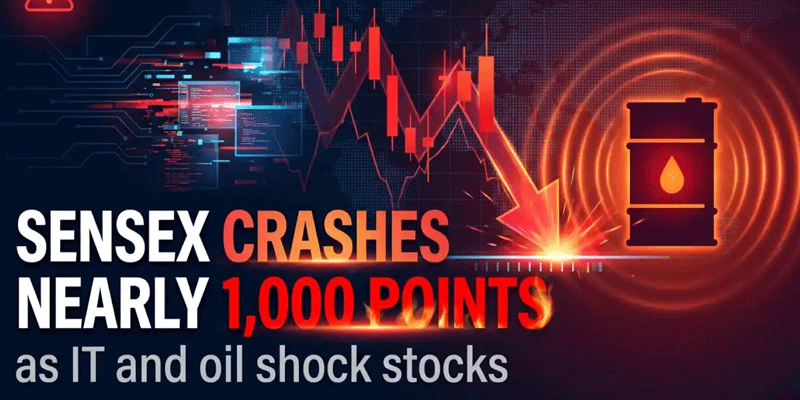
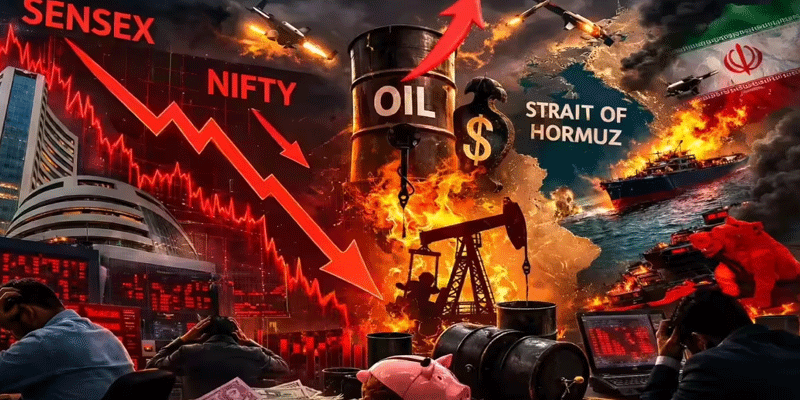
As Iran intensifies attacks across the Gulf, global oil markets have reacted sharply, with Brent crude crossing $119 per barrel—its highest level in months. At the same time, Israel has signaled a pause in strikes on Iran’s critical gas infrastructure, particularly the South Pars field, following pressure from the United States. This dual development captures the fragile balance of escalation and restraint now shaping the conflict, even as the broader crisis continues to expand across energy, military, and geopolitical fronts.
Israel Steps Back, But Risks Persist
Israeli Prime Minister Benjamin Netanyahu has confirmed that further strikes on Iran’s South Pars gas field will be halted, responding to direct intervention from Donald Trump. Trump’s warning was explicit: any renewed Israeli attack would only be tolerated if Iran escalates further against Gulf energy assets, in which case the United States itself could intervene decisively.
Despite this pause, the strategic landscape remains volatile. Iran continues to demonstrate its reach through missile and drone strikes on regional energy infrastructure and shipping lanes. The message is clear—Tehran retains the ability to impose economic costs globally, even without direct confrontation over its most critical gas reserves.
Energy Markets Under Structural Stress
The surge in oil prices reflects more than immediate supply fears—it signals a deepening structural crisis. Attacks on oil and gas facilities across the Gulf, combined with threats to maritime routes, have injected a sustained risk premium into global energy markets. This is not merely about lost barrels, but about uncertainty: traders are pricing in the possibility of prolonged disruption across one of the world’s most vital energy corridors.
The impact extends far beyond the Gulf. Energy-importing regions, including South Asia, face rising costs, inflationary pressures, and potential supply constraints. As the conflict increasingly targets infrastructure rather than just military assets, the global economy becomes more exposed to its ripple effects.
War Reaches Society and Daily Life
The conflict’s influence is no longer confined to battlefields and markets—it is reshaping daily life in the Gulf. Countries like the UAE, Kuwait, and Qatar have imposed restrictions on large public gatherings during Eid, moving prayers indoors due to security concerns. This unprecedented step reflects the growing fear of missile or drone attacks on civilian spaces.
Such measures highlight how deeply the war has penetrated the social fabric. Events traditionally marked by openness and community are now conducted under heightened security, symbolizing a region living under constant threat.
Smaller States Navigate Strategic Pressure
Beyond the Gulf, the war’s reach is influencing decisions in distant regions. Sri Lanka, for instance, has refused a US request to station military aircraft on its soil, signaling a cautious approach to avoid entanglement. By maintaining ties with both Washington and Tehran, Colombo is attempting to preserve strategic autonomy while navigating a highly polarized environment.
This reflects a broader trend: smaller nations are increasingly wary of being drawn into great-power rivalries linked to the conflict, particularly as its scope widens.
A Crisis Beyond the Battlefield
The crossing of $119 oil, Israel’s tactical restraint, and Iran’s continued strikes together illustrate a conflict that has evolved into a systemic crisis. It now spans energy markets, civilian life, and international diplomacy, affecting countries far beyond the immediate war zone.
Even if certain escalatory actions are paused, the underlying dynamics remain unresolved. As long as energy infrastructure and critical shipping lanes remain targets, the global economy will continue to bear the cost. The challenge ahead is not just de-escalation, but restoring stability to systems that the war has already profoundly disrupted.
(With agency inputs)