Policy Continuity as Repo Rate Remains at 5.25%
The Reserve Bank of India (RBI) on Wednesday kept the repo rate unchanged at 5.25%, maintaining policy continuity as rising geopolitical tensions and global economic uncertainties cloud the outlook. The decision, taken unanimously by the six-member Monetary Policy Committee (MPC) after its three-day meeting, reflects the central bank's preference for stability over aggressive policy action. While the domestic economy continues to exhibit resilience, the escalating US-Iran conflict and its potential impact on global energy markets have prompted the RBI to adopt a cautious approach rather than risk unsettling financial conditions.
A Delicate Balance Between Growth and Inflation
The repo rate—the interest rate at which the RBI lends short-term funds to commercial banks—is its primary monetary policy tool for managing inflation and supporting economic growth. Over the past few years, the central bank has navigated multiple global disruptions, including the pandemic, supply chain bottlenecks, inflationary pressures and geopolitical conflicts, by carefully calibrating interest rates.
With inflation gradually moderating and economic growth remaining relatively robust, expectations had emerged that the RBI might eventually consider easing monetary policy. However, the central bank has consistently maintained that any policy shift must be guided by evolving economic conditions rather than market expectations. The latest decision reinforces that philosophy.
Domestic Resilience Meets Global Uncertainty
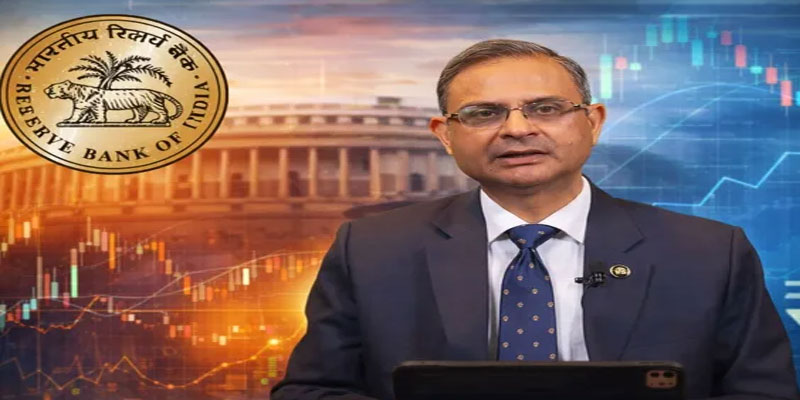
RBI Governor Sanjay Malhotra emphasised that India's domestic economic activity has remained resilient despite heightened geopolitical tensions. Strong consumption, steady investment activity and improving macroeconomic indicators have provided confidence that the economy is capable of sustaining growth without additional monetary stimulus.
Yet, the external environment remains a significant concern. The continuing US-Iran conflict has intensified uncertainty across global financial and commodity markets. A prolonged confrontation could drive crude oil prices higher, increase shipping and insurance costs, widen India's current account deficit and place renewed pressure on the rupee. Since India imports nearly 85% of its crude oil requirements, any sustained increase in energy prices could quickly feed into transportation costs, manufacturing expenses and food inflation.
Against this backdrop, the RBI appears determined to preserve monetary flexibility rather than prematurely reduce interest rates and risk fuelling imported inflation.
What the Decision Means for Borrowers and Markets
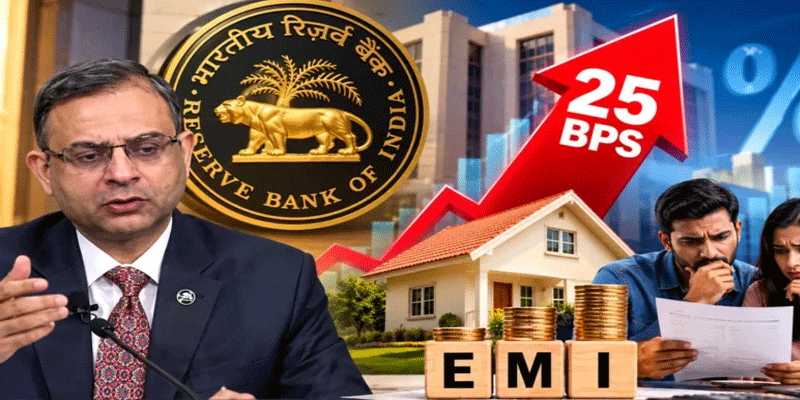
For borrowers, the immediate impact is limited. Home loan, vehicle loan and business loan EMIs linked to the repo rate are expected to remain unchanged, offering stability but little additional relief. Businesses, too, can continue planning investments without worrying about sudden changes in borrowing costs.
Financial markets interpreted the unanimous MPC decision as a signal of policy consistency. Investors generally view such consensus as an indication that the central bank remains confident in its assessment of domestic fundamentals while staying alert to external vulnerabilities. The RBI's stance also strengthens its credibility by reinforcing its commitment to inflation management and financial stability.
Stability Over Stimulus Remains the RBI's Priority
The RBI's decision to maintain the repo rate at 5.25% is more than a routine monetary policy announcement—it is a calculated affirmation of macroeconomic prudence. At a time when geopolitical conflicts threaten to disrupt global trade, energy supplies and financial markets, the central bank has chosen to safeguard economic stability rather than pursue short-term growth through lower interest rates.
India's domestic economy continues to display encouraging resilience, but the risks arising from imported inflation, volatile oil prices and currency pressures remain substantial. By keeping policy unchanged, the RBI has preserved room to respond to future shocks while reinforcing confidence in its inflation-targeting framework. If global tensions ease, the central bank may gain greater flexibility in the months ahead. Until then, the message is unmistakable: safeguarding stability and preserving economic credibility take precedence over premature monetary easing.
(With agency inputs)