OMCs Find No Evidence Of 500 Ppm Chloride Contamination
State-run oil marketing companies (OMCs) have completed a nationwide testing drive on E20 petrol, finding no evidence of widespread high-chloride or water contamination. More than 160 retail-outlet samples showed chloride levels between 0 and 3 ppm, sharply contradicting claims of contamination reaching several hundred ppm, including 500 ppm.
Why The E20 Controversy Emerged
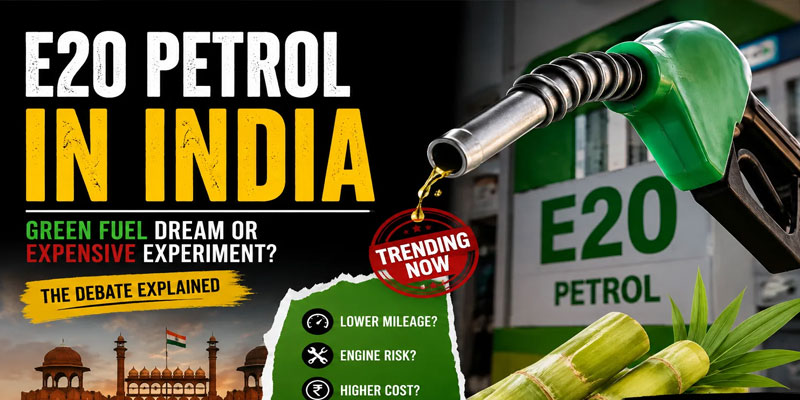
E20 petrol contains 20% ethanol and 80% gasoline and is central to India’s ethanol-blending programme. The policy aims to reduce crude-oil imports, cut emissions and create demand for agricultural feedstock and distillery production.
Concerns emerged after media reports and social-media claims alleged that contaminated E20 could contain dangerously high chloride and moisture levels, potentially damaging engines and fuel systems. Given the rapid expansion of E20 across India, such allegations immediately raised concerns about consumer safety and confidence.
Nationwide Tests Show Very Low Chloride Levels
The expanded surveillance produced reassuring results. More than 100 refinery petrol samples recorded chloride levels at or below 1 ppm, while ethanol samples from 80 distilleries remained below 3 ppm.
More than 80 E20 samples collected from depots and terminals also recorded chloride below 3 ppm. At retail outlets, over 160 samples fell within the 0–3 ppm range.
Two Isolated Cases Prompt Immediate Action
The testing did identify two exceptions. Chloride readings of 4.8 ppm and 4.1 ppm were detected at two retail outlets. Sales at both locations were immediately suspended, followed by investigations and corrective measures before supplies were restored.
On the water-contamination issue, inspections of underground storage tanks across roughly 90,000 retail outlets have so far found no evidence of widespread water ingress.
OMCs have also deployed mobile fuel-quality laboratories and are sending samples to independent laboratories for additional validation.
What The Findings Mean for E20
The available evidence points towards isolated quality-control issues rather than a systemic E20 failure. The overwhelming majority of tested samples recorded chloride levels far below the figures cited in contamination reports.
Nevertheless, the episode exposes vulnerabilities in fuel storage, transportation and ethanol blending, particularly because moisture and material compatibility must be carefully managed throughout the supply chain.
More importantly, the controversy demonstrates how quickly unverified technical claims can undermine public confidence in a major national energy policy.
Quality Assurance Must Now Build Public Trust
The government's intensified monitoring provides an important safeguard, but reassurance must be supported by continued transparency. Publishing regular aggregated testing data, promptly investigating isolated deviations and clearly communicating technical findings will be essential.
The latest results offer no evidence of widespread 500 ppm chloride or water contamination in E20 petrol. But the larger lesson is equally important: maintaining fuel quality is only half the challenge; maintaining consumer confidence through credible, transparent and sustained quality assurance will determine the long-term success of India’s E20 transition.
(With agency inputs)