Court Verdict Brings Curtain Down on High-Profile Sports Controversy
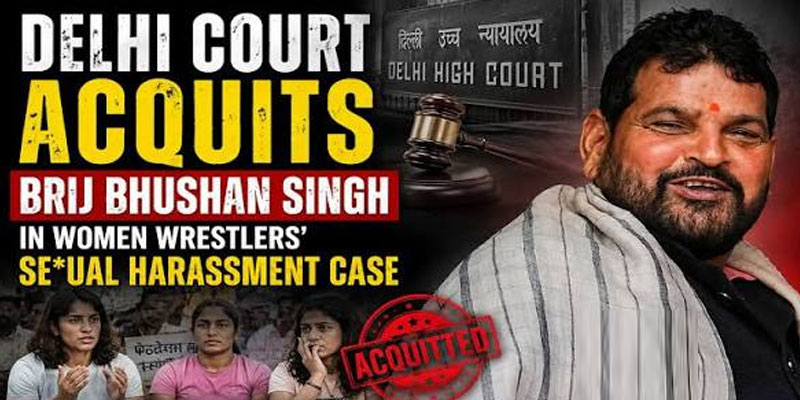
Brij Bhushan Sharan Singh has been acquitted by a Delhi court in the sexual harassment case filed by women wrestlers, bringing to a close one of the most closely watched controversies in Indian sports. The verdict, delivered after more than two years of legal proceedings, marks the conclusion of the trial at the lower court level. The Rouse Avenue Court acquitted former Wrestling Federation of India (WFI) chief Brij Bhushan and WFI Assistant Secretary Vinod Tomar, holding that the prosecution had failed to establish the charges beyond reasonable doubt. While the judgment offers legal relief to Singh, the case has already left a lasting impact on debates surrounding sports governance, athlete welfare and institutional accountability in India.
How the Case Began: Allegations Spark Nationwide Protest
The controversy first erupted in early 2023, when several prominent women wrestlers accused Brij Bhushan Sharan Singh of sexual harassment and abuse of authority during his tenure as the Wrestling Federation of India president.
The allegations soon evolved into a nationwide movement after celebrated wrestlers, including Sakshi Malik, Vinesh Phogat, and Bajrang Punia, staged prolonged protests at Delhi's Jantar Mantar in April 2023. Their demonstrations drew widespread public support and transformed what began as a legal complaint into a broader campaign demanding transparency, accountability and reforms within Indian sports administration.
The protests also intensified scrutiny of the government's response, with critics questioning delays in legal action and the influence wielded by powerful sports administrators.
The Legal Journey: From FIR to Final Verdict
The legal process formally commenced on April 28, 2023, when the Delhi Police registered First Information Reports (FIRs) based on complaints filed by six women wrestlers.
In June 2023, investigators submitted a chargesheet against Brij Bhushan and Vinod Tomar. The trial began in July 2024 and was conducted in camera, given the sensitive nature of the allegations.
During the proceedings, the prosecution presented testimony from 32 witnesses, including complainants and officials associated with the Wrestling Federation of India and the Sports Authority of India. After hearing arguments over an extended period, the court reserved its judgment in July 2026 before pronouncing its verdict on August 3, 2026, acquitting both accused due to insufficient evidence to meet the criminal standard of proof.
Why the Verdict Extends Beyond the Courtroom
Legally, the acquittal represents a significant victory for Brij Bhushan Sharan Singh, who has consistently denied all allegations throughout the proceedings.
However, the larger significance of the case extends far beyond the courtroom. The wrestlers' protests fundamentally altered the national conversation around athlete safety, workplace conduct and governance within sports federations. They highlighted concerns about the concentration of administrative power, the effectiveness of grievance redressal mechanisms and the challenges faced by athletes seeking institutional justice.
The controversy also triggered administrative upheaval within the Wrestling Federation of India and attracted attention from the Supreme Court, making it one of the most consequential athlete-led movements in recent Indian sporting history.
Latest Developments and Future Implications
Following the verdict, Brij Bhushan welcomed the judgment, describing it as a vindication of his position. The acquittal effectively concludes the criminal trial at the lower court level, although the legal process could continue if the judgment is challenged before a higher court.
Beyond the legal outcome, the case has prompted renewed discussions on safeguarding athletes, strengthening complaint mechanisms and ensuring greater transparency in sports governance.
A Verdict Ends the Trial, But Questions Remain
The acquittal of Brij Bhushan Sharan Singh closes a defining chapter in Indian sports history, but it does not erase the institutional questions the controversy brought into public focus. Regardless of the trial's outcome, the protests led by India's leading wrestlers exposed important concerns about accountability, gender safety and governance within sporting bodies. As Indian sport moves forward, the lasting legacy of this case will depend less on the courtroom verdict and more on whether meaningful reforms are implemented to strengthen athlete protection, build institutional trust and ensure that future grievances are addressed with transparency, fairness and credibility.
(With agency inputs)