Tata Steel Raises Alarm Over Chinese Imports
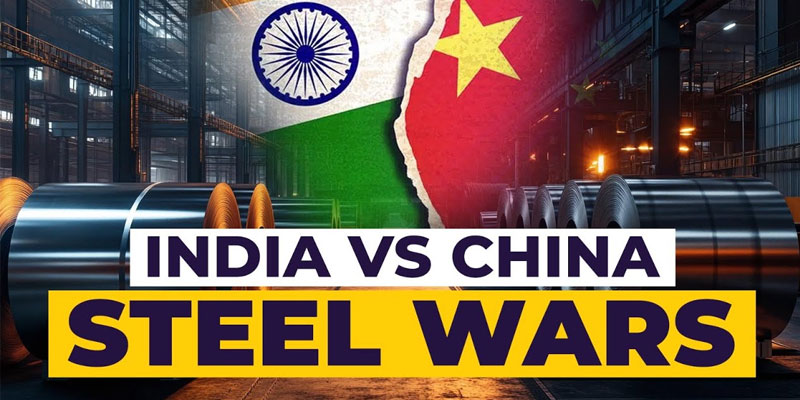
Chinese steel imports remain a threat to India's steel industry, Tata Steel CEO T V Narendran has warned, adding that domestic producers are continuing discussions with the government on measures to protect the sector. His remarks highlight growing concerns over China's excess steel production, competitive pricing and its impact on Indian manufacturers investing heavily in expanding domestic capacity. The warning comes at a crucial time when India is seeking to strengthen its manufacturing ecosystem and reduce dependence on imports.
Chinese Oversupply Intensifies Competitive Pressure
Narendran argued that Indian steelmakers investing substantial capital in new production facilities should not be unfairly affected by cheaper Chinese imports. Although existing government measures have helped restrict import flows, China's enormous export surplus continues to threaten domestic pricing and profitability.
Trade figures underline the concern. China accounted for nearly one-third of India's finished-steel imports during the first half of the current financial year, making it the country's largest source of such imports.
Domestic producers fear that sustained inflows of competitively priced steel could weaken their market position, discourage fresh investments and undermine India's ambition to become a major global steel manufacturing hub.
Government Faces a Difficult Policy Balancing Act
· Construction and infrastructure development.
· Automobile manufacturing and engineering.
· Capital goods and industrial equipment.
India has recommended a provisional 12% safeguard duty on selected steel products for 200 days. However, the measure remains subject to further proceedings and stakeholder comments.
While steelmakers favour stronger protection against inexpensive imports, policymakers must ensure that trade restrictions do not unnecessarily increase input costs for downstream industries.
Expansion Plans Face Cost and Market Challenges
Despite these uncertainties, Tata Steel intends to increase its annual production capacity to 40 million tonnes between 2033 and 2035. Narendran has indicated that its existing facilities could eventually support capacity of 50 million tonnes.
However, rising iron-ore prices in India and dependence on imported coking coal, primarily from Australia, are adding to production costs. These pressures could further squeeze margins when international steel prices remain subdued.
Separately, Tata Steel has sought financial assistance from the Dutch government to support its green transition in the Netherlands, with discussions continuing.
Protecting Domestic Steel Is Protecting India's Industrial Future
The concerns raised by Tata Steel reflect a wider challenge confronting India's steel industry: expanding production while remaining globally competitive. Chinese oversupply, volatile raw-material prices and expensive decarbonisation investments are creating multiple pressures. India needs predictable trade policies, fair competition and improved domestic raw-material security. Protecting manufacturers from unfairly priced imports should not mean restricting healthy competition. Ultimately, a stable and competitive steel ecosystem will be essential for infrastructure development, manufacturing expansion and India's long-term industrial ambitions.
(With agency inputs)