'Work Fearlessly,' Says Gyanendra Pratap Singh to CRPF Personnel
Director General of the Central Reserve Police Force (CRPF), Gyanendra Pratap Singh, has urged CRPF personnel to discharge their responsibilities fearlessly while assuring them of complete institutional support for every bona fide decision taken in the line of duty. Addressing an investiture ceremony, Singh said that whether deployed in operational battalions or law-and-order assignments, every legitimate action taken in good faith would have the backing of the force's leadership. He also affirmed that he would take responsibility wherever accountability was required, reinforcing confidence among personnel at a time when the force is facing intense public scrutiny.
RAF Under Spotlight After Delhi Protest
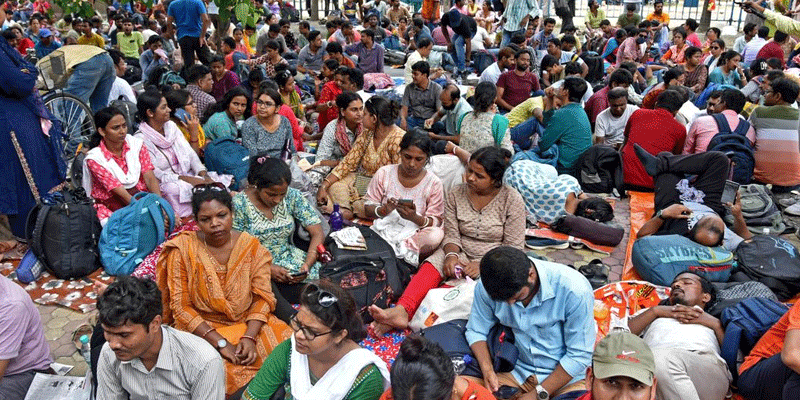
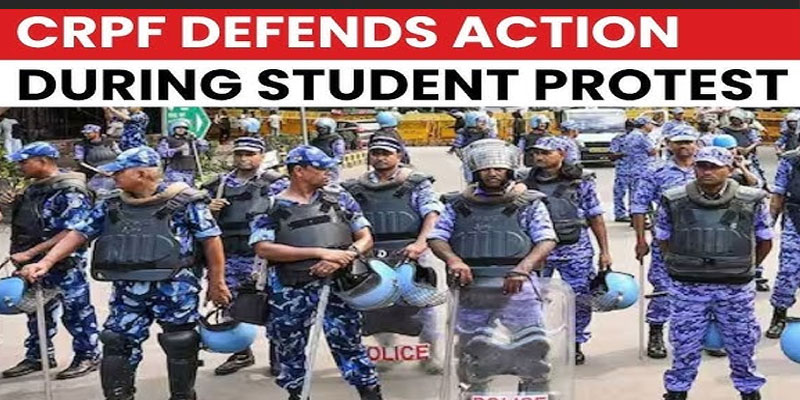
Singh's remarks come against the backdrop of allegations surrounding the deployment of the Rapid Action Force (RAF) during the July 20 anti-NEET paper leak protests in Delhi. The RAF, a specialised wing of the CRPF, is tasked with handling riots, violent demonstrations and other sensitive law-and-order situations through calibrated crowd-control measures.
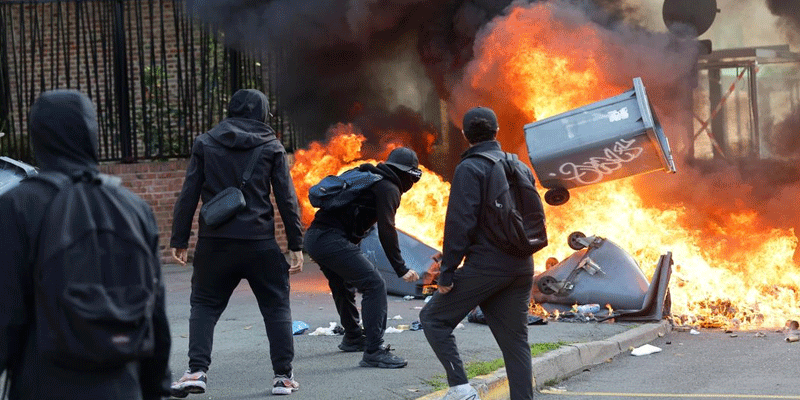
Following clashes between protesters and security personnel, allegations surfaced that pellet guns were used during the operation. The claims triggered widespread debate over the proportionality of force employed and whether standard operating procedures (SOPs) governing crowd-control measures were strictly followed.
Given the CRPF's critical role in maintaining internal security across the country, any allegation involving excessive force naturally attracts significant public and institutional attention.
Internal Review Continues
The CRPF has initiated a detailed post-operation assessment to ascertain the facts surrounding the Delhi incident. The review reportedly includes examination of video footage, deployment records, operational logs and statements from personnel present during the protest.
While Singh's statement strongly reassures personnel acting within the framework of the law, the internal scrutiny remains active. Reports suggest authorities are evaluating whether the RAF followed the prescribed force gradient before escalating crowd-control measures and whether the alleged use of pellet guns, if established, was authorised under existing SOPs.
Officials have indicated that any formal court of inquiry would depend on whether the ongoing assessment identifies violations of operational guidelines. Reports also suggest that restrictions on certain riot-control equipment have been introduced after the incident, signalling a broader review of crowd-management protocols.
Public Debate Without a Unified Political Response
Although the controversy has generated significant public discussion, there has been no consolidated or officially documented opposition position directly addressing Singh's remarks. Instead, the debate has largely revolved around allegations made by protesters, eyewitness testimonies and media reports questioning whether the force used proportionate methods during the demonstration.
The CRPF, meanwhile, has maintained that its official position will be based on the findings of the ongoing internal assessment.
What Singh's Message Implies
· Reinforces confidence among field personnel performing lawful duties.
· Signals strong institutional backing for decisions taken in good faith.
· Emphasises that leadership will shoulder responsibility where required.
· Simultaneously preserves the importance of accountability through SOP-based review.
· Seeks to maintain morale while allowing an impartial inquiry into the Delhi incident.
· Reflects the CRPF's effort to balance operational effectiveness with public trust and transparency.
Leadership, Accountability and Public Trust Must Go Together
Gyanendra Pratap Singh's statement sends a carefully calibrated message at a sensitive moment. By assuring personnel that the leadership stands firmly behind lawful actions while allowing independent scrutiny of operational conduct, the CRPF seeks to strike a balance between morale and accountability. As the internal review progresses, its findings will not only determine responsibility in the Delhi protest case but also shape future crowd-control practices. Ultimately, public confidence in security forces depends not only on decisive action during crises but also on transparent investigations and strict adherence to established procedures.
(With agency inputs)