Government’s Action Signals Accountability, But Questions Remain
The government’s reported decision to terminate 47 National Testing Agency (NTA) officials marks the most visible administrative response yet to the NEET paper leak controversy. While the move is being projected as a decisive step to restore confidence in India’s examination system, it has failed to pacify protesting students and activists, who continue to demand a transparent investigation, systemic reforms and the resignation of Union Education Minister Dharmendra Pradhan. The action, coupled with proposed legal proceedings against some officials and stricter anti-paper leak measures, reflects the Centre’s attempt to demonstrate accountability amid one of the biggest credibility crises to hit the country’s competitive examination framework.
From Examination Irregularity to National Debate
The controversy began after allegations that the NEET-UG examination paper had been leaked before the test, triggering widespread outrage among students, parents and educators. As investigations progressed, the issue evolved beyond a single examination into a broader debate over the integrity of India's recruitment and entrance examination ecosystem. Questions were raised over repeated examination irregularities, inadequate security protocols and the effectiveness of the National Testing Agency, which conducts several high-stakes examinations across the country.
The incident also intensified political criticism, with opposition parties accusing the government of failing to safeguard the future of millions of aspirants. The controversy soon transformed into a major political and administrative challenge.
Protests Continue Despite Administrative Crackdown
The Centre's reported removal of 47 NTA officials is being viewed as part of a wider restructuring of the agency. Reports indicate that legal proceedings may also be initiated against certain officials found responsible for lapses, while internal reforms are expected to strengthen examination security and accountability.
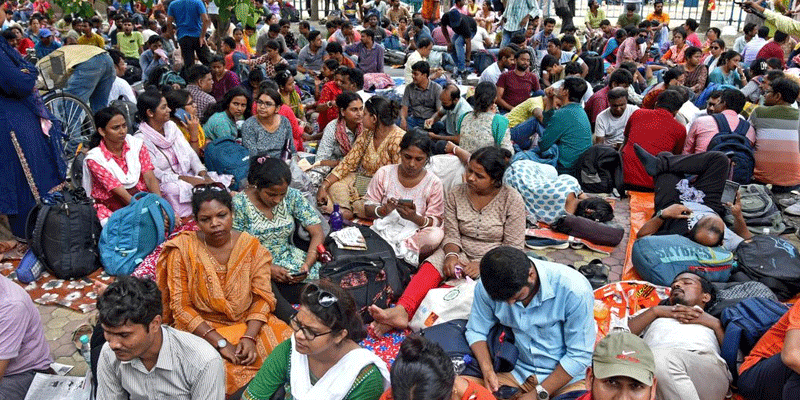
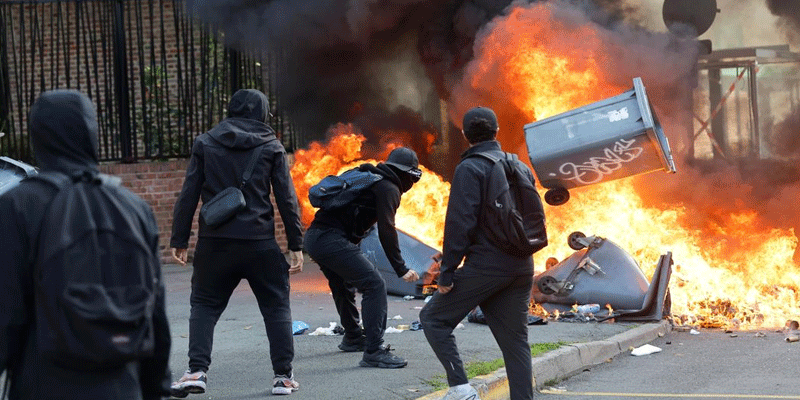
However, the protests led by the Cockroach Janta Party (CJP) have continued unabated. Demonstrations at Delhi's Jantar Mantar and other locations have entered several weeks, with protesters demanding an independent and transparent investigation, comprehensive reforms in the examination system and the resignation of Education Minister Dharmendra Pradhan. The agitation has also reached the judiciary after allegations of excessive police action during demonstrations.
Alongside administrative action, the Union Cabinet has reportedly approved amendments to the anti-paper leak law. The proposed changes seek to impose harsher punishments, higher financial penalties and the establishment of fast-track courts to expedite cases involving organised examination fraud. These measures aim to deter future malpractice and strengthen institutional safeguards.
Will Dharmendra Pradhan Resign?
Despite mounting political pressure, there is no official indication that Dharmendra Pradhan is likely to resign. The government has consistently defended the minister, arguing that the investigation is focused on identifying institutional failures and individual culpability rather than assigning political responsibility. By initiating disciplinary action against NTA officials and introducing legislative reforms, the Centre appears determined to project those corrective measures—not ministerial resignation—constitute its response to the crisis.
Nevertheless, opposition parties and protest groups continue to maintain that political accountability should accompany administrative reforms. Whether the demand for Pradhan's resignation gathers further momentum will largely depend on future investigative findings, judicial proceedings and the government's success in restoring public confidence.
Restoring Trust Will Be the Real Examination
The dismissal of dozens of NTA officials sends a strong message that accountability cannot be ignored, but it represents only the beginning of a much larger reform process. Public confidence in India's examination system will not be restored through disciplinary action alone. Transparent investigations, technological safeguards, institutional autonomy, stringent enforcement of anti-cheating laws and consistent administrative reforms will ultimately determine whether this crisis becomes a turning point or merely another episode in the recurring challenge of examination integrity. For the government, the real test now lies not in managing the controversy, but in rebuilding trust among millions of students whose futures depend on a fair and credible examination system.
(With agency inputs)