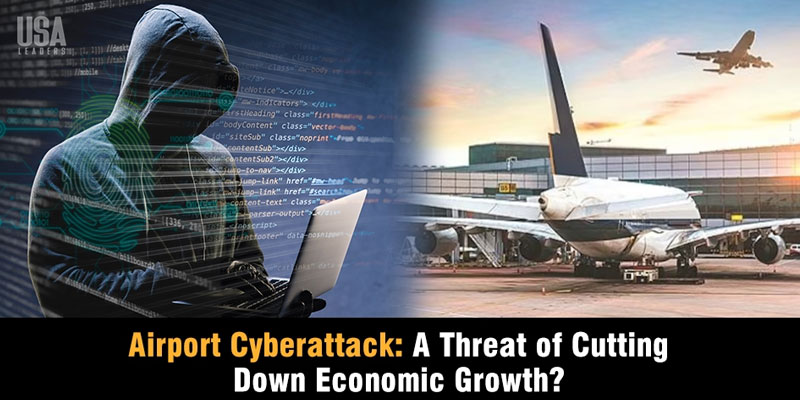
Airports in Turmoil
A large-scale cyberattack targeting airline check-in and boarding systems triggered chaos at several major European airports on Saturday, disrupting flight operations and inconveniencing thousands of passengers. London’s Heathrow, Berlin, and Brussels airports reported widespread delays and cancellations as the systems of Collins Aerospace, a subsidiary of RTX that powers passenger processing, were crippled. The incident highlights the growing vulnerability of aviation infrastructure to cyber threats, raising urgent questions about resilience and preparedness.
Extent of the Disruption
At Brussels Airport, at least 10 flights were cancelled and 17 delayed by over an hour. The airport admitted it had been forced to revert to manual check-in and baggage handling, a time-consuming process in one of Europe’s busiest hubs. London’s Heathrow Airport—Europe’s largest—also issued warnings of delays linked to the outage, urging travelers to verify flight status before arrival. Berlin Airport reported unusually long queues and extended waiting times.
While Frankfurt and Zurich airports remained unaffected, aviation officials across the continent expressed concern over how swiftly the disruption spread. RTX confirmed that the impact was limited to electronic check-in and baggage systems but acknowledged that the shift to manual procedures had created significant bottlenecks.
Echoes of Past Cyber Incidents
This is not the first time the aviation sector has suffered due to cyber or IT-related failures. In 2017, a global ransomware attack (WannaCry) disrupted systems worldwide, grounding flights in several countries. British Airways also faced a massive outage the same year, stranding 75,000 passengers and leading to compensation claims worth millions. In 2020, Czech airline Smartwings was hit by a cyberattack that briefly took down its communication systems.
The recurring nature of such incidents underlines the sector’s over-reliance on centralized digital infrastructure and the challenges of building robust cyber defenses against increasingly sophisticated attackers.
Airline and Government Responses
Airlines scrambled to minimize disruption. Delta Air Lines said it had implemented workarounds to limit the impact, while EasyJet confirmed that its operations were running normally. However, carriers like Ryanair and British Airways offered no immediate updates.
Governments, too, weighed in. Britain’s Transport Minister Heidi Alexander assured passengers she was receiving regular updates, while Polish authorities confirmed no impact on their airports. Officials in Germany and Belgium acknowledged that the recovery timeline was uncertain.
The aviation industry is uniquely vulnerable to cyberattacks due to its dependence on interconnected IT systems for passenger handling, baggage management, and flight coordination. Experts warn that disruptions in one node—such as a software provider—can cascade across multiple airports globally. This incident again demonstrates how attackers can exploit single points of failure to paralyze critical infrastructure.
For passengers, the immediate impact means long waits, missed connections, and travel uncertainty. For the industry, however, the long-term challenge lies in fortifying systems against future strikes.
Building Resilience in Aviation Security
The cyberattack on Collins Aerospace systems has exposed once again how fragile aviation operations can be in the face of digital threats. With thousands of travelers stranded and airlines scrambling, the episode serves as a wake-up call.
Possible solutions lie in greater investment in cybersecurity, redundancy planning, and diversified IT infrastructure to prevent over-dependence on a single provider. Regular stress tests, international cooperation on cyber intelligence, and quick-response mechanisms could also reduce the scale of future disruptions.
Ultimately, safeguarding air travel in the digital age requires treating cybersecurity as central to passenger safety and operational continuity. Unless governments and industry leaders act decisively, such attacks may become not exceptions but the norm.
(With agency inputs)