The Announcement: A Bold Product Push for 2026
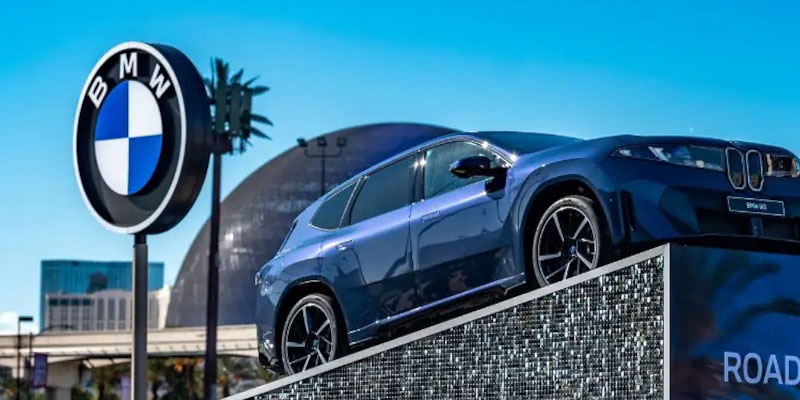
BMW Group India has unveiled an ambitious roadmap for 2026, announcing plans to introduce ten new vehicles across its BMW and MINI portfolios while rolling out seventeen product upgrades. The strategy combines fresh internal combustion models with a strong electric vehicle (EV) focus and increased localisation, as the German luxury automaker seeks to accelerate growth in one of the world’s most price-sensitive yet fast-evolving premium markets.
BMW’s Position in the Indian Luxury Landscape
India remains a relatively small but strategically important market for global luxury carmakers. Premium vehicles account for barely one percent of the country’s annual passenger car sales, yet rising incomes, younger buyers, and improved infrastructure are steadily expanding the segment. Within this context, BMW has emerged as one of the most aggressive players, narrowing the gap with long-time rival Mercedes-Benz and carving out an early lead in luxury EV adoption.
Sales Performance and Portfolio Strength
BMW’s confidence is rooted in numbers. In 2025, the company recorded its strongest-ever performance in India, delivering over 18,000 cars—an increase of around 14 percent year-on-year—along with nearly 6,000 motorcycles under the BMW Motorrad brand. SUVs and long-wheelbase sedans continued to dominate demand, accounting for roughly 60 percent of sales, while the MINI brand delivered a surprisingly strong contribution of more than one-third of total volumes.
The momentum underscores BMW’s success in aligning its global portfolio with Indian preferences, particularly for spacious, feature-rich vehicles that justify premium pricing in a cost-conscious market.
EV Adoption: BMW’s Key Differentiator
Electric mobility has become BMW’s most powerful growth lever in India. EVs accounted for 21 percent of its total car sales in 2025, up sharply from just 8 percent a year earlier. Volumes surged by roughly 200 percent, driven primarily by the locally assembled iX1, which has emerged as the country’s best-selling premium electric vehicle. At the top end, the BMW i7 has reinforced the brand’s dominance in the luxury EV space.
Unlike some competitors, BMW has committed to a pure battery-electric strategy in India, opting not to introduce hybrids. Competitive pricing enabled by local assembly, combined with supportive tax structures for EVs, has allowed BMW to outperform the broader luxury EV segment, where electric penetration remains in single digits. The company is now targeting an EV mix of 25 percent in 2026, supported by upcoming launches such as the i4 and i5.
Localisation and Cost Strategy
To sustain growth, BMW is pushing deeper into local sourcing. Currently, around half of the components used in its Indian operations are sourced domestically, including key elements like engines, seats, and axles. The company plans to raise this share further, potentially extending localisation to EV components such as electric motors.
This approach helps offset steep import duties that significantly inflate luxury car prices and shields BMW from currency volatility. Expanded operations at its Chennai plant will support the upcoming wave of launches while strengthening the case for India as a regional export hub.
A Calculated Expansion with Long-Term Stakes
BMW’s India strategy reflects a careful balance of ambition and pragmatism. By combining aggressive product launches, early EV leadership, and deeper localisation, the company is positioning itself for sustained relevance in a challenging market. Success, however, will hinge on policy stability, charging infrastructure growth, and continued consumer confidence. If these align, BMW’s bet on India could transform a niche luxury market into a meaningful growth engine over the next decade.
(With agency inputs)