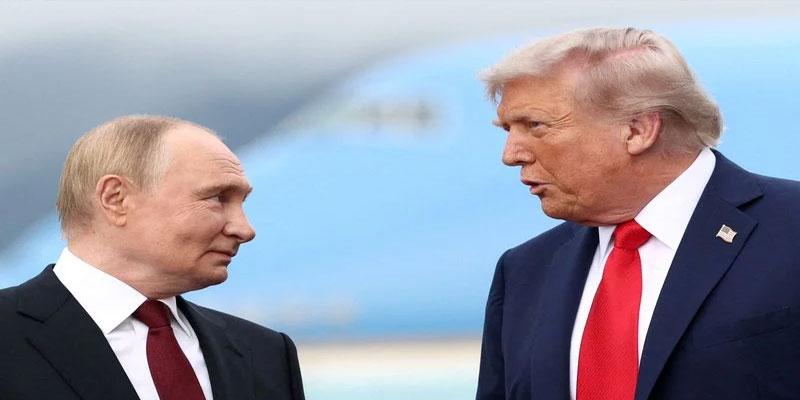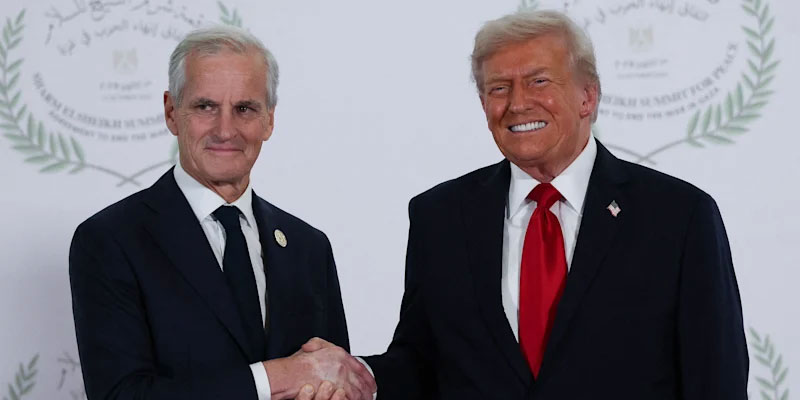
Norway’s Prime Minister Jonas Gahr Store moved quickly to correct the record after U.S. President Donald Trump suggested that Oslo’s failure to award him the Nobel Peace Prize influenced his hardening stance on Greenland and European allies. Responding publicly, Store stressed a fundamental point often misunderstood outside Norway: the Nobel Peace Prize is decided by an independent committee, not by the Norwegian government. The clarification came amid rising transatlantic tensions and highlighted how symbolic institutions can become entangled in geopolitical disputes.
Politics Meets a Prestigious Prize
Trump’s remarks linked several issues into one narrative—Greenland’s strategic value, threatened U.S. tariffs on European partners, and his long-running grievance over not receiving the Nobel Peace Prize. In private messages exchanged with Nordic leaders objecting to U.S. tariff threats, Trump implied that Norway’s perceived slight freed him from obligations of restraint. Store’s response was deliberately measured, aiming to separate Norwegian state policy from a century-old prize process designed to operate beyond political pressure.
How the Nobel Peace Prize Selection Actually Works
Contrary to popular belief, neither Norway’s prime minister nor its cabinet plays any role in choosing Nobel Peace Prize laureates. Responsibility lies with the Norwegian Nobel Committee, a five-member body appointed by Parliament but institutionally independent once constituted. This structure was created to safeguard the prize from day-to-day politics and shifting government priorities.
Each year, the nomination cycle begins in early autumn and closes on January 31. Eligible nominators include national legislators, professors in select disciplines, former Nobel laureates, and certain international officials. Crucially, candidates do not apply, and the committee does not solicit nominations. All submissions are confidential, and nominee identities remain sealed for 50 years, a rule intended to prevent lobbying and public campaigns.
From Long List to Laureate
After nominations close, the Nobel Institute screens submissions for eligibility and presents a preliminary list to the committee. Members may add names before narrowing the field to a shortlist, typically consisting of a few dozen candidates. From spring through late summer, this group undergoes intensive evaluation.
The committee relies on permanent advisers and external experts who produce detailed assessments examining a candidate’s contributions, impact, and controversies, measured against Alfred Nobel’s will—particularly the promotion of peace, disarmament, and international fraternity. Deliberations continue over several months, with candidates gradually eliminated through discussion and consensus-building.
The final decision is taken in early October, either by unanimity or majority vote. Once announced, it is final and cannot be appealed. The award is formally presented by Norway’s monarch in December, but the monarchy, like the government, has no influence over the choice.
Why Norway’s Response Matters
By emphasizing this separation, Store was defending more than a procedural detail. He was reaffirming Norway’s commitment to institutional independence at a time when Trump’s rhetoric blurred personal recognition with state responsibility. The episode illustrates how grievances tied to symbolic honors can spill into real policy debates—on trade, security, and alliances—despite having no formal connection.
Institutions as Guardrails
The clash over the Nobel Peace Prize underscores a broader truth about international politics: strong institutions matter precisely because they resist personalization. Norway’s insistence on the committee’s independence was not a rebuke of Trump personally, but a reminder that global norms depend on clear boundaries between politics and principle. In an era of transactional diplomacy, such guardrails remain essential—even when they frustrate powerful leaders seeking validation beyond the ballot box.
(With agency inputs)