The Shadow of Hindenburg
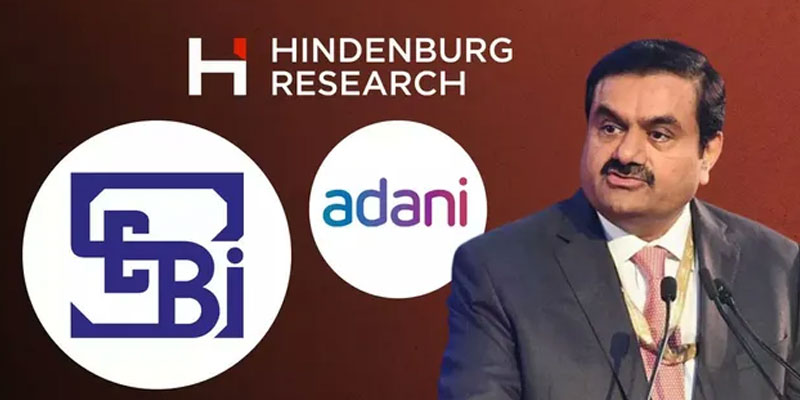
The Adani Group, one of India’s most influential conglomerates, has weathered a turbulent journey since January 2023 when US-based short-seller Hindenburg Research accused it of financial manipulation and stock irregularities. The report triggered a market storm, eroding billions of dollars in shareholder value, shaking investor confidence, and putting Gautam Adani under intense global scrutiny.
Now, nearly twenty months later, the tide has turned. The Securities and Exchange Board of India (SEBI) has officially dismissed the allegations, providing what appears to be a clean slate for the group. Markets have responded with renewed optimism, as several Adani stocks surged immediately after the announcement.
SEBI’s Findings: No Wrongdoing Established
SEBI’s investigation focused on transactions that Hindenburg claimed were attempts to route funds through lesser-known firms such as Adicorp Enterprises, Milestone Tradelinks, and Rehvar Infrastructure. After a detailed inquiry, the regulator concluded that there were no breaches of law at the time the transactions occurred. Importantly, it noted that the definition of related-party dealings was different when those trades were executed, and thus the Adani Group had not violated existing regulations.
SEBI also clarified that loans in question were fully repaid, funds were utilized for legitimate purposes, and no evidence of fraudulent practices or unfair trading emerged. Consequently, all proceedings were dropped.
Market Response: A Wave of Gains
The ruling immediately buoyed Adani’s listed companies. Adani Total Gas led the rally with a sharp 10% rise, while Adani Power surged 7.4%, and Adani Enterprises, the group’s flagship, climbed over 4%. Adani Ports also gained around 2%, while Adani Green Energy and Adani Energy Solutions saw nearly 4% increases each.
This market upswing not only reflects relief among investors but also a renewed sense of stability around the group’s financial health. Adani himself remarked that SEBI’s conclusion reaffirmed his stance that Hindenburg’s claims were “baseless,” while expressing sympathy for investors who had suffered during the controversy.
The Media Battle: Court Orders and Takedowns
Parallel to the financial investigation, the Adani Group has also been entangled in a media and legal tussle. Earlier this month, a Delhi civil court restrained journalists, activists, and independent media platforms from publishing allegedly defamatory or unverified reports about the conglomerate.
Following the court order, the Ministry of Information and Broadcasting (MIB) issued notices to social media giants Google and Meta, asking them to remove 138 YouTube videos and 83 Instagram posts. The content, published by outlets and individuals such as The Wire, Newslaundry, Ravish Kumar, Dhruv Rathee, and others, was deemed potentially defamatory.
Several journalists, including Paranjoy Guha Thakurta and Ravi Nair, challenged the order, calling it excessive and pointing out that some of the content dated back as far as 2017. While the appeals are still being heard, the case has sparked debates on free expression, accountability, and the balance between corporate reputation and press freedom.
Legal Viewpoints on the Notice
Experts note that while such MIB enforcement is rare, it is not illegal. Under India’s IT Rules, intermediaries are obliged to comply with court orders to take down content. Analysts argue that the ministry’s directive was essentially an administrative step to ensure compliance rather than an overreach of executive power. Still, the unusual move has drawn attention, raising concerns about censorship and the potential chilling effect on investigative journalism.
A Path Forward
The SEBI verdict marks a significant turning point for the Adani Group, potentially restoring faith among investors who were rattled by the Hindenburg storm. However, the media and legal challenges underline that reputational recovery may take longer than financial recovery.
For corporate India, the episode serves as a reminder of the need for robust transparency standards and proactive communication. For regulators, it underscores the importance of swift and conclusive investigations to prevent speculation from eroding markets.
As Adani looks to rebuild trust, the broader lesson lies in balancing corporate accountability with media freedom. Sustainable growth, especially for a group of Adani’s scale, will depend not just on financial performance but also on maintaining credibility in the eyes of investors, regulators, and the public at large.
(With agency inputs)