Notices Issued Over Abusive Posts Targeting PM, Security Forces
Delhi Police have intensified action against abusive and defamatory social media content linked to the Cockroach Janta Party (CJP)-led protests over the alleged NEET paper leak. Notices have been issued to several social media accounts and intermediaries over posts allegedly targeting Prime Minister Narendra Modi and security forces. Authorities have also sought the removal of objectionable content and initiated legal proceedings under the Bharatiya Nyaya Sanhita (BNS) and the Information Technology Act.
CJP Protests Spill into the Digital Space
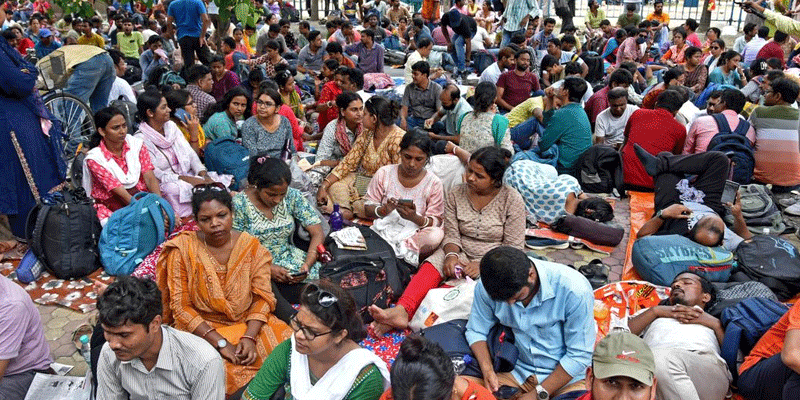
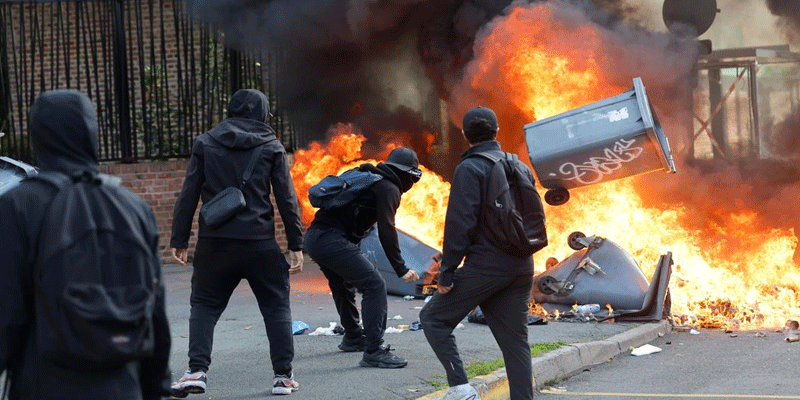
The CJP-led agitation began with demands for accountability over the alleged NEET paper leak, a re-examination and the resignation of then Union Education Minister Dharmendra Pradhan. As protests at Jantar Mantar and the "Sansad Chalo" march intensified, social media became a major platform for mobilising support and shaping public opinion.
Police Action Against Online Content
Delhi Police's Social Media Monitoring Team has expanded its scrutiny of online platforms. According to officials, the police have:
· Issued notices to several account holders on X and other platforms over allegedly abusive and defamatory posts targeting Prime Minister Narendra Modi.
· Written to social media platforms seeking removal of unlawful content.
· Registered an FIR over objectionable posts and sought user details from platform operators.
· Examined possible offences relating to criminal intimidation, public mischief, defamation and cyber law violations.
· Indicated that further legal action will depend on responses from users, platforms and the outcome of the investigation.
Officials say the objective is to ensure lawful use of digital platforms while preventing content that could threaten public order.
Cross-Border Disinformation Under Scanner
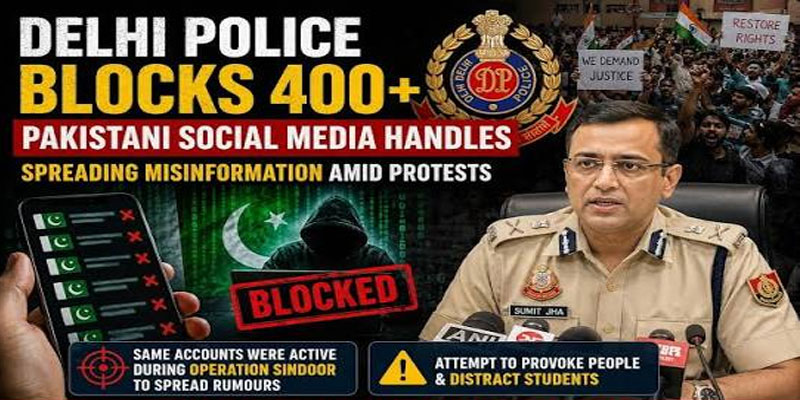
Alongside domestic action, Delhi Police have alleged a coordinated online misinformation campaign originating from Pakistan.
Investigators claim that over 400 Pakistan-linked social media handles circulated AI-generated videos, deepfakes, edited images and misleading posts related to the protests. Authorities say these accounts attempted to exaggerate violence, spread rumours and influence public opinion. Police have also stepped-up fact-checking efforts through official channels to counter false narratives.
The episode highlights how domestic protests can be exploited by foreign actors through digital information warfare.
What the Delhi Police Response Raises: Key Analytical Points
The police action raises several important policy and governance questions:
· Balancing free speech and accountability: The crackdown reflects the challenge of distinguishing legitimate political criticism from abusive, defamatory or unlawful online speech directed at constitutional authorities.
· Digital platform responsibility: Notices issued to social media intermediaries demonstrate the growing role of online platforms in content moderation and compliance with India's evolving regulatory framework.
· Countering information warfare: The identification of Pakistan-linked accounts highlights concerns that hostile foreign actors may exploit domestic protests to spread misinformation and influence public discourse.
· Law enforcement in the digital age: The case illustrates how policing now extends beyond physical protests to monitoring digital ecosystems where narratives are created, amplified and contested.
· Political and democratic debate: While the government argues that action is necessary to protect constitutional institutions and maintain public order, critics contend that enforcement must avoid discouraging legitimate dissent or investigative reporting.
Latest Developments
The investigation is ongoing, with police analysing digital evidence and coordinating with social media platforms. Authorities have indicated that additional notices may be issued if more objectionable content is detected, while efforts to identify fake accounts and dismantle coordinated misinformation networks continue.
Navigating the Complex Digital Protest Landscape
The Delhi Police's latest action reflects the evolving challenges of policing in the digital age, where street protests and online narratives increasingly overlap. While authorities seek to curb abusive content and foreign-backed misinformation, the response also revives the debate over balancing national security, platform accountability and freedom of expression.
Going forward, India will need a transparent framework that effectively counters malicious online campaigns while safeguarding legitimate democratic dissent. Striking this balance will be crucial to preserving both public order and the constitutional right to free expression.
(With agency inputs)