In a significant development in the NEET protest controversy, the Supreme Court has issued interim directions granting protection to student protesters, ordering the release of minors and students with no prior criminal record who were detained in connection with demonstrations over the alleged NEET-UG paper leak. The court has also directed that no coercive action be taken against eligible students named in FIRs until further orders. Simultaneously, the Bihar and Assam governments have begun withdrawing cases linked to the protests, marking a major de-escalation in a dispute that has evolved from an education-related grievance into a broader constitutional debate on protest rights, police powers and civil liberties.
A Student Agitation That Expanded Nationwide
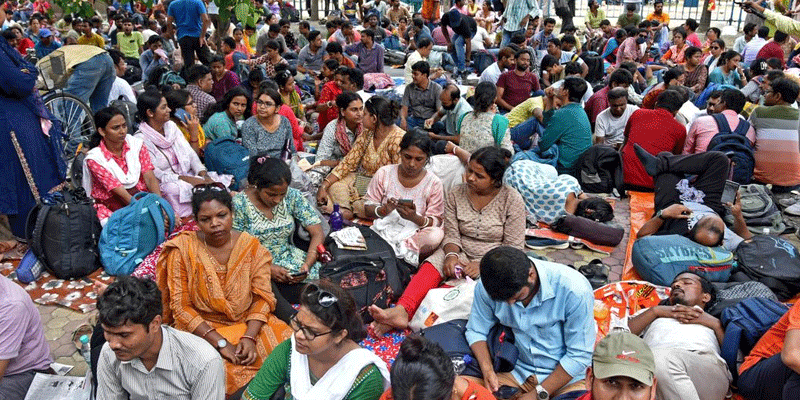
The controversy originated with nationwide student protests over the alleged irregularities in the NEET-UG examination, including claims of a paper leak and demands for greater accountability in the examination process. Mobilised by the Cockroach Janta Party (CJP), demonstrations spread from Delhi's Jantar Mantar to several states, attracting thousands of students and supporters.
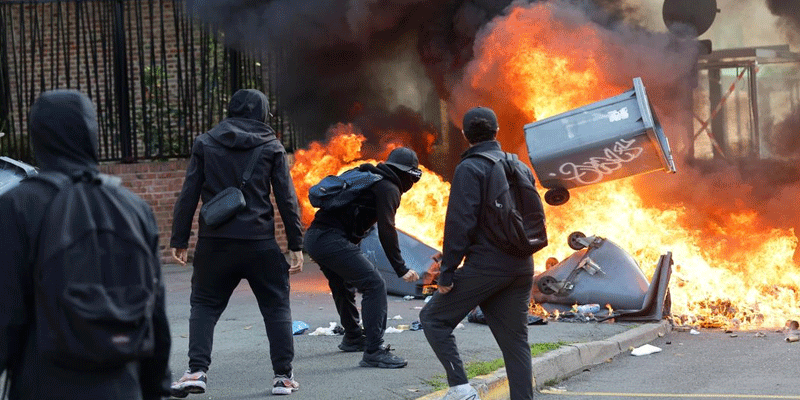
As the protests intensified, allegations of excessive police action—including detentions, FIRs and preventive arrests—began surfacing. What initially centred on examination integrity soon transformed into a wider legal and constitutional issue concerning the treatment of peaceful protesters and the limits of state authority during public demonstrations.
States Begin Rolling Back Police Action
The first signs of reconciliation came from Bihar, where the government announced that it would withdraw FIRs, criminal complaints and show-cause notices related to protests held before 6 p.m. on July 26. Authorities also ordered the release of individuals detained in connection with the demonstrations.
Assam followed with a similar decision, stating that although five cases had been registered and 13 individuals arrested, no adverse legal action would be pursued against those who participated in the protests. The coordinated nature of these announcements suggests more than a routine administrative review—it reflects a broader political and governance decision to ease tensions surrounding the student movement.
Supreme Court Extends Interim Protection
The Supreme Court's interim order complements these administrative measures by directing the immediate release of detained or arrested students who have no previous criminal history. The Bench further ordered that no coercive action be initiated in FIRs registered against such students, effectively preventing further escalation until the petitions are fully adjudicated.
Reports also indicate that the court has directed authorities to preserve CCTV footage and other evidence from the protest sites while issuing notices to multiple state governments. These directions underscore the court's intention to ensure that the factual record remains intact before any final judicial determination is made.
A Defining Moment for Protest Rights
The court's observations extend well beyond individual relief. By distinguishing first-time student protesters from habitual offenders, the Bench has signalled that peaceful participation in public demonstrations should not automatically invite harsh criminal consequences. The case is also likely to influence future judicial scrutiny of police responses to youth-led protests and campus movements.
For state governments, the developments serve as a reminder that broad punitive measures against student demonstrators may attract both judicial intervention and public criticism, reinforcing the need for proportionate and constitutionally compliant policing.
A Turning Point in Balancing Dissent and Governance
The simultaneous withdrawal of cases by state governments and the Supreme Court's interim safeguards represents a significant shift toward de-escalation and constitutional accountability. While the immediate outcome offers relief to hundreds of students, the larger significance lies in the evolving legal standards governing peaceful protest, police conduct and state responsibility. As the matter proceeds, its final outcome could shape the future of democratic dissent in India by reaffirming that public order and constitutional freedoms must coexist within the rule of law.
(With agency inputs)