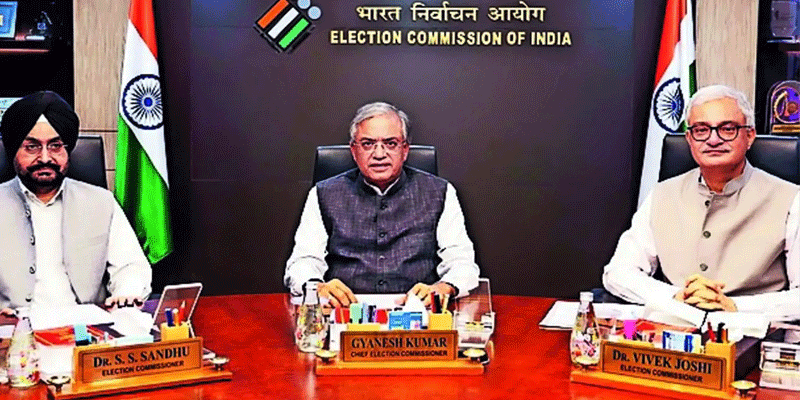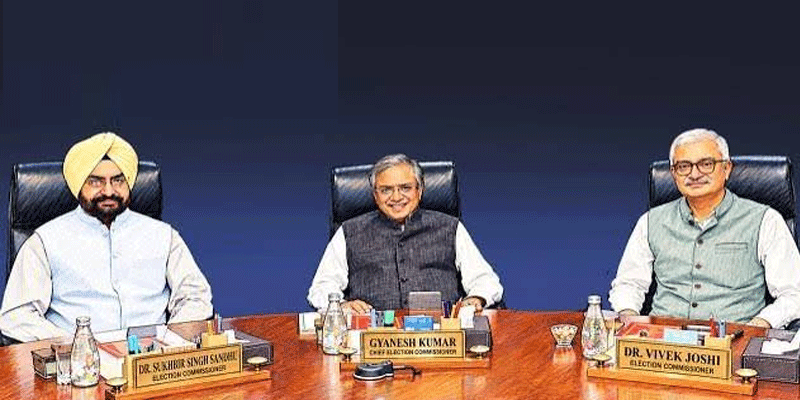
The Election Commission of India (ECI) has rejected reports of an internal rift over the Special Intensive Revision (SIR) of electoral rolls, maintaining that all decisions were taken with the approval of Chief Election Commissioner Gyanesh Kumar and Election Commissioners Sukhbir Singh Sandhu and Vivek Joshi. The clarification came after The Indian Express reported that Sandhu and Joshi had raised objections on record on several occasions concerning electoral-roll revisions and related procedures. The ECI, however, said such observations were part of internal deliberations and did not amount to formal dissent.
What Triggered the Controversy
The reported objections concern fundamental aspects of electoral-roll management, including new voter registration, deletion and restoration of names, appeals and access to voter databases.
One major issue involved Form 6, used by new voters. According to The Indian Express, Joshi and Sandhu questioned changes that required applicants to establish links with earlier SIR-era electoral rolls, arguing that statutory forms could not be altered without amendments to the relevant rules.
The two commissioners also raised concerns over the increasing centralisation of electoral-roll databases through ECINet and whether statutory Electoral Registration Officers retained full access to make changes.
Dissent, Observation or Institutional Consultation?
The ECI has drawn an important distinction between internal observations and formal dissent. It maintains that questions and objections raised during deliberations are part of institutional functioning and do not establish a formal split. Reports citing ECI sources said final decisions carried the signatures of all three commissioners and that the law permits majority decisions where consensus is not reached.
The distinction matters because the issue is not simply whether commissioners disagreed, but how those disagreements were handled and recorded. The Indian Express report says some objections alleged that particular steps were taken without the knowledge of two commissioners and described certain actions as “unauthorised” or “illegal”. Those claims remain contested and require examination of the underlying records.
Opposition Raises Political and Institutional Questions
Opposition parties have seized on the report to question the ECI’s functioning, particularly amid the continuing SIR exercise. Their criticism has focused on transparency, centralisation and safeguards against wrongful exclusion from electoral rolls.
The controversy comes as the Supreme Court is separately examining the transparency of SIR procedures. On September 22, the Court questioned whether notices issued to voters over “logical discrepancies” required additional filters and clearer explanations.
Transparency Will Define the Next Phase
The immediate question is whether the reported objections were resolved through documented institutional processes and whether electoral-roll decisions complied with the applicable legal framework. Publication or disclosure of relevant records, where legally permissible, could help clarify the sequence of decisions.
Ultimately, the credibility of the electoral process depends not merely on formal signatures but on clear procedures, traceable decision-making and meaningful safeguards for eligible voters. The ECI’s response, the underlying records and judicial scrutiny will therefore be central to determining how this controversy is resolved.
(With agency inputs)