A Historic Verdict That Shakes a Nation
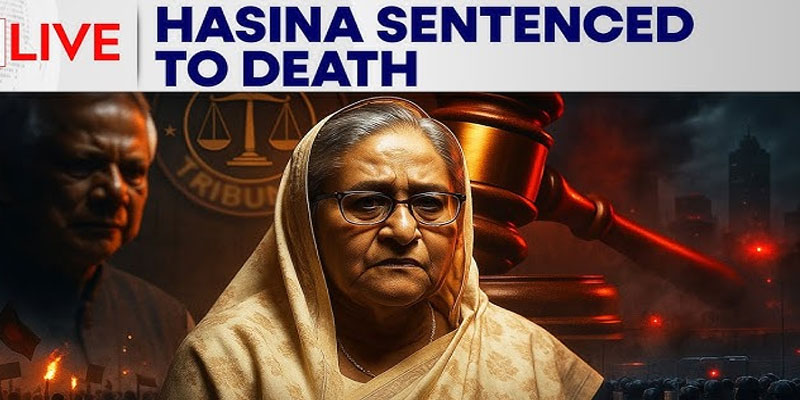
In a ruling that has stunned Bangladesh and reverberated across South Asia, the International Crimes Tribunal (ICT) has sentenced ousted Prime Minister Sheikh Hasina to death, finding her guilty of crimes against humanity for the brutal 2024 crackdown on student protesters. The verdict—handed down in a televised session—marks the harshest legal judgment in the nation’s recent history and a defining rupture in a political crisis that has engulfed Bangladesh since Hasina fled to India in August 2024.
Hasina Rejects Verdict as ‘Fake and Fabricated’
From exile in India, Hasina denounced the ruling as “fake, fabricated, and politically engineered,” vowing to “fight back with every legal and international tool available,” according to reports. She insists the tribunal is illegitimate and claims the trial was designed to erase her legacy and silence the Awami League. Her rejection of the verdict has intensified anger among her supporters and heightened fears of renewed unrest on the streets of Bangladesh.
Origins of the Crisis: The 2024 Uprising and Collapse of Power
The political unraveling began in mid-2024, when university students launched mass protests over discriminatory quota policies in public sector jobs. What began as a reform movement rapidly ballooned into an anti-government uprising, drawing tens of thousands into the streets across Dhaka and major cities. Demands soon escalated from policy changes to calls for democratic accountability.
Hasina’s administration responded with overwhelming force—deploying military units, riot police, armored vehicles, helicopters, and drones. International bodies and Bangladesh’s interim health authorities estimate over 1,400 civilians were killed and thousands more wounded, making it one of the deadliest crackdowns in the country’s history. Under intense pressure and losing control of the capital, Hasina resigned and fled, setting the stage for her prosecution.
The Charges and Trial: A Forensic Examination of State Violence
The ICT charged Hasina with five counts of crimes against humanity, including orchestrating mass killings, authorizing lethal aerial assaults on crowds, targeting student leaders, and attempting to cover up the state’s actions. The trial, which began in June 2025, was unprecedented in scope and visibility—televised nationwide and based on an extensive evidentiary record.
Prosecutors relied on drone surveillance logs, intercepted communications, medical records, and hours of video showing the crackdown. Alongside Hasina, former Home Minister Asaduzzaman Khan Kamal and ex-police chief Chowdhury Abdullah Al-Mamun—who pleaded guilty—were tried for their roles in coordinating the security operation.
The Verdict: A Nation Divided and a Future Uncertain
On November 17, 2025, the tribunal delivered its historic ruling, finding Hasina guilty on all counts and sentencing her to death. The interim government of Nobel laureate Muhammad Yunus insists the verdict demonstrates a commitment to accountability and paves the way for political reform under its forthcoming July Charter, which aims to build stronger constitutional guardrails against future authoritarianism.
But the decision has deepened polarization. Hasina’s son, Sajeed Wazed, and expelled Awami League leaders have denounced the trial as a political purge carried out by a “kangaroo court.” With the Awami League banned and its members calling for resistance, fears of widespread unrest loom ahead of the February 2026 national elections.
A Volatile Landscape: Violence, Security Alerts, and Global Attention
The verdict comes as Dhaka grapples with sporadic bombings, arson attacks, transport shutdowns, and a heavy military presence around government buildings. International observers—and India in particular—are closely watching developments, recognizing the potential for cross-border instability and regional repercussions.
A Nation at a Crossroads
Sheikh Hasina’s death sentence—rejected by her as “fake and fabricated”—has pushed Bangladesh into an unprecedented moment of reckoning. The ruling has not only intensified long-standing political divisions but also cast a shadow over the country’s path toward elections and institutional reform. As supporters mobilize and security forces brace for further unrest, Bangladesh stands at a fragile crossroads. Whether the nation can uphold justice without inflaming instability, and whether reform can advance amid fierce political resistance, will define the next chapter of its democratic future..
(With agency inputs)