Jaishankar Says Direct Talks with Iran Are Delivering Results
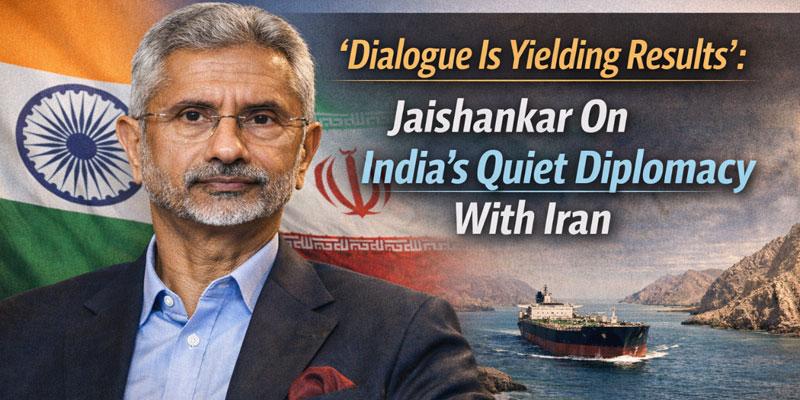
India is relying on diplomacy rather than confrontation to protect its critical energy routes. External Affairs Minister Subrahmanyam Jaishankar recently stated that New Delhi’s direct engagement with Iran is yielding results as the government works to restore shipping through the strategically vital Strait of Hormuz. The narrow maritime corridor, one of the world’s most crucial oil chokepoints, handles roughly a fifth of global oil trade and remains central to India’s energy imports.
Regional tensions escalated after U.S.–Israel strikes reportedly killed Iranian Supreme Leader Ali Khamenei, prompting Tehran to tighten control over maritime movement in the strait. Since early March, the disruption has raised alarm in energy-importing countries like India, which relies heavily on the passage for crude oil, liquefied natural gas (LNG), and liquefied petroleum gas (LPG).
Jaishankar noted that India’s diplomatic outreach has already helped secure safe transit for several Indian vessels. Two LPG tankers recently passed through the strait without incident following direct communication between New Delhi and Tehran, demonstrating the effectiveness of what he described as “quiet diplomacy.”
What the United States Said
Speculation about a special arrangement between India and Iran emerged after comments by U.S. Energy Secretary Chris Wright, who suggested that Tehran might have struck a deal to allow Indian ships safe passage. However, Jaishankar firmly rejected the claim, stating that there was “no special deal” or quid pro quo involved.
According to him, India’s engagement with Iran is based on longstanding diplomatic ties rather than transactional arrangements. Each vessel’s passage is being handled individually through dialogue and coordination. He emphasized that Iran “got nothing in exchange,” underscoring that the situation reflects diplomatic communication rather than negotiated concessions.
The episode highlights India’s careful balancing act. While maintaining strong relations with the United States and other Western partners, New Delhi also preserves working ties with Iran—particularly because of energy security concerns and projects like the Chabahar Port that connect India to Central Asia.
Who Else Is Getting Passage?
India is not the only country negotiating safe transit through the Strait of Hormuz. Several energy-importing nations, particularly in Asia, are engaged in similar diplomatic efforts with Iran to ensure shipping continuity.
Countries heavily dependent on Gulf energy supplies—such as Japan, South Korea and China—have reportedly been seeking assurances for their tankers as well. Many global shipping companies are also coordinating with regional authorities to avoid escalation while maintaining essential energy flows.
Iran’s approach appears selective, allowing passage on a case-by-case basis rather than fully reopening the corridor. This calibrated strategy enables Tehran to demonstrate control over the strait without triggering a complete shutdown of global energy trade.
How India Diversified Oil Sources Beyond Hormuz
Even as it negotiates passage, India has steadily reduced its reliance on Hormuz-bound supplies. Today, the country imports crude oil from nearly 40 different nations, with roughly 70 percent of shipments arriving through routes that do not depend on the strait.
Russia has emerged as India’s largest supplier, accounting for roughly 35–40 percent of imports, followed by the United States with about 15 percent. Other key suppliers include Iraq, Saudi Arabia and the United Arab Emirates. Emerging sources such as Guyana, Nigeria, Brazil and Canada have further broadened India’s supply base.
Alternative shipping routes—from Russia’s Arctic corridors to Atlantic shipments from the U.S. and West Africa—help ensure continuity even during disruptions. Additionally, India maintains strategic petroleum reserves at facilities in Visakhapatnam, Mangalore and Padur, providing emergency cover for several days of national consumption.
Diplomacy and Diversification as Energy Shields
The ongoing Hormuz crisis highlights both the fragility of global energy supply chains and the importance of diplomatic agility. India’s approach—combining quiet negotiations with Iran and long-term diversification of crude sources—reflects a pragmatic strategy aimed at protecting economic stability.
While dialogue has so far prevented a major disruption to Indian shipments, the situation underscores a broader lesson: energy security in a volatile geopolitical environment depends not only on diplomacy but also on diversified supply networks and strategic reserves. Together, these measures form India’s strongest safeguard against future shocks.
(With agency inputs)