Lawyer’s Killing Raises Questions Beyond a Property Dispute
The alleged murder of senior Hyderabad lawyer Khaja Moizuddin has evolved from what initially appeared to be a hit-and-run incident into a high-profile criminal investigation involving allegations of a contract killing linked to a long-running Waqf property dispute. Police claim that two city-based educationists conspired to eliminate the lawyer over litigation connected to disputed Waqf lands, bringing together issues of land ownership, political influence and the safety of legal professionals handling sensitive cases.
A Lawyer at the Centre of Waqf Litigation
Khaja Moizuddin, a 63-year-old Waqf Board panel lawyer, had practised in the Telangana High Court and City Civil Court for more than three decades. Over the years, he became closely associated with cases involving alleged encroachments on Waqf properties, including disputes relating to Anwar-ul-Uloom Waqf lands and Madarsa-e-Aizza properties in Hyderabad.
According to family members, Moizuddin had consistently challenged what he viewed as attempts to encroach upon or privatise Waqf assets. His son has alleged that these legal battles made him a target for individuals with vested interests in the disputed properties.
The Incident and the Investigation
On 23 May 2026, Moizuddin reportedly left his residence in Hyderabad’s Shanti Nagar area early in the morning for a swimming session. An SUV allegedly struck him outside his home, causing severe injuries that later proved fatal.
The subsequent probe reportedly led police to uncover what they describe as a wider conspiracy involving multiple individuals. Authorities have constituted several special investigation teams to examine the circumstances surrounding the case and any links to ongoing property disputes.
Alleged Conspiracy and Political Fallout
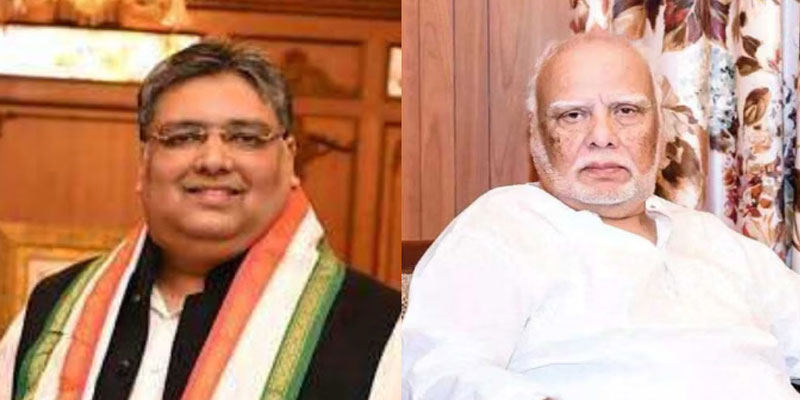
According to police, the murder was allegedly planned by educationists Mujahid Alam Khan and Mahaboob Alam Khan, who are accused of hiring individuals to carry out the attack. Investigators claim that a contract amount ranging between ₹15 lakh and ₹25 lakh was discussed, though the exact figure remains part of the investigation.
The case has acquired a political dimension because Mujahid Alam Khan was serving as a vice-president of the Telangana Pradesh Congress Committee at the time of his arrest. Following the developments, Indian National Congress expelled him from the party.
Meanwhile, Hyderabad MP Asaduddin Owaisi condemned the killing, describing it as a serious crime and calling for a thorough investigation and protection for the victim’s family.
Wider Concerns: Land, Power and Rule of Law
Beyond the individual case, the incident has reignited concerns about disputes involving Waqf properties, allegations of encroachment and the risks faced by lawyers engaged in contentious land litigation. It has also raised broader questions about political influence, accountability and the effectiveness of safeguards for legal professionals handling sensitive matters.
Protecting the Guardians of Justice
The Moizuddin case represents more than a criminal investigation; it highlights the complex intersection of property rights, political power and the justice system. While the courts and investigators must determine individual culpability, the episode underscores the need for stronger institutional protections, transparent land governance and swift legal action against attempts to use intimidation or violence to settle disputes. Only a credible and impartial investigation can restore public confidence in the rule of law.
(With agency inputs)