A Fresh Start After a Period of Strain
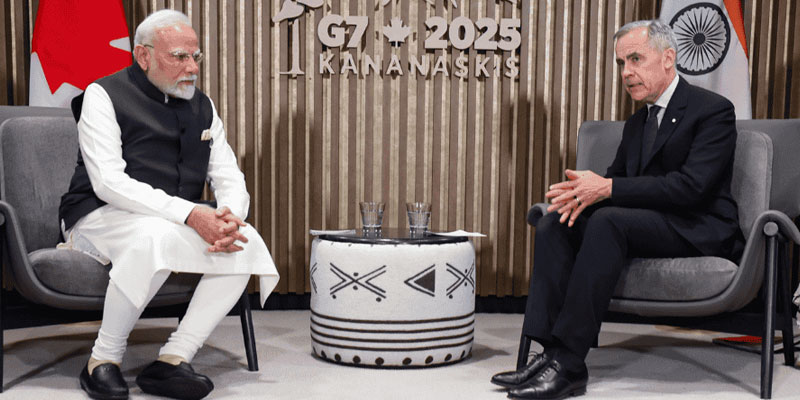
After months of quiet diplomacy and cautious engagement, India and Canada have unveiled a new roadmap to rebuild their strategic partnership—signaling a major thaw in relations that had cooled in recent years. The renewed dialogue comes amid a change in Canada’s leadership, with Prime Minister Mark Carney extending a hand of cooperation to New Delhi, and Prime Minister Narendra Modi reciprocating the gesture at the G7 Summit in Kananaskis earlier this year.
Now, with Canadian Foreign Minister Anita Anand making her first official visit to India, both nations are taking concrete steps to re-establish trust and restore momentum in a relationship defined by deep people-to-people connections, shared democratic values, and significant economic potential.
Reinstating Diplomacy and Setting a New Roadmap
The high-level talks between External Affairs Minister S. Jaishankar and Anita Anand in New Delhi culminated in the announcement of a comprehensive roadmap for cooperation spanning strategic, economic, technological, and security sectors.
This follows a series of trust-building measures—including the reinstatement of High Commissioners in August and renewed security and trade consultations in September. Both sides agreed that a resilient bilateral partnership is crucial amid global economic uncertainty and shifting geopolitical dynamics.
“India and Canada are complementary economies bound by shared values of diversity, pluralism, and innovation,” said Jaishankar. Anand, in turn, called the joint statement “comprehensive and all-encompassing,” noting common priorities in areas such as energy, AI, and climate action.
Strengthening Economic and Strategic Ties
Trade remains the backbone of the renewed engagement. Bilateral trade reached $23.66 billion in 2024, with both countries eager to build further. To sustain this growth, India and Canada will soon launch ministerial-level trade and investment talks and revive the Canada–India CEO Forum by early 2026.
Key focus areas will include clean technology, infrastructure, agri-food, and digital innovation—sectors seen as engines of sustainable growth. The leaders also emphasized supply chain resilience, reflecting shared concerns over global disruptions and dependency on limited trade corridors.
Climate, Energy, and Critical Minerals Cooperation
At the heart of the new framework lies an ambitious climate and energy partnership. Both nations plan to relaunch the Ministerial Energy Dialogue to promote cooperation in renewable energy, LNG and LPG trade, green hydrogen, and industrial decarbonization.
A Critical Minerals Annual Dialogue, set for Toronto in March 2026, will explore how Canada’s mineral resources can support India’s clean energy transition and bolster energy security. This initiative aligns with India’s growing push to diversify supply chains and reduce reliance on Chinese raw materials.
Innovation, AI, and Science Collaboration
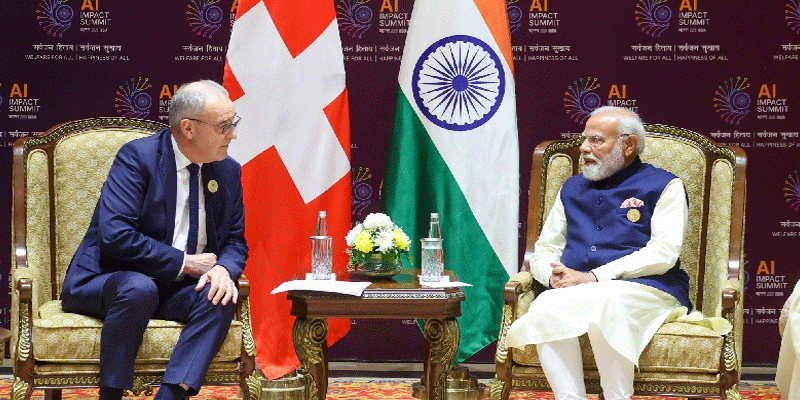
In technology and innovation, the two sides agreed to revitalize the Joint Science and Technology Cooperation Committee and expand collaboration in artificial intelligence and digital infrastructure. Canadian AI firms are expected to participate in India’s AI Impact Summit in February 2026, underscoring a shared commitment to ethical and inclusive tech advancement.
Agriculture, Education, and Cultural Links
Acknowledging agriculture’s centrality to sustainable growth, both nations will promote climate-resilient farming, agri-value chains, and food security initiatives. The Joint Working Group on Higher Education will also be reactivated to expand institutional partnerships, with Canadian universities seeking a larger footprint in India’s education sector.
People-to-people ties—long the cornerstone of India–Canada relations—will see renewed focus through enhanced cooperation in tourism, education, and cultural exchange.
A Reset Rooted in Trust and Shared Values
Jaishankar noted that both sides are “working to restore and reinvigorate mechanisms necessary to advance the partnership,” citing recent productive meetings between national security and trade officials. The appointment of new high commissioners—Christopher Cooter for Canada and Dinesh K. Patnaik for India—symbolizes a diplomatic reset grounded in mutual respect.
Beyond bilateral matters, the ministers reaffirmed commitments to multilateral cooperation, including in the G20, Commonwealth, and Indo-Pacific frameworks, emphasizing climate action and the 2030 Sustainable Development Goals.
Toward a Stable and Forward-Looking Partnership
Prime Minister Modi, in his meeting with Anand, expressed optimism that her visit would “infuse fresh momentum” into India–Canada relations and open new chapters of cooperation in trade, energy, technology, and people-to-people ties.
After a period of tension, the two democracies appear ready to move forward—anchored in shared interests and a common vision for stability and progress. The new roadmap, if implemented with consistency and political will, could transform India and Canada’s partnership into one of the most dynamic collaborations in the Indo-Pacific era.
(With agency inputs)