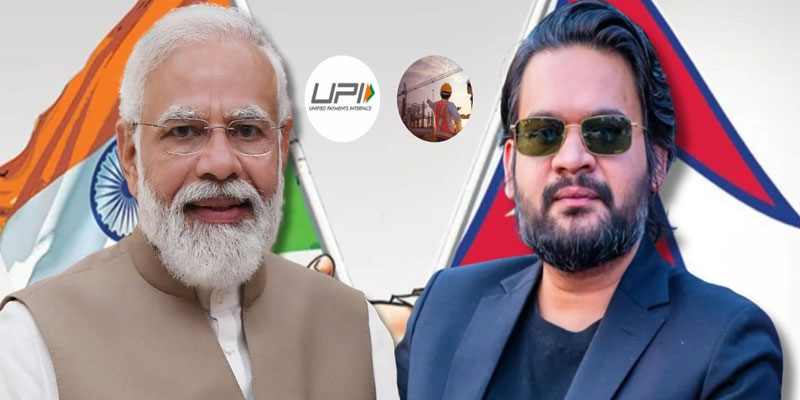
India and Nepal have launched a landmark cross-border digital payment system while simultaneously marking a major humanitarian milestone with the handover of 84 reconstruction projects built with Indian assistance after Nepal’s devastating 2015 earthquake. In a significant diplomatic moment, External Affairs Minister S. Jaishankar virtually handed over 72 health facilities and 12 cultural heritage projects reconstructed with Indian support, underscoring the growing depth of ties between the two neighbouring countries.
Cross-Border Digital Payments Begin
The launch of the new digital payment mechanism marks a major step in financial integration between India and Nepal. The system enables seamless peer-to-peer money transfers through linked digital payment platforms based on India’s Unified Payments Interface (UPI) technology.
The initiative follows a memorandum of understanding signed in 2023 between Nepal Clearing House Limited and the National Payments Corporation of India. Through QR-code-based transactions, individuals in both countries can now send and receive money instantly and at relatively low cost.
The development is expected to particularly benefit millions of Nepali citizens working in India who regularly send remittances home. Faster and cheaper transfers could significantly improve financial accessibility for migrant workers and their families while also promoting formal digital banking channels across borders.
Rebuilding Nepal After the 2015 Earthquake
Alongside the digital payment announcement, India formally handed over 84 post-earthquake reconstruction projects completed in Nepal. These include 72 health infrastructure projects and 12 cultural heritage restoration initiatives.
The projects trace their origins to the catastrophic 2015 earthquake in Nepal that claimed nearly 9,000 lives and caused massive destruction to public infrastructure and heritage sites. India had pledged extensive assistance for reconstruction efforts in the aftermath of the disaster.
The completed projects now stand as visible symbols of long-term developmental cooperation between the two countries. Beyond humanitarian relief, they also reinforce India’s broader strategic engagement with Nepal through infrastructure, health and cultural preservation.
The Broader India-Nepal Relationship
India and Nepal share one of South Asia’s closest and most complex bilateral relationships. The two countries maintain deep civilisational, cultural and economic ties rooted in geography, open borders and people-to-people exchanges.
Millions of Nepali citizens live and work in India, while trade, tourism and religious links remain central to the relationship. The open-border arrangement allows free movement of citizens, making the partnership unique in the region.
At the same time, ties have occasionally experienced political tensions over border disputes, constitutional developments in Nepal and concerns over external geopolitical influence, particularly involving China’s growing role in the Himalayan nation.
Despite periodic friction, both governments have continued to prioritise cooperation in connectivity, energy trade, water resource management and regional security.
Diplomacy Beyond Immediate Agreements
Jaishankar’s discussions with Nepalese leaders reportedly covered the full spectrum of bilateral ties, including trade, infrastructure, power cooperation and cultural exchanges. The meeting also produced an agreement involving AI-based language technology collaboration between Indian and Nepali institutions.
Importantly, the diplomatic engagement is also seen as laying the groundwork for a future visit to India by Nepal Prime Minister Balendra Shah, widely known as Balen Shah. Such a visit would mark an important milestone in resetting high-level political engagement between the two neighbours.
A Partnership Rooted in Connectivity and Trust
The simultaneous launch of cross-border digital payments and the completion of earthquake reconstruction projects reflect the evolving character of India-Nepal relations. The partnership is no longer confined to traditional diplomacy but increasingly centred on financial connectivity, technology, infrastructure and human development. While geopolitical sensitivities will continue to shape regional dynamics, these initiatives demonstrate that mutual dependence, historical ties and practical cooperation remain the strongest foundations of the India-Nepal relationship.
(With agency inputs)