Rawalakot Remains Tense After Deadly Violence
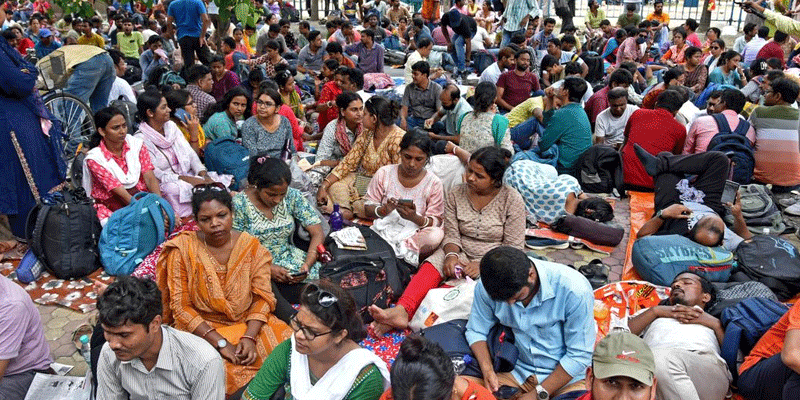
Days after a violent crackdown by Pakistani authorities in Rawalakot reportedly left at least 27 people dead, tensions continue to grip Pakistan-occupied Kashmir (PoK). The unrest has intensified political and humanitarian concerns in the region, with widespread protests, internet restrictions, and growing anger against Islamabad’s policies. The situation has also triggered sharp diplomatic reactions from India, which accused Pakistan of suppressing Kashmiri voices through force and intimidation.
What Sparked the Protests?
The latest crisis emerged after Pakistani authorities banned the Joint Awami Action Committee (JAAC), a civil society coalition leading demonstrations over economic hardship and political grievances in PoK. The organisation had presented a 38-point charter demanding subsidised wheat flour, reduced electricity tariffs, free healthcare and education, political reforms, and an end to privileges enjoyed by government officials.
Economic distress remains a major source of public anger in the region, with residents complaining about inflation, electricity shortages, and unemployment levels reportedly touching 64 percent. Protesters also accuse Islamabad of politically marginalising local populations while exploiting the region’s resources.
A major trigger for the current protests was the allocation of 12 reserved seats in the upcoming July 27 legislative assembly elections for Kashmiri refugees living outside PoK in other parts of Pakistan. The JAAC argued that these seats dilute local representation because many candidates do not reside within Kashmir itself.
How the Conflict Turned Violent
The immediate escalation began after Islamabad officially declared the JAAC a terrorist organisation under anti-terror laws on June 7, 2026. The move was followed by internet restrictions and reports of a JAAC leader's killing, sparking widespread outrage.
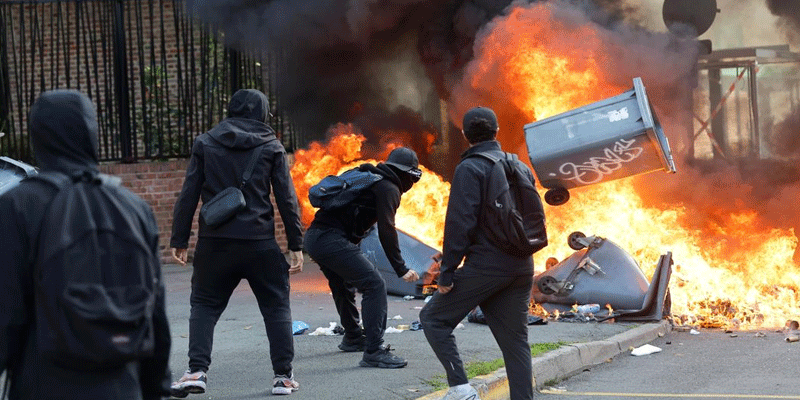
Ahead of a planned region-wide shutdown call, violence erupted when paramilitary forces attempted to disperse protesters in Rawalakot. Pakistani authorities claimed demonstrators attacked police personnel, leading to clashes in which security officials were also killed. Protesters, however, accused security forces of using excessive force and firing on civilians.
Official figures from Pakistan mention 27 deaths and nearly 70 injuries, though activists and social media reports claim the actual casualty count could be higher. The crackdown has further deepened resentment against Pakistani authorities in the region.
India Condemns the Crackdown
India’s Ministry of External Affairs strongly criticised the violence, describing it as a consequence of Pakistan’s “oppressive approach” in territories under what New Delhi calls “illegal occupation.” Indian officials expressed hope that Pakistan would eventually be held accountable for alleged human rights abuses against Kashmiris in PoK.
The remarks came shortly after the crackdown, with India highlighting reports of police brutality and civilian casualties. New Delhi has consistently maintained that Pakistan-occupied Kashmir remains an integral part of India and has often accused Islamabad of suppressing democratic voices in the region.
What Could Happen Next?
The crisis appears far from resolved. Despite the ban on the JAAC, protests and shutdowns continue across PoK, while internet restrictions remain in force. The upcoming legislative elections may face legitimacy questions if political unrest intensifies further.
The violence also risks increasing tensions between India and Pakistan at a time when bilateral relations remain fragile despite the continuation of the May 10 ceasefire understanding.
PoK Faces Deepening Instability
The Rawalakot crackdown has exposed deep-rooted economic, political, and governance grievances in Pakistan-occupied Kashmir. While Islamabad views the protests through a security lens, many residents see them as a struggle for representation and basic rights. Unless the underlying issues are addressed through dialogue and reform, the region could witness prolonged instability, escalating unrest, and greater international scrutiny in the months ahead.
(With agency inputs)