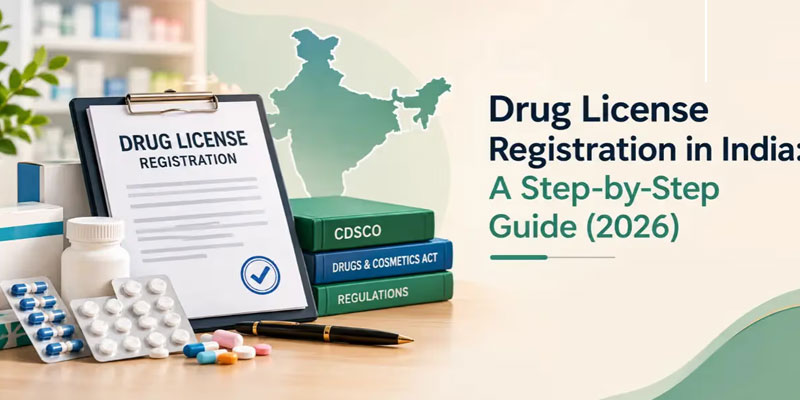
Proposed amendment seeks immediate action against medicines failing critical quality tests, strengthening patient safety and pharmaceutical accountability.
India is proposing an immediate suspension of manufacturing licences for medicines that fail government quality tests on critical parameters, signalling a tougher regulatory approach towards pharmaceutical manufacturers. The Union Health Ministry's proposed amendment aims to eliminate the delay between identifying substandard medicines and taking enforcement action, ensuring that potentially unsafe drugs do not continue to be manufactured or circulate in the market.
Why Existing Regulations Need Strengthening
India is among the world's largest pharmaceutical producers and a leading supplier of affordable generic medicines. Its global reputation depends significantly on the quality, safety and reliability of medicines manufactured domestically.
The pharmaceutical sector is regulated under the Drugs Rules, 1945, with the Central Drugs Standard Control Organisation (CDSCO) and state licensing authorities responsible for monitoring manufacturing standards and enforcing compliance.
CDSCO regularly publishes monthly alerts identifying medicines declared 'Not of Standard Quality' (NSQ). However, an adverse Government Analyst report does not automatically result in the immediate suspension of a manufacturer's licence. Existing procedures can create a time gap between detection and regulatory intervention, potentially allowing affected products to remain available.
The New Proposal: Five Critical Quality Parameters
On November 4, 2026, the Union Health Ministry proposed amendments to the Drugs Rules, 1945, empowering the Central Licensing Approving Authority or relevant State Licensing Authority to immediately suspend the manufacturing licence for an affected drug following an NSQ finding by a Government Analyst.
The proposed automatic suspension mechanism would cover failures involving five critical parameters:
· Assay: Incorrect quantity of the active pharmaceutical ingredient, potentially affecting treatment effectiveness or safety.
· Dissolution: Failure of a medicine to release its active ingredient appropriately.
· Related substances: Unwanted chemical compounds developing during manufacturing or storage.
· Impurities: Contaminants or degradation products exceeding permissible limits.
· Sterility: Microbial contamination risks, particularly serious for injectable medicines.
The suspension would continue until the manufacturer conducts a comprehensive root-cause analysis and implements satisfactory Corrective and Preventive Actions (CAPA). Licence restoration would require regulatory verification of the corrective measures.
What It Means for Patients and Pharmaceutical Companies
The proposal could significantly change India's pharmaceutical compliance environment.
For patients, faster intervention would reduce exposure to ineffective, contaminated or potentially dangerous medicines.
For manufacturers, even a single government test failure involving critical parameters could interrupt production of the affected drug. Companies would need stronger quality-control systems, traceability and manufacturing documentation.
For regulators, the amendment offers a preventive enforcement mechanism rather than relying exclusively on prolonged post-detection procedures.
However, immediate suspension could also disrupt supplies of essential medicines, particularly where alternative manufacturers are limited.
The Challenge: Balancing Safety with Fairness
An important concern is that an initial NSQ finding does not necessarily establish a manufacturing defect. Improper storage, transportation failures, laboratory variations, sampling errors, product degradation or counterfeit medicines could also contribute to adverse test results.
Therefore, regulators must distinguish genuine manufacturing failures from problems originating elsewhere in the supply chain. Transparent procedures and scientifically reliable testing will be essential.
Patient Safety Must Override Regulatory Delays
The proposed amendment marks an important shift from reactive enforcement towards immediate, risk-based pharmaceutical regulation. Its underlying principle is straightforward: medicines suspected of serious quality failures should not remain a potential public-health threat while regulatory procedures continue. However, speed must be accompanied by scientific accuracy, accountability and procedural fairness. If implemented effectively, the proposal could strengthen public confidence in Indian medicines, improve manufacturing discipline and reinforce India's position as a trusted global pharmaceutical supplier. Ultimately, the credibility of India's pharmaceutical industry must rest not merely on affordable medicines, but on an uncompromising assurance of quality and patient safety.
(With agency inputs)