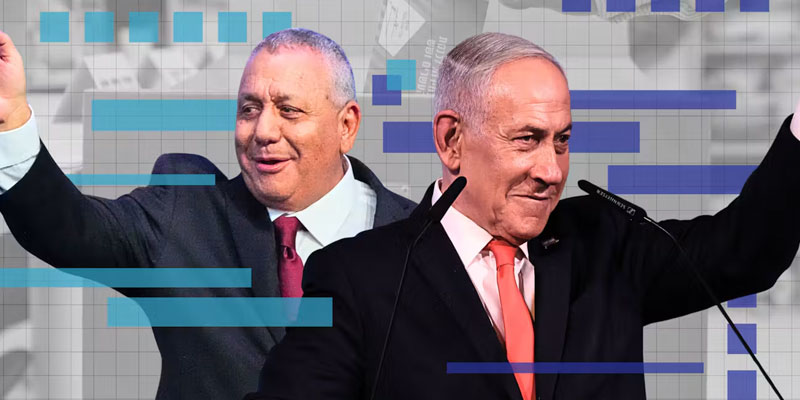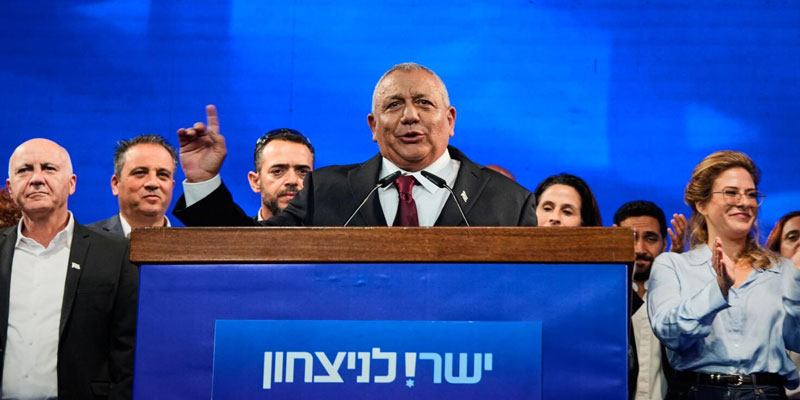
Israel has entered a crucial political transition as President Isaac Herzog formally tasked opposition leader Gadi Eisenkot with forming the next government, potentially ending Prime Minister Benjamin Netanyahu's prolonged dominance of Israeli politics.
The decision follows the October 27 parliamentary elections, which produced a fragmented Knesset without a clear majority, intensifying uncertainty over Israel's political leadership and future governance.
Key Takeaways
-
Leadership transition: President Herzog has officially entrusted Gadi Eisenkot with forming Israel's next government.
-
Political arithmetic: Eisenkot received 67 parliamentary recommendations, against Netanyahu's 46.
-
Coalition uncertainty: Neither major political bloc secured the 61 seats normally required for a parliamentary majority.
-
Limited timeframe: Eisenkot has 28 days, potentially extendable by another 14 days, to form a government.
-
Netanyahu's future: The incumbent remains caretaker prime minister and could receive another opportunity if negotiations fail.
-
Regional implications: A new government could influence Israel's approach towards Gaza, Iran, Lebanon, and Washington.
-
Democratic test: Coalition-building, political compromise, and institutional stability will determine Israel's next chapter.
Eisenkot, a former Israeli military chief and leader of the Yashar party, received recommendations from 67 lawmakers, compared with 46 supporting Netanyahu. Seven lawmakers abstained from recommending either candidate.
Despite this endorsement, forming a government remains a formidable challenge. Eisenkot's four-party alliance secured 48 seats, while Netanyahu's right-wing and religious bloc won 53, both falling short of the required 61-seat majority.
Herzog has given Eisenkot 28 days to negotiate a coalition, with a possible 14-day extension. Failure could allow Netanyahu another opportunity or eventually trigger fresh elections.
Eisenkot has proposed a broad national emergency government, seeking political cooperation across ideological divisions. His approach reflects mounting concerns about institutional stability, national security, and public confidence.
However, coalition negotiations remain complicated. Arab-led parties hold 19 parliamentary seats, while ultra-Orthodox parties could become decisive players in determining Israel's next political leadership.
The central political dilemma is whether Eisenkot can secure parliamentary support without compromising key electoral commitments. Disagreements over military conscription, religious influence, and Netanyahu's participation could obstruct negotiations.
Beyond domestic politics, Israel faces significant geopolitical pressures involving Iran, Gaza, Lebanon, and its evolving relationship with the United States, making government formation particularly consequential.
Herzog has emphasised national unity, democratic stability, and economic resilience, urging political leaders to prioritise national interests over partisan differences during this sensitive transition.
For Netanyahu, the development represents a major political setback, although he remains caretaker prime minister. His political future depends partly on whether Eisenkot successfully assembles a viable governing coalition.
Ultimately, Israel stands at a political crossroads. Eisenkot's success could reshape domestic governance and regional diplomacy, while failure may prolong instability, deepen political divisions, and return the country to another election.