French officials have blamed Iran’s Islamic Revolutionary Guard Corps (IRGC) for a series of cyberattacks that disrupted refrigeration systems at nearly 700 supermarkets and commercial outlets across France on October 11–12, 2026. The attacks reportedly caused extensive food spoilage and at least 15 fires. Paris has summoned Iran’s ambassador, launched a criminal investigation and vowed to pursue European Union sanctions, raising the prospect of a fresh diplomatic confrontation.
How Hackers Turned Refrigeration Systems into Weapons
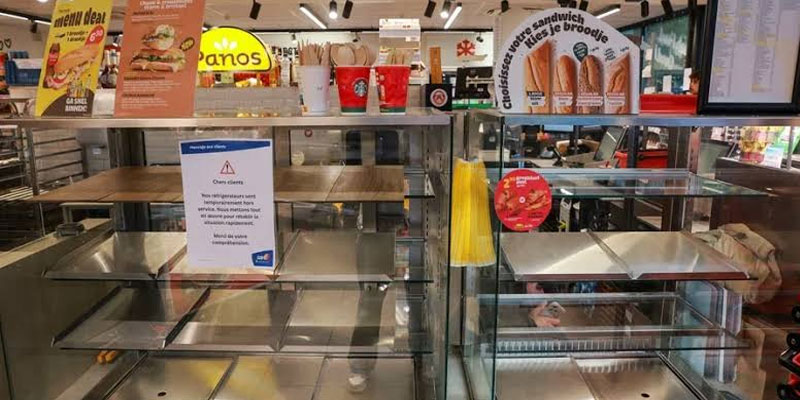
The attackers remotely accessed internet-connected refrigeration controllers and manipulated their operating settings. By triggering abnormal, prolonged defrost cycles, they caused temperatures inside refrigerators and freezers to rise dramatically, reportedly reaching as high as 50 degrees Celsius.
The disruption lasted several hours, forcing supermarkets to discard fresh and frozen food. The Intermarché retail chain reportedly suffered losses worth tens of millions of euros in a single day.
The incident exposed how digital interference with ordinary commercial equipment can produce physical damage, financial losses and potential public-safety risks without hackers entering a building.
France Identifies An IRGC-Linked Cyber Unit
French Foreign Minister Jean-Noël Barrot publicly attributed the operation to Iran’s IRGC, describing it as unprecedented in scale and aggression. Investigations by French intelligence and cybersecurity agencies identified Shahid Kaveh, an offensive cyber unit affiliated with the IRGC’s Electronic and Cyber Centre, as the alleged perpetrator.
Authorities named three individuals associated with the operation: Hamid Reza Lashgarian, Mahdi Lashgarian and Reza Salarvand. Investigators cited the use of Persian-language elements and internet addresses linked to devices in Iran. Paris prosecutors have opened a judicial investigation and sought international arrest warrants for the unit’s leadership.
These are French government allegations and investigative findings, not yet a final judicial determination.
Diplomatic Fallout and European Security Concerns
France summoned Iran’s ambassador on November 10 to lodge a formal protest. Barrot said Paris would seek EU-level sanctions against those responsible and would not rule out additional proportionate measures, including actions not publicly disclosed.
The concern extends beyond France. On November 2, suspected attacks or disruptions involving supermarket refrigeration systems were reported in at least nine other European countries. Authorities have not established that every incident was connected to the same operation.
A Warning for Critical Civilian Infrastructure
The attacks have exposed vulnerabilities in internet-connected industrial control systems, particularly equipment protected by weak passwords or inadequate security. Refrigeration is central to food distribution, while similar technology supports healthcare and other essential services. A separate attempted manipulation of blood-bank equipment in France was reportedly thwarted before supplies were affected.
Cybersecurity Must Become a National-Security Priority
France’s response signals that cyber sabotage targeting civilian infrastructure will be treated as a national-security threat, not merely a commercial disruption. The challenge now is to establish accountability, strengthen protection of vulnerable systems and prevent further attacks. Whether European sanctions follow will test the continent’s ability to respond collectively to state-linked cyber threats.
(With agency inputs)