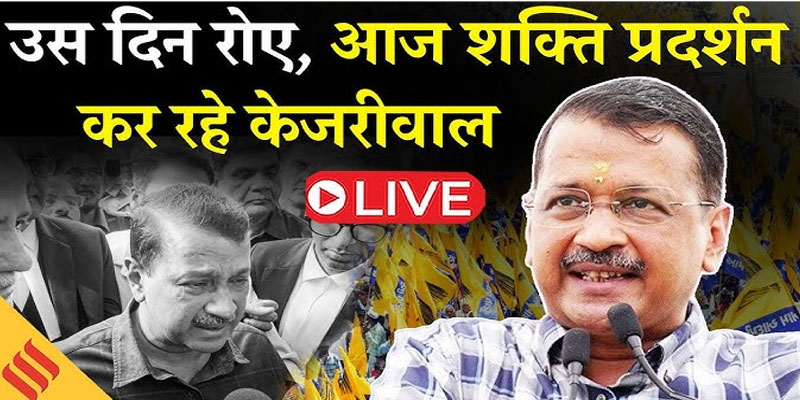
Arvind Kejriwal’s rally at Jantar Mantar on March 1, 2026, marks a pivotal political comeback following his discharge in the Delhi excise policy case. The Rouse Avenue Court’s decision to clear Kejriwal, Manish Sisodia, and others has provided the Aam Aadmi Party (AAP) with a critical legal and political reprieve after months of uncertainty.
The discharge significantly reshapes AAP’s immediate strategy. By criticizing the CBI for failing to establish a prima facie case, the court ruling strengthens Kejriwal’s long-standing narrative of political victimhood. AAP is expected to leverage this judgment to reinforce its claim of being targeted by the BJP-led central government.
The rally’s focus on employment issues reflects tactical recalibration. Allegations of large-scale job removals under the current administration allow AAP to reconnect with affected grassroots segments—such as bus marshals and Mohalla Clinic workers—who were once central to its governance narrative.
Organizationally, the rally serves as a morale booster after AAP’s setback in the 2025 Delhi Assembly elections. Public mobilization at a symbolic protest venue like Jantar Mantar signals renewed confidence and an attempt to regain political momentum.
Strategically, the timing is crucial. With upcoming electoral challenges in Punjab and Gujarat, AAP needs to reassert leadership clarity and ideological positioning. Kejriwal’s direct engagement with supporters helps stabilize internal ranks and project continuity.
However, uncertainty persists. The CBI’s intention to appeal the discharge in the Delhi High Court could reopen legal battles, potentially disrupting the revival narrative.
In the near term, the rally provides Kejriwal with a platform to shift discourse from legal defense to political offense. Whether this resurgence translates into sustained electoral recovery will depend on AAP’s ability to convert legal relief into tangible public trust and policy-driven mobilization.