A pilgrimage caught in a Himalayan catastrophe
The devastating flash floods along the Nepal–China border have transformed a sacred pilgrimage season into a major humanitarian crisis. Nepalese authorities have reported hundreds of people missing, including a large number of foreign nationals travelling through the Rasuwa district towards Tibet. Early reports put the number of missing foreign tourists at more than 390, while subsequent updates indicated that the number of missing foreigners in Nepal could approach 600 as information from remote areas continues to emerge. Indian nationals constitute a significant share of those unaccounted for, with many believed to have been travelling towards Mount Kailash and Lake Manasarovar.
The scale of the tragedy is still evolving. Nepal's Foreign Minister Shisir Khanal has been central to the government's communication on the disaster; he assumed office in March 2026.
A disaster triggered by an extraordinary natural event
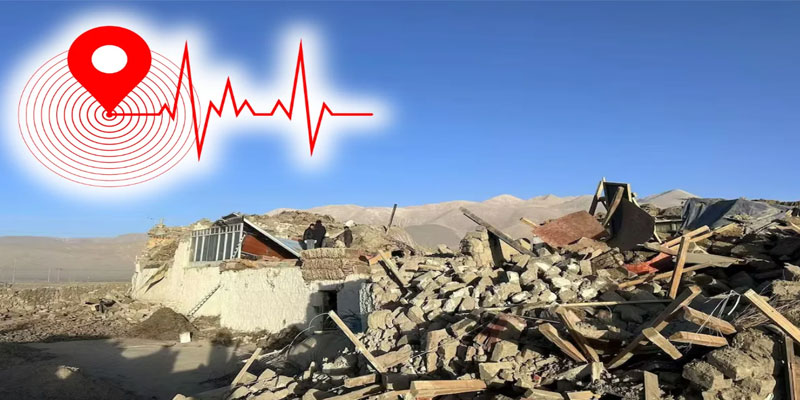
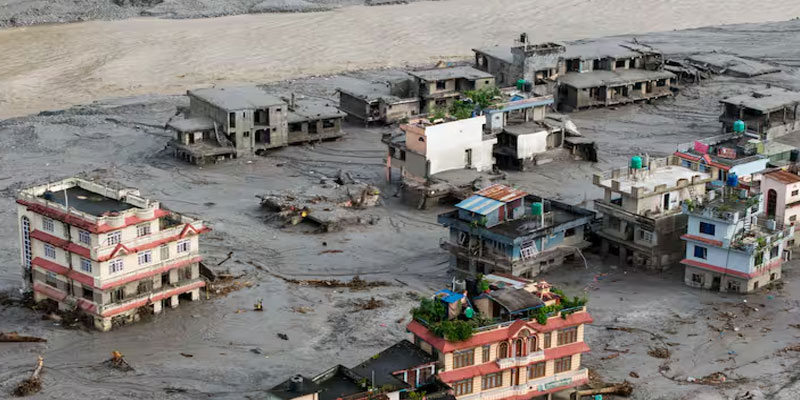
The flooding struck the Bhote Koshi–Trishuli river system in Nepal's mountainous Rasuwa district on August 26. Initial reports suggested that an earthquake had triggered an avalanche. However, subsequent analysis by the US Geological Survey indicated that the seismic signal itself was generated by a glacial collapse and debris flow, rather than by a conventional earthquake. A huge mass of ice and rock collapsed from the high Himalayas, sending an enormous surge of water, mud and debris downstream.
The consequences were catastrophic. Villages, roads, bridges, power infrastructure and border facilities were swept away or buried. Communication failures and destroyed road links have made it exceptionally difficult to establish the whereabouts of travellers. Rescue teams are consequently working against both geography and time.
Why so many Indians were in the region
The concentration of Indian pilgrims is not accidental. Kailash Mansarovar is among the most revered pilgrimage destinations in Asia. The Government of India's official Kailash Manasarovar Yatra website describes the journey as having profound religious and cultural importance for Hindus, Jains and Buddhists. The official pilgrimage is organised annually by the Ministry of External Affairs through the Lipulekh and Nathu La routes.
For Hindus, Mount Kailash is traditionally regarded as the abode of Lord Shiva and Goddess Parvati. For Jains, the mountain is associated with spiritual liberation and the tradition surrounding the first Tirthankara, Rishabhadeva. Tibetan Buddhists associate Kailash with their sacred cosmology and a range of Buddhist deities and masters. Scholarly research also identifies Kailash as a sacred landscape shared across Hindu, Jain and Buddhist traditions, rather than merely a single religious destination.
This extraordinary spiritual importance explains why pilgrims continue to undertake a physically demanding Himalayan journey despite altitude, cold, difficult terrain and limited infrastructure.
When faith meets a changing Himalayan risk
The latest disaster, however, raises questions beyond immediate rescue operations. The Himalayas are increasingly exposed to climate-linked hazards, including glacier instability, landslides, avalanches and glacial lake outburst floods. Experts cited by the Guardian noted that warming is accelerating glacier retreat and weakening mountain permafrost, potentially increasing the likelihood of sudden high-altitude disasters.
This makes pilgrimage management a growing challenge. Religious devotion cannot eliminate geographical risk, while traditional travel routes can become extremely dangerous within minutes. Better early-warning systems, real-time weather and glacier monitoring, emergency communication networks, evacuation plans and coordinated information-sharing between Nepal, India and China are therefore becoming essential.
A sacred journey demands safer pathways
The Kailash tragedy is ultimately more than a story of missing pilgrims. It is a warning about the collision between faith, fragile Himalayan geography and a rapidly changing climate. The immediate priority must remain locating the missing, rescuing survivors and supporting affected families. But once the emergency passes, governments and pilgrimage organisers will need to reassess how such journeys are managed.
Kailash will continue to draw devotees because its spiritual significance transcends borders and generations. The lesson from this catastrophe is not that pilgrimage should stop, but that sacred journeys in an increasingly unpredictable Himalayas must be made substantially safer, better monitored and better prepared for nature's sudden extremes.
(With agency inputs)