Opposition invokes Trump's setback to challenge Modi's political dominance, while BJP dismisses comparisons as misleading.
Congress, Shiv Sena (UBT) and AIMIM have portrayed the Democrats' sweeping victory in the 2026 US midterm elections as evidence of a broader global pushback against right-wing governments. Seizing the opportunity, India's Opposition has turned the Republican setback into a political message against the BJP, popularising the slogan "Today POTUS, Tomorrow LOTUS" to suggest that Prime Minister Narendra Modi could face a similar electoral backlash. The BJP, however, has rejected the comparison, arguing that India's political realities are fundamentally different.
Trump's Electoral Setback
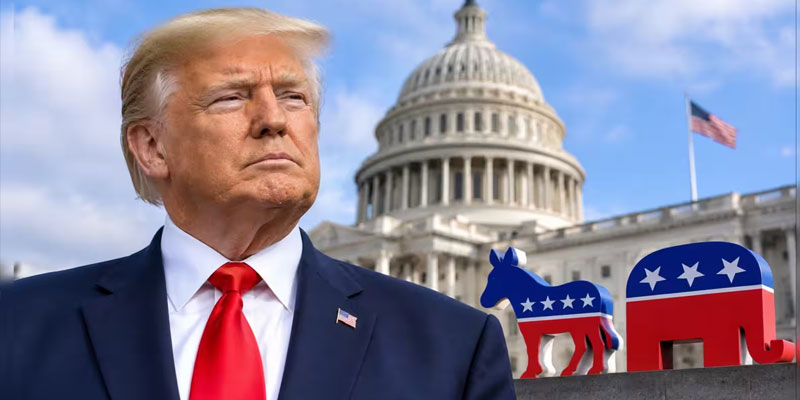
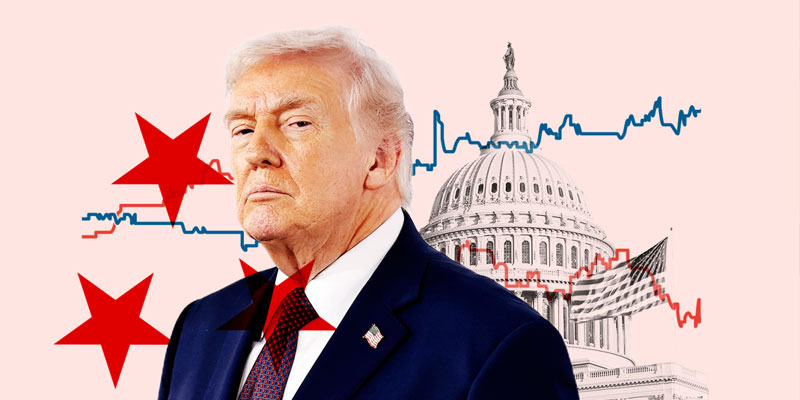
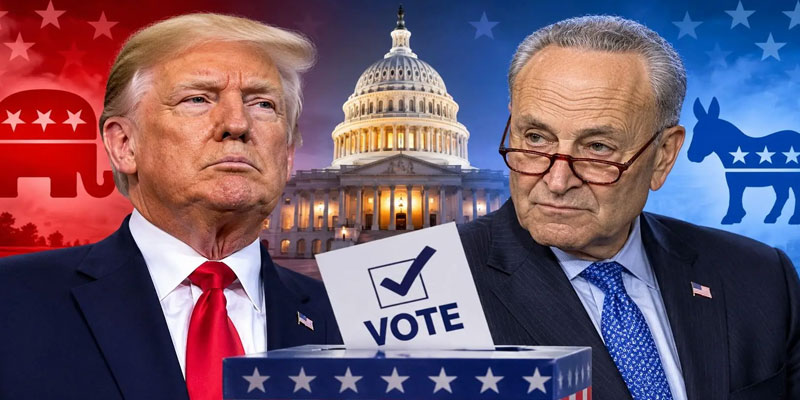
The 2026 US midterm elections delivered a significant blow to President Donald Trump and the Republican Party, with Democrats winning control of both the House of Representatives and the Senate. The outcome ended unified Republican control of Congress, creating a powerful institutional check on Trump's administration during the remaining two years of his presidency.
Voter dissatisfaction over rising prices, the Iran war and allegations of government corruption reportedly contributed to the Democratic resurgence.
For India's Opposition, the result offered an important political narrative: even powerful leaders with strong electoral mandates can face voter resistance when public dissatisfaction builds.
The Political Flashpoint: POTUS Versus LOTUS
Congress, Shiv Sena (UBT) and AIMIM interpreted the Democratic victory as a warning for right-wing political establishments globally.
Congress MP Pawan Khera drew a direct parallel by describing Trump as "America's Modi" and Modi as "India's Trump". Congress leader Kumari Selja argued that voters eventually respond against excessive centralisation of authority.
The sharpest political messaging came from Congress leader Priyanka Kakkar, whose slogan, "Today POTUS. Tomorrow LOTUS", quickly became the Opposition's defining attack.
· POTUS refers to the President of the United States.
· LOTUS represents the BJP's election symbol.
· The slogan suggests that Trump's political setback could foreshadow an electoral challenge to Modi and the BJP.
Congress general secretary K.C. Venugopal further amplified the message with the phrase "change is in the air".
BJP's Counterattack: India Is Not America
The BJP dismissed the Opposition's interpretation as politically motivated and historically misplaced.
National spokesperson Pradeep Bhandari responded: "POTUS can come and go. LOTUS wohi rahega," asserting that American presidents change while the BJP's political position remains strong.
BJP MP Manju Sharma also argued that India's political circumstances cannot be compared with those of the United States. The party maintains that Modi continues to enjoy substantial political support, backed by a strong organisational network and established electoral appeal.
What The Political Battle Really Means
The Opposition's argument is primarily symbolic, rather than a reliable prediction of India's next electoral outcome. US midterms and Indian general elections operate under entirely different political and institutional frameworks.
Nevertheless, Democrats' victory provides the Opposition with three potential arguments:
· Powerful incumbents are not immune to electoral accountability.
· Inflation, governance concerns and public dissatisfaction can undermine established political advantages.
· Democratic institutions and electoral checks remain essential to political accountability.
Congress has also connected the American developments with its opposition to the Centre's 'One Nation, One Election' proposal, arguing that frequent elections provide opportunities for voters to hold governments accountable.
Beyond Political Slogans, The Real Test Is Voter Sentiment
The American result may offer India's Opposition a useful political talking point, but electoral outcomes cannot be imported from one democracy into another. The BJP retains its organisational strengths, while India's political landscape is shaped by regional alliances, welfare delivery, leadership credibility and state-specific issues. The Opposition must therefore translate international political symbolism into a credible domestic alternative. Ultimately, "Today POTUS, Tomorrow LOTUS" may generate headlines, but whether it becomes an electoral reality will depend on Indian voters, their everyday concerns and the Opposition's ability to convert public dissatisfaction into political momentum.
(With agency inputs)