Parliament Grinds to a Halt Amid Coordinated Opposition Offensive
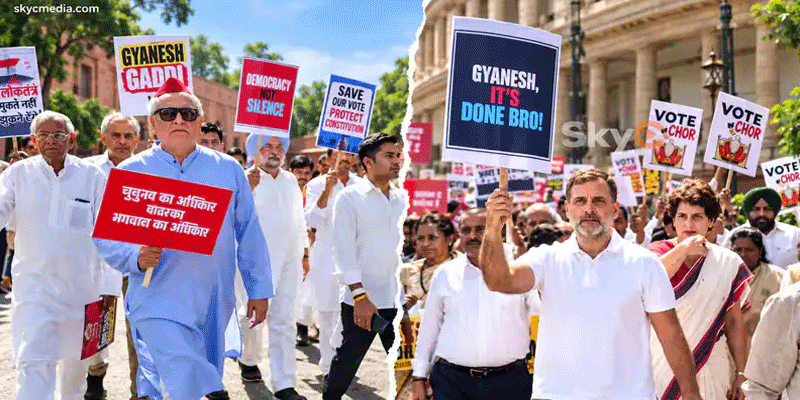
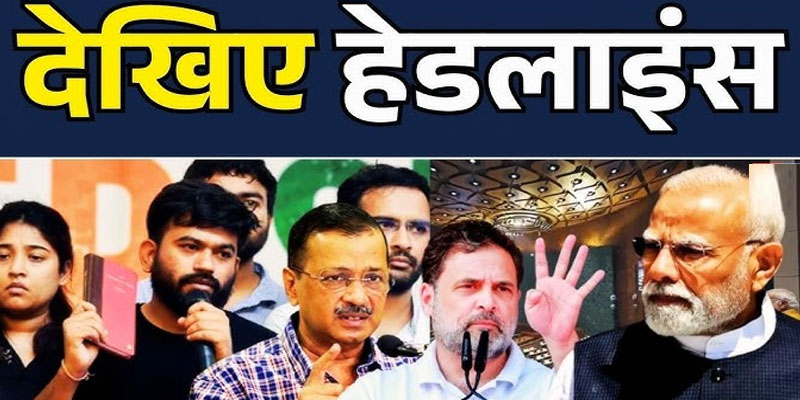
The second day of the Monsoon Session of Parliament witnessed severe disruptions and repeated adjournments as the Opposition intensified its attack on the Centre over three contentious issues—the alleged NEET paper leaks, police action against Cockroach Janta Party (CJP) protesters, and the Ram Mandir donation controversy. Sloganeering, placards and demands for immediate discussions brought proceedings in both the Lok Sabha and Rajya Sabha to a standstill, reflecting how political battles unfolding on the streets have now shifted decisively to Parliament.
Three Controversies Converge
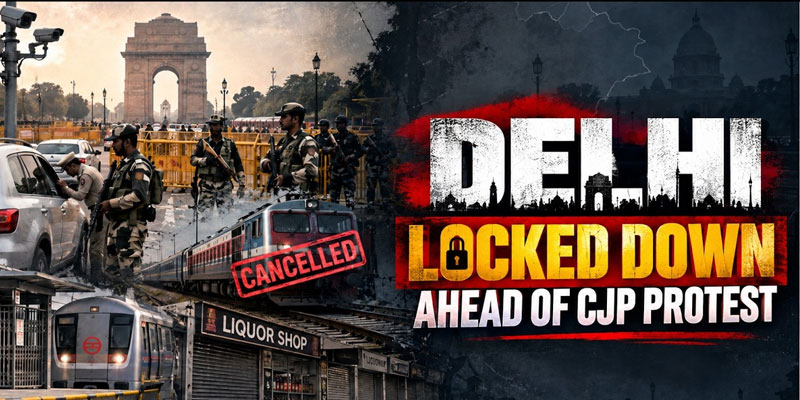
The ongoing unrest has its roots in the nationwide outrage over alleged irregularities in the NEET-UG examination, which triggered the CJP-led "Chalo Sansad" protests in Delhi. The demonstrations escalated after police used lathi-charge, tear gas and barricades to stop protesters marching towards Parliament, later dismantling the protest site at Jantar Mantar before demonstrators regrouped.
Adding to the political heat is the Ram Mandir donation controversy. Allegations of financial irregularities involving donations made to the Shri Ram Janmabhoomi Teerth Kshetra Trust have reached the Supreme Court, which has sought status reports from the Special Investigation Team (SIT) and suggested that the probe be strengthened with experienced officers while cautioning against politicising the issue.
The Opposition now sees these controversies as interconnected examples of alleged governance failures, institutional decline and misuse of state power, making Parliament the principal platform to demand accountability.
Day Two Marked by Repeated Disruptions
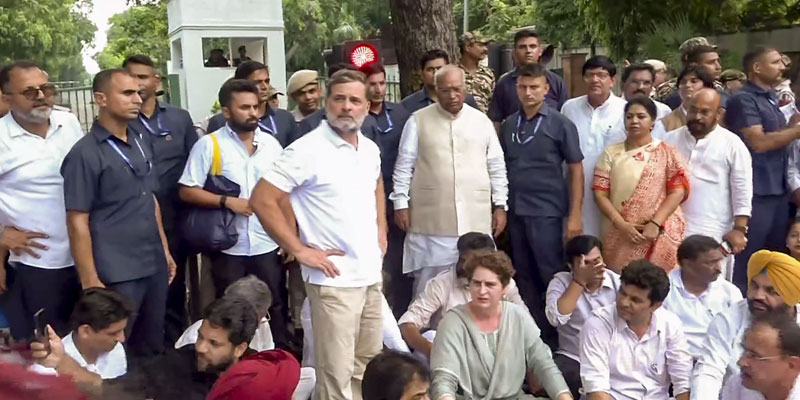
Both Houses experienced repeated interruptions as Opposition MPs demanded dedicated debates on examination reforms, police action against students and transparency in the Ram Mandir donation investigation. Members raised slogans, displayed placards and pressed for discussions through adjournment and suspension-of-business motions.
Despite attempts by the presiding officers to proceed with scheduled legislative business, persistent protests resulted in multiple adjournments, extending the disruption that characterised the opening day of the session.
Opposition leaders maintained that Parliament could not continue with routine business while issues affecting students, democratic rights and public trust remained unaddressed. Their coordinated strategy seeks official government statements on exam integrity, accountability for alleged police excesses, and an independent or court-monitored investigation into the temple donation allegations.
Government Defends Legislative Agenda
The government has rejected the Opposition's approach, arguing that Parliament cannot function if every politically contentious issue is allowed to stall legislative business. Ministers have maintained that concerns can be addressed through appropriate parliamentary procedures but have resisted attempts to allow the Opposition to dictate the agenda.
The continuing deadlock mirrors previous Monsoon Sessions where repeated disruptions substantially reduced legislative productivity, curtailed Question Hour and weakened parliamentary oversight of the executive. With little business transacted so far, concerns are growing that this session could witness a similar erosion of effective legislative functioning.
Analytical Takeaways: Parliament as an Extension of Street Politics
· A unified Opposition narrative: Congress and other INDIA bloc parties have strategically combined the issues of NEET paper leaks, CJP police action and the Ram Mandir donation controversy into a broader narrative of governance failure, institutional erosion and declining public accountability.
· Government seeks to retain agenda control: By resisting demands for special debates, the Centre appears intent on preventing street protests from determining Parliament's legislative priorities, fearing that yielding now could encourage similar tactics in future sessions.
· Political gains outweigh institutional costs: While repeated disruptions diminish parliamentary productivity and weaken legislative scrutiny, both the government and the Opposition appear to believe that demonstrating political resolve before their respective constituencies offers greater immediate electoral and political dividends.
A Session Testing Democracy Beyond the Numbers
The second day of the Monsoon Session illustrates how Parliament is increasingly becoming an extension of political mobilisation outside its walls rather than a forum for resolving national disputes through deliberation. Whether the current impasse evolves into meaningful debate or continues as prolonged confrontation will determine not only the productivity of this session but also public confidence in Parliament's ability to address issues of education, governance, law enforcement and institutional accountability.
(With agency inputs)