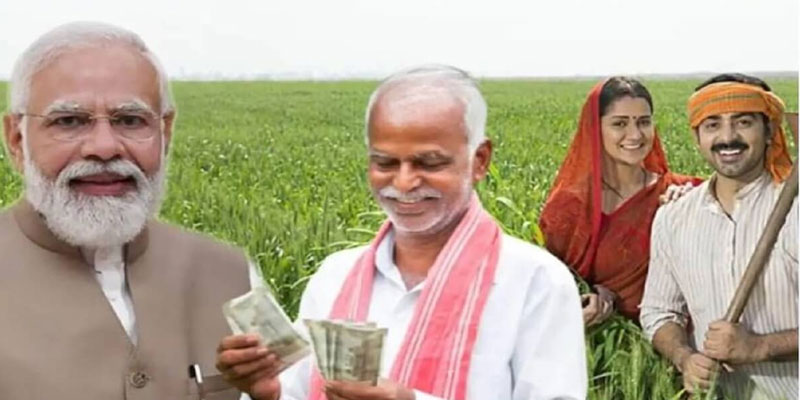
PM Modi unveils projects worth over Rs 14,000 crore in Banaskantha, releases PM-KISAN instalment, reinforcing the Centre's focus on farmer welfare, rural infrastructure and agricultural modernisation. During his Gujarat visit, the Prime Minister launched and laid foundation stones for development projects covering dairy infrastructure, clean energy, horticulture, railway connectivity and social-sector facilities. He also released the 24th instalment of PM-KISAN, transferring approximately ₹19,000 crore to nearly 10 crore farmers nationwide. The announcements combine immediate financial assistance with longer-term investments aimed at strengthening rural livelihoods and advancing the vision of Viksit Bharat.
PM-KISAN: Nearly 10 Crore Farmers Receive Assistance
The latest instalment provides direct financial support to eligible farming families through the government's income-support programme.
Key figures highlighted during the visit include:
· National transfer: Approximately ₹19,000 crore to nearly 10 crore farmers.
· Gujarat beneficiaries: More than 50 lakh farmers received over ₹1,000 crore.
· Banaskantha: Nearly ₹50 crore reached farming families.
· Cumulative assistance: Nearly ₹4.5 lakh crore has reportedly been transferred directly to farmers under PM-KISAN.
Modi highlighted that small and marginal farmers constitute more than 85% of India's farming community, making direct financial assistance particularly important for agricultural households.
What Are the Major Projects Worth ₹14,000 Crore?
The development package covers several sectors, with particular emphasis on dairy, agricultural productivity and connectivity.
1. Dairy and Clean Energy Infrastructure
Two Banas Dairy Bio-CNG plants are being developed at Tharad and Radhanpur.
· Tharad plant: Processing capacity of 75 metric tonnes of cattle dung daily.
· Radhanpur plant: Processing capacity of 100 metric tonnes daily.
An automated storage-and-retrieval facility for ultra-high-temperature (UHT) dairy products at Palanpur will further strengthen dairy logistics and storage.
2. Horticulture Development
Work on 12 horticulture clusters covering approximately 1.46 lakh hectares is expected to benefit more than 1.3 lakh farmers. The initiative aims to improve production, processing, storage and market access.
3. Railway Connectivity
The Prime Minister flagged off two important services:
· Sabarmati–Varanasi Express.
· Mehsana–Becharaji–Sabarmati MEMU service.
Improved connectivity is expected to support passenger movement and agricultural logistics.
Why Does This Investment Matter for Farmers?
The projects seek to connect agricultural production with processing, transportation and additional income opportunities.
Converting cattle dung into Bio-CNG can generate clean energy and create economic value from livestock waste. Horticulture clusters can reduce post-harvest losses, while improved railway connectivity can help farmers access wider markets.
From Financial Assistance to Sustainable Rural Prosperity
The combination of direct income transfers and infrastructure investment reflects a broader strategy to modernise India's agricultural economy. However, the real measure of success will be timely project completion, better market access and measurable improvements in farmers' earnings. The larger objective is to move Indian agriculture beyond subsistence support towards productivity, value addition and sustainable rural prosperity, making farmers active partners in the journey towards Viksit Bharat.
(With agency inputs)