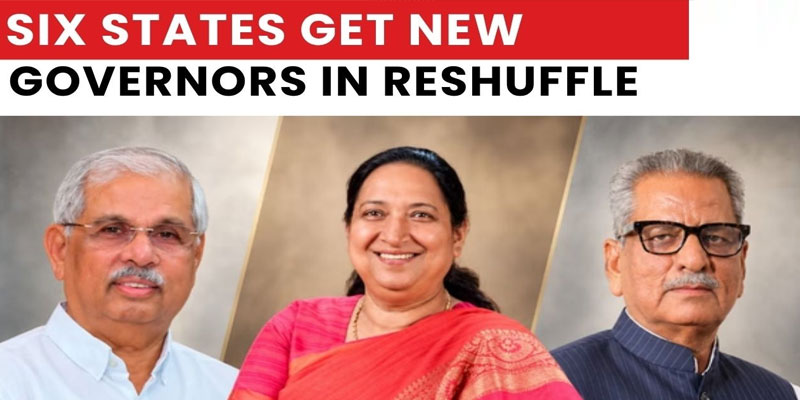
Major Gubernatorial Changes Announced
President Droupadi Murmu has announced a significant reshuffle of Governors across six states, transferring two serving Governors and appointing four new incumbents. The changes affect Tamil Nadu, Kerala, Sikkim, Odisha, Karnataka and Uttarakhand, with implications for constitutional administration and Centre-state relations. The appointments take effect from the dates the respective Governors assume office.
Who Moves Where? The Six Appointments
According to the Rashtrapati Bhavan announcement, the reshuffle involves the following changes:
· Tamil Nadu: Rajendra Vishwanath Arlekar moves from Kerala, where he had also held additional charge of Tamil Nadu since March 12, 2026.
· Kerala: Om Prakash Mathur, previously Governor of Sikkim, takes over from Arlekar.
· Sikkim: Dushyant Gautam has been appointed the new Governor.
· Odisha: Braj Mohan Ram succeeds Hari Babu Kambhampati.
· Karnataka: Dr Sudha Yadav succeeds Thaawarchand Gehlot.
· Uttarakhand: Dr Dhal Singh Bisen succeeds Lieutenant General Gurmit Singh (Retd).
The reshuffle ends the arrangement under which one Governor handled Kerala and Tamil Nadu, restoring separate incumbents to the two states.
Tamil Nadu and Kerala: The Political Significance
Tamil Nadu is likely to attract particular attention because of persistent tensions between the Governor’s office and the Dravida Munnetra Kazhagam (DMK)-led government. Disputes over legislative Bills, university appointments and the constitutional role of the Governor have repeatedly strained relations between Raj Bhavan and the state administration.
Arlekar’s full-time appointment provides continuity in the office but places him in a politically sensitive environment where cooperation and constitutional restraint will be closely scrutinised.
In Kerala, Mathur takes charge amid an equally significant political setting, with the Left Democratic Front (LDF) government likely to watch how the Governor exercises constitutional discretion. His transfer also creates a vacancy in Sikkim, now filled by Gautam.
Political Calculations Behind the Reshuffle
The appointments bring several experienced political figures into gubernatorial positions. Governors are appointed by the President and serve as constitutional heads of their respective states, while the Union government plays a central role in recommending appointments.
The reshuffle follows a broader round of gubernatorial and Lieutenant Governor changes in March 2026. Together, these developments indicate continuing adjustments to constitutional appointments amid political differences between the Centre and several state governments.
Constitutional Balance Will Define Their Tenure
The real test of this reshuffle will begin when the new Governors assume office. Their handling of legislative Bills, government formation, university appointments and relations with elected administrations will shape public perceptions of their roles.
Ultimately, gubernatorial appointments must strengthen constitutional governance rather than deepen political confrontation. The success of the new incumbents will depend on their ability to uphold constitutional responsibilities, respect the democratic mandate of elected governments and maintain a workable balance between the Union and the states.
(With agency inputs)