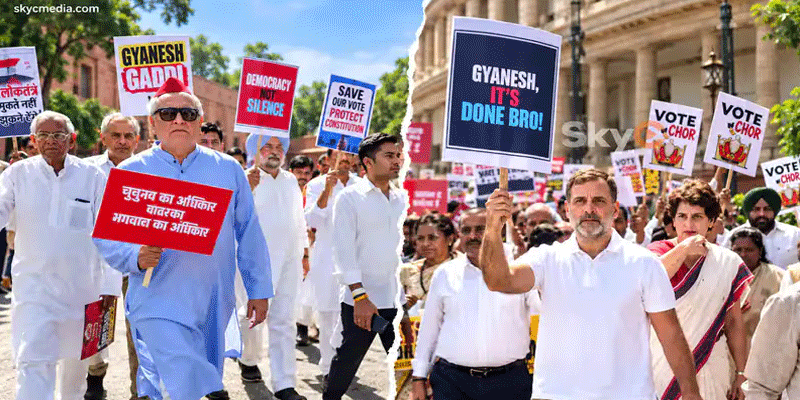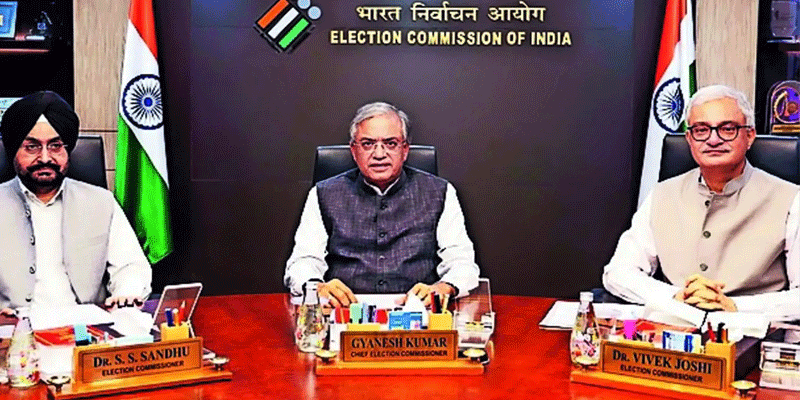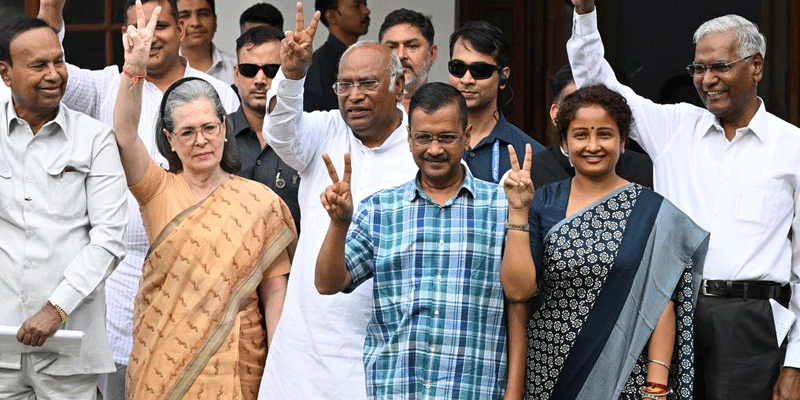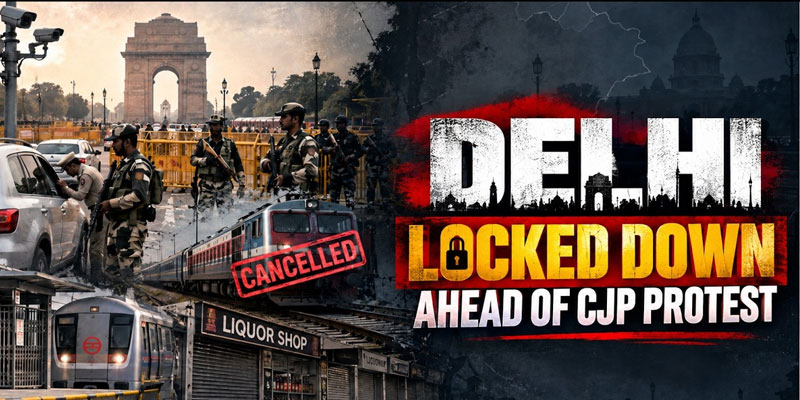
Delhi is bracing for a major security and transport challenge ahead of the Cockroach Janata Party’s (CJP) planned October 10 protest at Jantar Mantar, demanding the resignation of Chief Election Commissioner Gyanesh Kumar. With police denying permission and extensive restrictions planned across the capital, the Supreme Court has urged authorities to balance security requirements with commuters’ needs and the right to peaceful protest.
Why the Protest Has Triggered a Security Alert
The demonstration is linked to controversy over the Election Commission’s Special Intensive Revision (SIR) of electoral rolls. Critics argue that the revision risks excluding eligible voters, while the Election Commission maintains that the process allows errors to be corrected and eligible voters to enrol.
CJP and supporting groups have called for a gathering at Jantar Mantar. Delhi Police refused permission, citing short notice, prohibitory orders under Section 163 of the Bharatiya Nagarik Suraksha Sanhita (BNSS), and concerns over public order, traffic and compliance with previous directions. Organisers have challenged the restrictions and said the protest should proceed.
Massive Deployment and Preventive Measures
The Union government has made 221 companies of Central Armed Police Forces—around 23,000 personnel—available to Delhi Police for deployment between October 8 and 12.
Additional preparations include:
· Heightened checks and surveillance at Delhi’s borders and key entry points.
· Barricades, designated blocking points and detention facilities across districts.
· Body-worn cameras for frontline officers and additional women personnel.
· Outreach to paying-guest accommodation operators and educational institutions to discourage students from joining the mobilisation.
· Closure of liquor shops on October 9 and 10 under an order citing public order concerns.
Police have also called for restraint and minimum use of force while handling crowds. Officials say the measures are intended to prevent disorder and protect sensitive locations.
Metro and Rail Curbs Raise Commuter Concerns
Transport restrictions threatened to affect thousands of daily commuters. Delhi Police asked the Delhi Metro Rail Corporation to close entry and exit gates at 57 stations from 9 pm on October 9, including major interchanges such as Rajiv Chowk, Central Secretariat, New Delhi and Kashmere Gate. Railways also announced cancellations affecting Mail and Express trains scheduled to arrive at New Delhi or Hazrat Nizamuddin between 4 am and 2 pm on October 10. Some services were cancelled, diverted or rescheduled because of anticipated congestion.
Passengers have been advised to verify train and Metro updates before travelling. Importantly, closing station gates does not necessarily mean that Metro trains stop operating across the network.
Supreme Court Calls for Proportionate Restrictions
On October 9, the Supreme Court questioned whether extensive transport curbs were justified, highlighting the hardship they could cause students, workers and senior citizens travelling from the National Capital Region. It urged the government to reconsider road and Metro restrictions, stressing that public order must be maintained without bringing essential transport to a standstill. The government indicated that restrictions could be reviewed and regulated according to circumstances.
Security Must Not Eclipse Democratic Rights
Delhi’s preparations reflect the challenge of managing a potentially large mobilisation while protecting public safety and keeping the capital functioning. Yet, the effectiveness of security arrangements should be measured not simply by the number of personnel deployed or restrictions imposed, but by their necessity, proportionality and impact on ordinary citizens.
Authorities must facilitate lawful dissent wherever possible, communicate transport changes clearly and ensure that any police intervention remains restrained and accountable. Equally, organisers and participants must respect lawful directions and avoid violence or disruption. A secure capital and a functioning democracy are not competing goals; responsible policing must protect both public order and the right to peaceful expression.
(With agency inputs)