Over 6% of voters were dropped from Manipur’s electoral rolls and 11% from Sikkim’s after the Election Commission of India’s Special Intensive Revision (SIR), with final photo electoral rolls published on September 6, 2026. The exercise has significantly reduced the electorate in both northeastern states while intensifying the national debate over voter-roll accuracy, verification and safeguards against wrongful deletions.
What the Special Intensive Revision Seeks
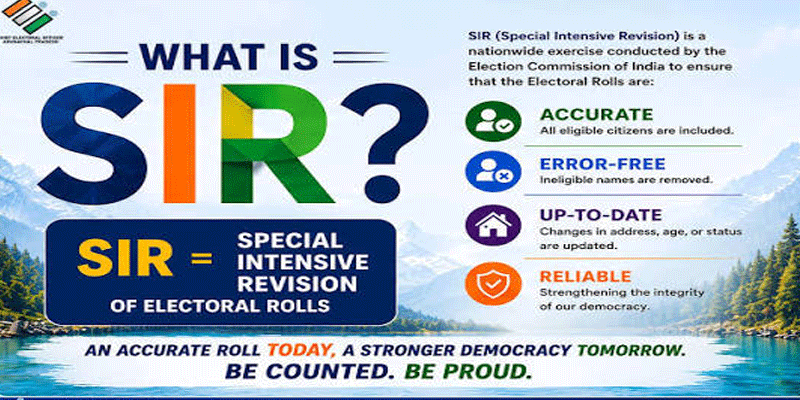
The SIR is a house-to-house verification exercise designed to identify and remove dead, shifted, duplicate and otherwise ineligible voters while adding newly eligible citizens. In its third phase, covering 16 states and three Union Territories, July 1, 2026 was the qualifying date, with Booth Level Officers conducting enumeration between May 30 and June 28.
Draft rolls were subsequently published, allowing citizens to file claims and objections before hearings and final publication. In states such as Manipur and Sikkim, the exercise assumes added significance because migration, displacement and outdated records can complicate voter verification.
Manipur and Sikkim See Significant Reductions
Manipur’s electorate fell from 20,93,076 before revision to 19,60,620, following the removal of 1,32,456 names. Sikkim’s rolls declined from 4,71,081 to 4,18,467, with 52,614 names deleted.
In Sikkim, 37,724 deletions were classified under Absentee, Shifted, Dead and Duplicate categories. These included 10,837 deceased voters, 8,648 absent or untraceable electors, 14,603 permanently shifted voters and 2,396 duplicate entries. Another 16,485 names were found ineligible during hearings.
The Delhi SIR Shake-Up: 47.56 Lakh Names Out
The northeastern figures form part of a much larger national exercise. Draft rolls across the third phase reportedly removed more than 6.15 crore names, with Delhi witnessing the highest proportion of deletions at 32.78%.
In absolute terms, the Delhi SIR shake-up saw 47.56 lakh names removed, leaving 97.53 lakh voters in the draft rolls. Dadra & Nagar Haveli and Daman & Diu and Telangana also recorded substantial reductions.
Interestingly, Manipur and Sikkim ranked among the states with comparatively lower deletion percentages at the draft stage, although their final reductions remain substantial relative to their smaller electorates.
Accuracy Versus Inclusion: The Central Challenge
The SIR could strengthen electoral integrity by ensuring that voter lists reflect actual residents rather than accumulated, outdated entries. In sensitive northeastern states, accurate residency records can be particularly important for maintaining confidence in elections.
However, deletion exercises also carry an inherent risk: genuine voters who are temporarily absent, displaced or unable to produce required documentation could potentially be removed. That makes accessible claims procedures, transparent hearings and effective grievance redressal essential.
Cleaner Rolls Must Also Protect Every Voter
The SIR’s central objective is straightforward: an electoral roll should be accurate, current and inclusive. The challenge is achieving all three simultaneously.
The latest revisions could make future elections more administratively reliable, but their credibility will ultimately depend on how effectively legitimate voters can reclaim their names. Regular updating, integration with death and migration records, transparent verification and swift restoration mechanisms can prevent stale entries from returning while protecting genuine electors.
A cleaner electoral roll is valuable only when accuracy does not come at the cost of democratic inclusion. The real success of SIR will therefore be measured not simply by how many names are removed, but by how confidently every eligible citizen remains represented.
(With agency inputs)