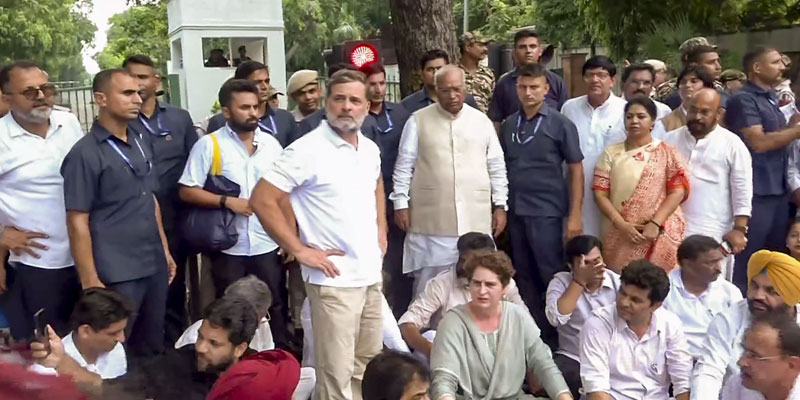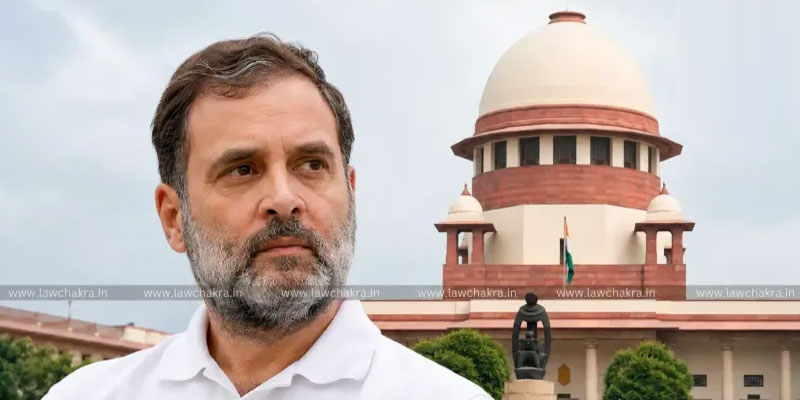
Congress MP and Leader of the Opposition Rahul Gandhi received significant interim relief from the Supreme Court after it paused proceedings in a disproportionate assets case pending before the Allahabad High Court. The apex court directed the High Court not to proceed further for now and restrained the Central Bureau of Investigation (CBI) and the Enforcement Directorate (ED) from filing any report based on the High Court's earlier directions. The order temporarily halts the investigative process while the Supreme Court examines Gandhi's challenge, making it an important development in a politically sensitive legal dispute.
Supreme Court Steps In
A Bench headed by Chief Justice Surya Kant, along with Justices Joymalya Bagchi and V. Mohana, issued notices to the petitioner, the CBI and the ED after hearing Rahul Gandhi's special leave petition.
The Court also directed the Allahabad High Court to defer its next hearing, which had been scheduled for August 20, until the Supreme Court takes up the matter again.
By staying further proceedings, the Bench has effectively frozen the High Court's directions that required central investigative agencies to verify the allegations and submit progress reports.
What the Interim Order Means
The Supreme Court's intervention does not decide whether the allegations are true or false. Instead, it preserves the status quo until the legal questions surrounding the High Court's directions are examined.
The immediate impact of the order includes:
· Suspension of proceedings before the Allahabad High Court.
· A bar on the CBI and ED from submitting reports under the High Court's earlier orders.
· A pause on any investigative steps that could have led to a formal inquiry or First Information Report.
This ensures that no further action is taken while the apex court considers the legality of the earlier judicial directions.
How the Case Reached the Supreme Court
The case originated from a petition filed by S. Vignesh Shishir, a Karnataka-based BJP worker, who alleged that Rahul Gandhi possessed assets disproportionate to his known sources of income.
The Allahabad High Court subsequently directed the CBI to explain what action had been taken on the complaint and later asked the agency to verify the allegations and report back. Gandhi challenged those directions before the Supreme Court, arguing that they warranted judicial scrutiny.
The Larger Legal Questions
The case raises important questions extending beyond the allegations themselves.
Among the key issues are:
· Whether private petitions can trigger CBI or ED action against political leaders.
· What threshold of evidence is required before courts direct investigative agencies to verify allegations.
· Whether such judicial directions can be issued without a formal complaint under relevant anti-corruption laws.
The Supreme Court's eventual ruling could clarify the procedural safeguards governing politically sensitive investigations initiated through private litigation.
A Case That May Shape Future Judicial Standards
The Supreme Court's interim order provides Rahul Gandhi temporary legal protection while leaving the substantive questions unresolved. More importantly, the case has broader implications for how courts balance accountability with procedural fairness when allegations against public figures reach the judiciary. The final verdict could become an important precedent, defining the limits of judicially directed investigations and reinforcing the principles that govern politically charged legal disputes in India's constitutional framework.
(With agency inputs)