Supreme Court Hears Pleas Over Alleged Police Brutality
The Supreme Court on Monday heard a batch of petitions alleging police brutality against protesters during demonstrations at Delhi’s Jantar Mantar and other locations linked to the NEET controversy. The hearing has assumed national significance after the Bench observed that the constitutional right to peaceful protest cannot be curtailed merely because citizens are agitating, placing the police response under closer constitutional scrutiny. The court is also examining whether India requires a uniform national protocol for policing public demonstrations, a move that could have far-reaching implications beyond the present case.
From Street Protests to Constitutional Challenge
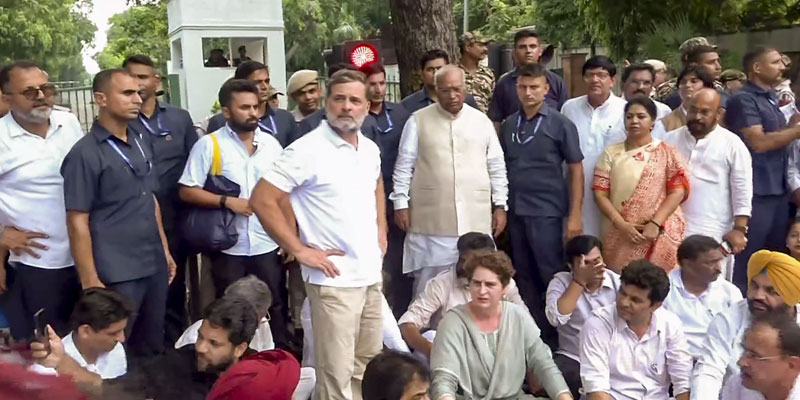
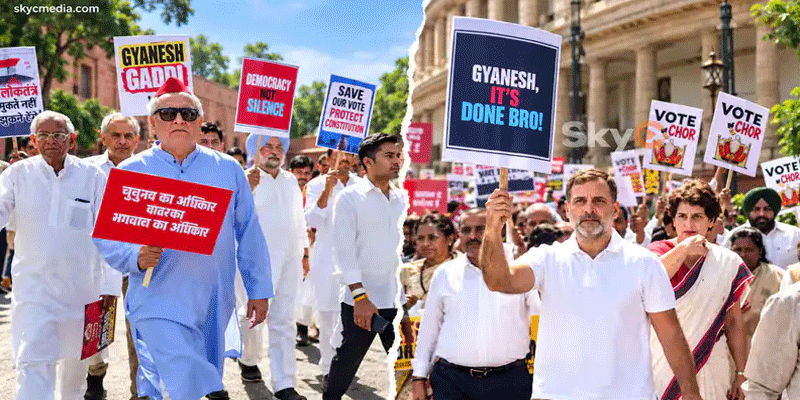
The petitions stem from allegations that the Delhi Police used disproportionate force during the July 20 protest march connected with the NEET paper leak controversy and subsequent demonstrations at Jantar Mantar and other parts of the national capital. Protesters and several civil rights groups have alleged the use of lathicharge, tear gas, and arbitrary detentions despite what they describe as peaceful assemblies.
The Delhi Police, however, has defended its actions, maintaining that intervention became necessary to preserve law and order. What initially appeared to be a dispute over crowd control has now evolved into a larger constitutional question: how far can the police go while managing lawful public assemblies without infringing upon fundamental rights?
Court Reinforces Constitutional Protection of Peaceful Protest
During the hearing, Chief Justice Surya Kant underscored that the Constitution unequivocally guarantees citizens the right to peaceful protest. The Bench remarked that "mere agitation" cannot become a justification for police excesses, reaffirming that democratic dissent remains a cornerstone of constitutional governance.
At the same time, the court acknowledged that police personnel often function under difficult and potentially volatile circumstances. Any future framework, it observed, must strike a careful balance between protecting civil liberties and ensuring public order. These observations indicate that the court is evaluating not only the Delhi incident but also broader policing practices adopted during public protests across the country.
Why the Case Could Become a National Landmark
The proceedings could culminate in judicially mandated nationwide guidelines governing the policing of demonstrations. Such a framework may define the circumstances under which force can be used, prescribe transparent procedures for issuing dispersal orders, mandate preservation of video evidence, and establish mechanisms for independent examination of complaints alleging excessive force.
Legal experts believe such standardisation could reduce recurring disputes in which protesters accuse authorities of unlawful violence while police justify their actions on grounds of maintaining order. Clear operational protocols would also provide greater legal certainty for law enforcement agencies performing their duties under challenging conditions.
Latest Developments and Expanding Judicial Focus
The matter was listed for hearing on July 28 after the Supreme Court agreed to examine the petitions. Meanwhile, the Delhi High Court has reportedly directed authorities to preserve video footage recorded during the protest, recognising its potential evidentiary value.
Several human rights organisations, including Amnesty International, have called for an independent and impartial investigation into the alleged police excesses, arguing that the reported use of force raises serious concerns regarding the protection of civil liberties and human rights.
Safeguarding Democracy Through Constitutional Accountability
The Supreme Court's intervention signals that the right to peaceful protest is a constitutional guarantee, not a privilege subject to administrative convenience. If the Bench ultimately frames nationwide guidelines, the judgment could reshape protest policing across India by establishing uniform standards that safeguard both democratic freedoms and public order. Beyond the immediate controversy, the case represents an important opportunity to strengthen constitutional accountability and reinforce the delicate balance between state authority and citizens' fundamental rights.
(With agency inputs)