A Historic Defense Initiative
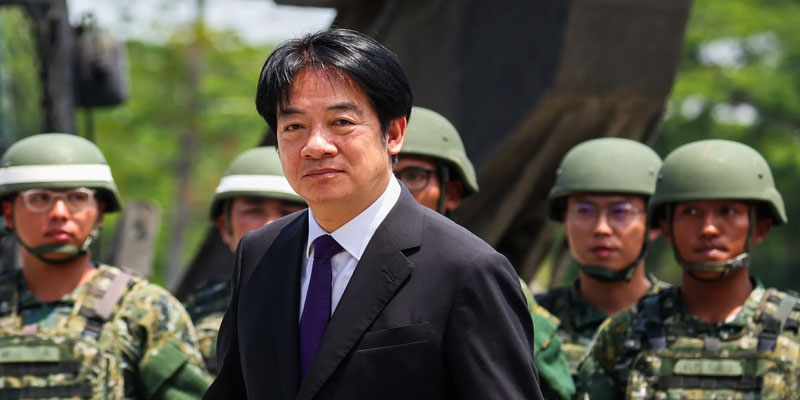
Taiwan’s President Lai Ching-te has announced a special supplementary defense budget of approximately $40 billion, designed to strengthen the island’s military capabilities in the face of escalating threats from China. The plan, detailed in an op-ed for The Washington Post, aims to finance significant arms acquisitions, primarily from the United States, and enhance Taiwan’s asymmetrical strengths through advanced technologies. Central to this effort is the “Taiwan Dome”, a multi-layered air defense system capable of detecting and intercepting missiles, rockets, drones, and aircraft—bolstering the island’s deterrence capabilities.
Focus on Asymmetry and Technological Edge
The budget emphasizes AI-driven, unmanned, and mobile missile systems designed to complicate potential aggressors’ calculations and increase the cost of any military action. By 2027, Taiwan aims to integrate these technologies to counter China’s gray-zone harassment and military pressure. If the legislature approves the $40 billion supplement, Taiwan’s total defense spending could rise to 3.3% of GDP in 2026, the highest since 2009, with ambitions to reach 5% by 2030. Analysts see this as a strategic pivot toward high-tech, asymmetric capabilities rather than conventional force parity.
Strengthening US-Taiwan Military Ties
The package underscores deepening defense cooperation with the United States, Taiwan’s primary unofficial ally. Planned procurement includes advanced US weaponry and technology transfers essential to sustaining credible deterrence against China’s significantly larger forces. US officials, including de facto ambassador Raymond Greene, have endorsed Taiwan’s strategy, emphasizing the importance of asymmetric capabilities to regional stability. This collaboration signals the shared interest of Washington and Taipei in counterbalancing Chinese assertiveness in the Indo-Pacific.
Strategic Context: Countering Chinese Pressure
China views Taiwan as a renegade province and has repeatedly demonstrated military assertiveness through drills and rhetoric. Taiwan’s government stresses that defending democratic freedoms and sovereignty requires robust defensive capabilities and international partnerships. The supplementary budget reflects a strategic recalibration, emphasizing innovation, self-reliance, and multilateral support to deter potential aggression and safeguard democratic governance.
Bolstering Deterrence and Regional Stability
President Lai’s $40 billion defense initiative represents a milestone in Taiwan’s military modernization, combining advanced systems like the Taiwan Dome, AI-enabled missiles, and strengthened US ties. By enhancing asymmetric capabilities and readiness, Taiwan seeks to reinforce deterrence, protect its democracy, and maintain regional stability amid a rapidly evolving geopolitical landscape dominated by Chinese assertiveness. The move signals both Taiwan’s resolve to remain self-reliant and the growing expectation for allies to support robust defense postures in the Indo-Pacific.
(With agency inputs)