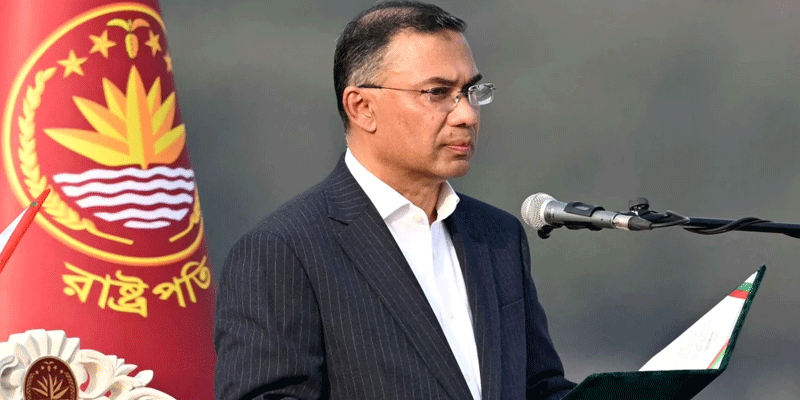
Bangladesh Prime Minister Tarique Rahman may visit New Delhi in November, as India and Bangladesh have resumed official-level discussions on his first bilateral trip since taking office. The visit has not yet been finalised, but the renewed talks indicate an effort by both sides to restore high-level engagement after recent diplomatic friction over the proposed visit and the BRICS invitation.
A New Government, An Unfinished Diplomatic Engagement
Rahman became Bangladesh’s prime minister in February 2026 following national elections, but his proposed bilateral visit to India has remained pending. New Delhi had extended an invitation for a standalone bilateral visit, while Rahman was separately invited to attend the BRICS Summit in New Delhi as chair of BIMSTEC.
The BRICS invitation subsequently became a source of disagreement. Bangladesh maintained that Rahman had been invited in his capacity as BIMSTEC chair rather than as Bangladesh’s prime minister. India, however, clarified that the two invitations were separate. External Affairs Ministry spokesperson Randhir Jaiswal said New Delhi had invited Rahman for a bilateral visit and subsequently invited him to the BRICS Summit as BIMSTEC chair.
India Had Not Received a Response
The diplomatic uncertainty became particularly clear after Rahman did not attend the September 12–13 BRICS Summit. On September 15–16, Jaiswal said India had not received a response from Dhaka regarding the proposed bilateral visit, while stressing that the invitation remained in place.
The clarification came amid reports that the two countries were discussing how and when Rahman could travel to India. The earlier uncertainty reflected broader sensitivities in bilateral relations following the political transition in Bangladesh and disagreements surrounding former prime minister Sheikh Hasina, who remains in India.
November Emerges as A Possible Window
The latest reports suggest that New Delhi and Dhaka are now exploring dates in the latter half of November, although no final schedule has been announced. Officials and diplomats are reportedly discussing both the timing and agenda, with early December also mentioned as a possible alternative.
A successful visit could provide an opportunity to address practical bilateral concerns, including trade, connectivity, energy cooperation, border management, security and water-related issues. It could also establish a direct political channel between Rahman and the Indian leadership after months of uncertainty.
A Test of The Next Phase
For India, Rahman’s visit would offer an opportunity to reinforce engagement with a strategically important neighbour and strengthen regional cooperation through bilateral and BIMSTEC channels. For Bangladesh, a New Delhi visit could help advance economic and security interests while demonstrating an active, independent foreign-policy approach.
Ultimately, the significance of the proposed November visit will depend not merely on the ceremony surrounding it, but on whether both governments can convert renewed diplomatic contact into sustained dialogue. After the recent uncertainty over invitations and responses, getting the visit formally scheduled would itself mark a step toward rebuilding predictability in India-Bangladesh relations.
(With agency inputs)