As the world transforms, the G7's role as a guiding force for global governance is under scrutiny. Does it need reforms, expansion—or reinvention?
A Club of the Powerful
Each year, the leaders of seven of the world’s most advanced economies gather to discuss solutions to the most urgent global problems. Known as the Group of Seven (G7), this summit is more than a diplomatic ritual—it is a crucible where ideas for economic stability, international peace, technological progress, and climate resilience are forged.
The G7’s core members—Canada, France, Germany, Italy, Japan, the United Kingdom, and the United States—represent just 10% of the global population but control around 30% of the world’s GDP. The European Union also participates as a non-enumerated member, lending further weight to this elite gathering of democracies.
While the G7 Summit may lack legal authority, its influence is profound. The group sets the tone for how the West—and often the world—responds to crises, from pandemics to war, inflation, and environmental collapse.
What Happens at a G7 Summit?
Each summit is hosted by a rotating G7 presidency. The host country sets the agenda, organizes ministerial meetings, and leads negotiations. Leaders meet face-to-face once a year, while finance ministers, foreign ministers, and other officials meet regularly throughout the year.
The summit topics vary based on global events, but several themes are consistent:
· International Peace and Security
· Economic Growth, Inflation, and Trade
· Climate Change and Sustainable Energy
· Technology, AI, and Data Regulation
· Health and Pandemic Preparedness
· Geopolitical Stability and Humanitarian Aid
Despite having no formal enforcement mechanisms, G7 agreements often shape international priorities and fuel multilateral cooperation through consensus-driven commitments.
India and the G7: A Growing Partnership
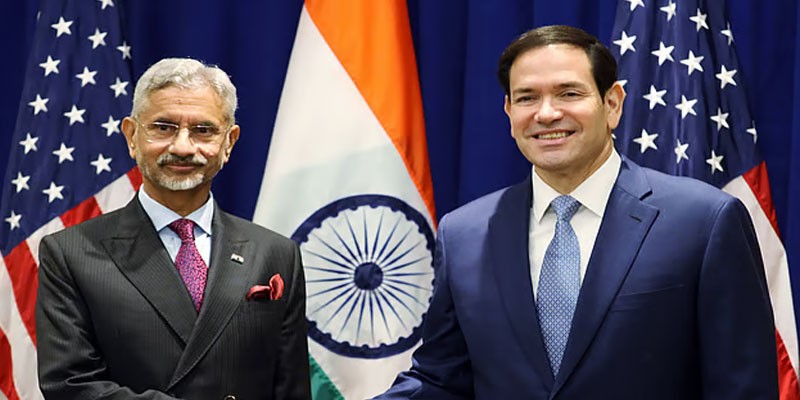
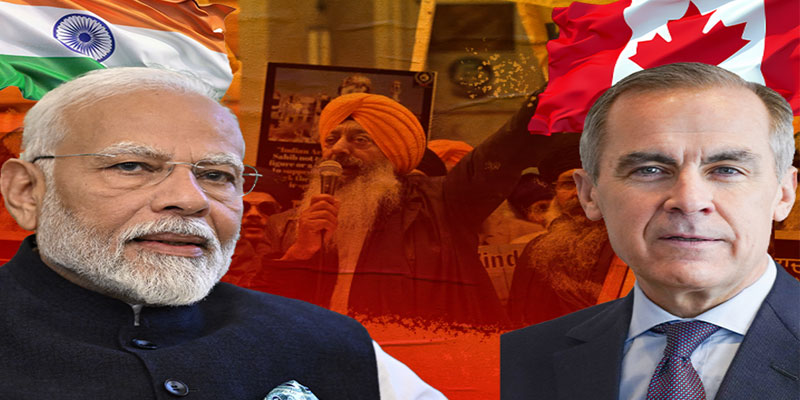
Though not a formal member, India has emerged as a frequent and influential participant in G7 discussions. Since 2003, India has been invited to the summit’s outreach sessions eleven times, including in 2024 and 2025. The invitations are more than symbolic; they reflect India's ascent as the world’s fifth-largest economy and a key player representing the Global South.
India’s consistent presence in these discussions emphasizes its role in shaping dialogues around climate justice, energy transition, and global equity—especially as developing countries push for fairer terms in the global system.
A Brief History of the G7
The G7 was born in the aftermath of the 1970s oil crisis, when finance ministers from the US, UK, West Germany, France, and Japan began informal meetings. It became the G6 in 1975, when leaders met in France. Canada joined in 1976, forming the G7, while the European Union entered discussions a year later.
In 1997, Russia joined, creating the G8, but its membership was suspended in 2014 following the annexation of Crimea. Since then, the group has reverted to its original format.
A Club in Need of Change?
Despite its strengths, the G7 faces growing criticism for being exclusive, outdated, and unrepresentative of today’s global order.
Some analysts argue that a handful of Western democracies cannot alone address challenges that now involve emerging powers like India, Brazil, South Africa, and Indonesia, which together represent billions of people and rapidly growing economies.
Calls for reform or expansion have intensified in recent years. Advocates of change suggest several possible paths:
1. Permanent Expansion
Including countries like India, Brazil, or South Korea as permanent members would improve global representation and legitimacy. This change would acknowledge the multipolar reality of today's world economy.
2. Structured Outreach
Instead of ad hoc invitations, the G7 could establish a formalized outreach mechanism, involving permanent consultation with select emerging economies or regional unions like the African Union or ASEAN.
3. Democratization of Agenda-Setting
The presidency should be encouraged to build inclusive agendas with input from both member and non-member states, aligning the summit more closely with global priorities rather than just Western ones.
4. Stronger Institutional Framework
Though G7’s informal, flexible nature allows agility, the absence of institutional memory and enforcement tools reduces impact. A more institutionalized approach, while still consensus-based, could boost follow-through on commitments.
Why the G7 Still Matters
Despite the critique, the G7 retains enormous clout. Its ability to mobilize financial resources, influence international norms, and shape global narratives remains unmatched by any other bloc.
The G7's endorsement of issues like pandemic preparedness, decarbonization, and AI regulation signals global priorities. It serves as a normative compass, elevating principles like democracy, transparency, gender equality, and human rights.
Crucially, the G7 acts as a forum for fast coordination—a capability that has proven vital during economic crises and military conflicts. It doesn’t wait for consensus among 193 UN member states; it acts swiftly, setting the stage for broader global alignment.
Time to Evolve, Not Dismantle
The G7 is at a crossroads. In an increasingly multipolar, interconnected world, a small group of advanced economies cannot alone carry the burden of global leadership. The solution, however, is not to discard the G7 but to reshape it.
Whether through expansion, structured partnerships, or greater inclusivity in its agenda, the G7 must adapt or risk becoming irrelevant.
If the G7 is to remain a meaningful actor in global governance, it must evolve from a club of the rich into a coalition of the willing and capable—representing the diversity, urgency, and complexity of the 21st-century world.
Because a summit that speaks for only a few, in a world of many, can no longer lead—it must listen, include, and transform.
(With agency inputs)