When Diplomacy Turns into Theatre
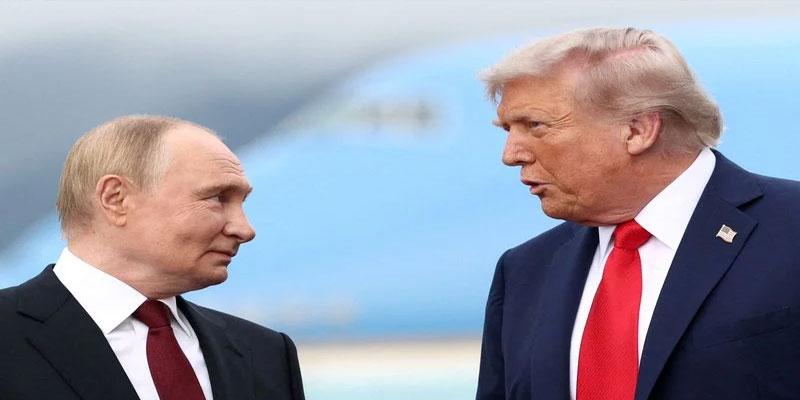
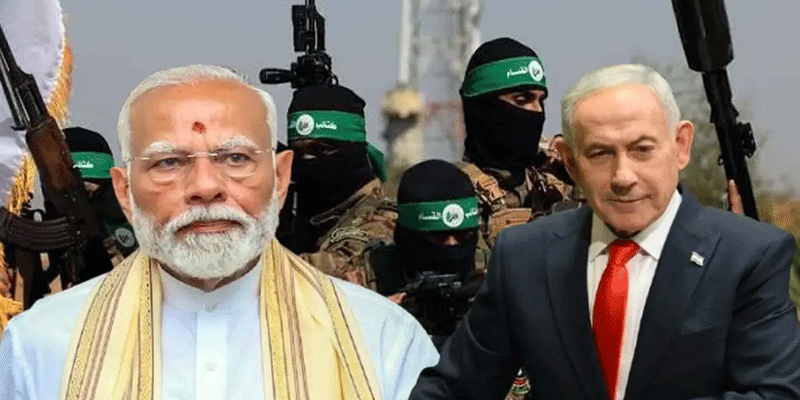
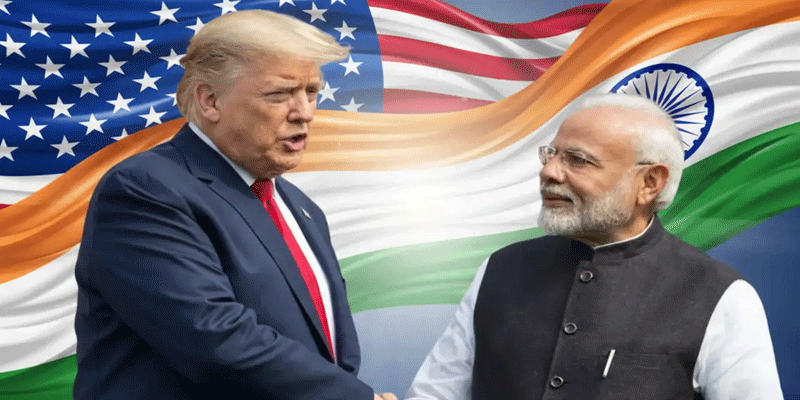
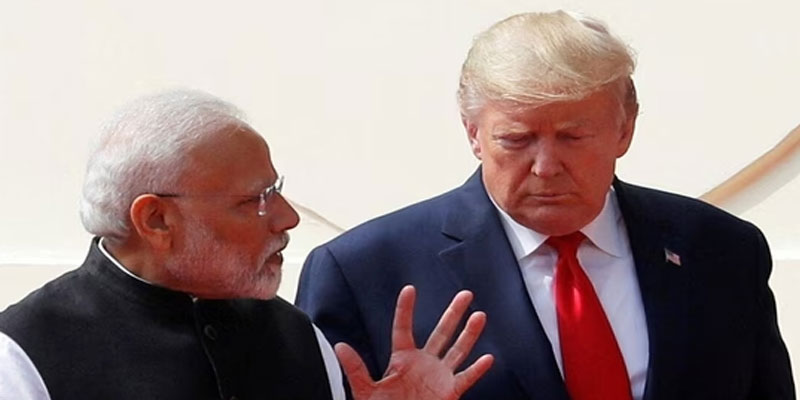
In a dramatic display of words and world politics, US President Donald Trump once again grabbed global headlines—this time with an unusual blend of praise and pressure aimed at Indian Prime Minister Narendra Modi. During a speech in South Korea, Trump hailed Modi as “the nicest-looking guy… tough as hell… a killer,” even as he claimed personal credit for preventing a major India–Pakistan conflict during Operation Sindoor.
The operation—India’s intense five-day military strike in May 2025 against Pakistan-based terror infrastructure—had brought the subcontinent dangerously close to a wider war. Trump’s boast underscored not only his signature personalized, transactional diplomacy, but also the high-stakes interplay of power, pride, and pressure in South Asia’s volatile security landscape.
Operation Sindoor: Precision with a Purpose
India’s Operation Sindoor was launched as a targeted retaliation for a horrific terrorist attack in Pahalgam, Jammu & Kashmir, on April 22, 2025, that killed 26 civilians. Determined to strike back without provoking a full-scale war, India executed precision airstrikes and missile attacks on nine terror camps located in Pakistan and Pakistan-occupied Kashmir (PoK).
New Delhi clarified the mission’s intent: “punitive deterrence, not territorial conquest.” The strikes dismantled recruitment hubs, weapons depots, and training facilities—sending a message that terrorism would invite swift retribution.
But the situation quickly turned tense. On May 8, Pakistan launched drone and missile counterstrike, targeting Indian installations and triggering a rapid military escalation. By May 10, both sides agreed to a ceasefire under heavy international mediation—a fragile truce that left behind an uneasy calm and a loud echo of global intervention.
Trump’s Claim: Praise with a Pressure Valve
From the podium in South Korea, Trump offered a typically flamboyant retelling of the crisis. He claimed that Washington’s firm stance—and his personal phone call to Modi “stopped a war.” According to Trump, he warned India of sweeping trade sanctions if Operation Sindoor continued unchecked.
This blend of compliment and coercion fits Trump’s well-known diplomatic style: maximum pressure paired with public spectacle. It also highlights Washington’s perennial dilemma—supporting India as a strategic partner while preventing flashpoints with Pakistan from spiralling into regional chaos.
Reactions Across Capitals: Applause, Denial, and Discomfort
Trump’s remarks set off ripples across three continents.
· In the US, they reinforced his image as the “world’s dealmaker”, projecting control over global crises.
· In India, Modi’s supporters celebrated the implied respect for India’s power, dismissing Trump’s claim of coercion as “campaign theatre.” The government quietly avoided controversy, emphasizing India’s sovereign decision-making.
· In Pakistan, officials seized on Trump’s version to argue that foreign pressure “restrained Indian aggression”, framing it as a diplomatic win.
· Globally, analysts questioned whether brinkmanship disguised as diplomacy was sustainable—or simply a dangerous form of political performance.
The Strategic Equation: Personality Meets Policy
Trump’s “Modi-the-killer” remark blurred the line between compliment and confrontation. His intervention may have helped avoid escalation, but it exposed how ego-driven diplomacy can reduce nuanced security crises to personal rivalries and political theater.
For India, Operation Sindoor reinforced a new counterterrorism doctrine: swift, surgical, and unapologetically assertive. For the US, it reaffirmed its central yet complicated role as South Asia’s reluctant crisis manager—one increasingly shaped by the moods of its president rather than institutional strategy.
Power, Performance, and the Peril of Personality
Trump’s South Korea speech was more than a retelling of a tense episode—it was a case study in power politics wrapped in performance. His mix of admiration and intimidation toward Modi mirrored a world where personal diplomacy often overshadows policy discipline.
Operation Sindoor, meanwhile, stands as a defining moment in India’s evolving defense posture—measured yet muscular, signaling that terror networks will not go unanswered.
In the end, both leaders emerged with their images intact: Modi, the decisive defender; Trump, the self-styled peacemaker. But beneath the theatrics lies a sobering truth—in a nuclear neighborhood, even small moves on the chessboard can shake the world.
(With agency inputs)